
Be cautious of the risk of food poisoning at home.
Nearly 57% of food poisoning incidents nationwide in 2012 occurred within families, resulting in 28 deaths. Authorities warned housewives to be cautious when purchasing food to prevent food poisoning among their families during the Tet holiday.
“Food poisoning at home tends to increase in both the number of cases, the number of people affected, and the number of deaths. During the Lunar New Year holiday, the demand for food at home is even higher. Therefore, it is crucial to pay close attention to the selection and preparation of food to avoid poisoning,” said Dr. Tran Quang Trung, Director of the Food Safety Department (Ministry of Health), at the conference on ensuring food safety and quality during Tet for public health, held in Ho Chi Minh City on the morning of January 13.
According to Mr. Trung, in 2012, 95 out of 168 food poisoning cases nationwide occurred in households, accounting for nearly 57% (compared to 80 cases in 2011). Nearly 1,220 people were affected, and 28 died. The causes of poisoning included the consumption of mixed processed foods (nearly 58%), poisonous mushrooms (nearly 12%), and seafood (over 10%).
Regarding provinces and cities in the southern region, Dr. Huynh Van Tu from the Ho Chi Minh City Institute of Public Health and Hygiene stated that in 2012, 17 out of 49 food poisoning cases occurred at home, accounting for nearly 35% of all cases. Mixed processed foods were also the leading cause of food poisoning (over 55%), followed by seafood (over 20%).
Mixed processed foods (such as stir-fries, soups, stews, etc.) that are left out for a long time are mostly contaminated with microorganisms, while seafood is contaminated with chemicals or natural toxins. Lunch and dinner meals are suspected of being the "culprits" behind family food poisoning incidents because cooked food becomes more easily contaminated with microorganisms the longer it is left out, and food from morning to evening spoils easily.
|
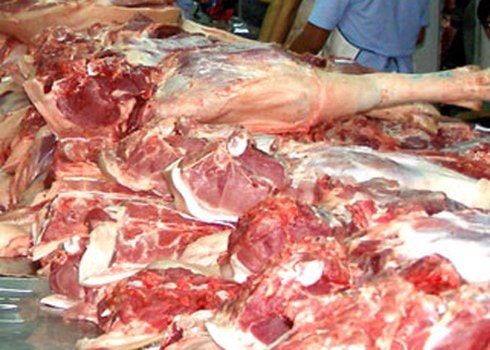
Housewives should be cautious when buying pork to avoid the risk of food poisoning during the Tet holiday. |
Dr. Tran Quang Trung warned that the risk of food poisoning during Tet (Lunar New Year) remains quite complex due to the increasing trend of food poisoning within families. Poisonous mushrooms and natural toxins in seafood are not yet thoroughly controlled, so consumers may still consume them. Meanwhile, Dr. Tu noted that due to economic difficulties and low incomes, many families accept using cheap food that does not guarantee food safety and hygiene. In addition, due to a lack of knowledge, consumers still choose to buy unsafe food or place too much trust in (often unfounded) guarantees from sellers.
Professor Phan Thi Kim, President of the Vietnam Association of Food Safety and Technology, stated that pork, alcohol, jam, dried shredded pork, vegetables, and fruits are widely consumed by families during Tet (Lunar New Year). However, nationwide testing results in 2012 showed that 16 out of 244 pork samples (nearly 7%) contained banned substances; 170 out of 250 samples of various types of alcohol (68%) failed to meet the standards for aldehydes and methanol; and 89 out of 134 samples of various types of preserved fruits (over 66%) failed to meet the standards for lead, artificial sweeteners, and preservatives. In addition, 130 out of 244 samples of various types of dried shredded pork (over 53%) failed to meet the standards for microorganisms, preservatives, and artificial sweeteners; and 16 out of 320 samples of fresh vegetables (5%) and 3 out of 310 samples of fresh fruit (nearly 1%) contained pesticide residues. Therefore, housewives carefully select their food to avoid the risk of food poisoning.
According to Health-MD


