
Thanh Chuong: Every family builds a waste disposal pit.
(Baonghean) - While many localities are struggling with rural waste management, Thanh Chuong district's initiative to build one waste pit for each household has been positively received by officials and the people, contributing to the creation of a clean and beautiful rural environment.
In Thanh Lien commune, along the main roads and alleyways, there are no longer the makeshift garbage dumps commonly seen in other rural areas. Ms. Nguyen Thi Hoa, from Lien Duc hamlet, was sweeping and gathering garbage into a built-in garbage pit in the corner of her garden. She shared: “Since this garbage pit was built, all household waste has been collected and sorted. Anything that can be burned is burned, while things like broken glass and pottery are collected and then taken to the commune’s central garbage collection point.”
Mrs. Hoa's family was one of the first households in the commune to implement the construction of household waste pits. To date, in Lien Duc hamlet alone, 100 out of 115 households have built household waste pits. In some areas with close alleys, 2-3 families share one pit. As a result, the amount of waste generated in the village has been significantly reduced.
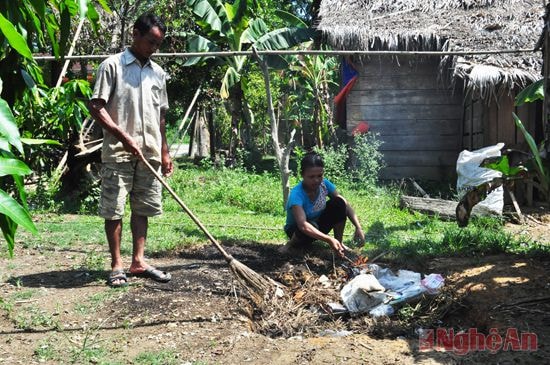 |
| Many families in the Ngoc Lam resettlement area have dug pits to collect and dispose of waste at home. |
During the discussion, Mr. Phan Bá Ngọc, Chairman of the People's Committee of Thanh Liên commune, stated: Since 2012, the commune has implemented a policy requiring each family and residential area to build a garbage pit for collecting, accumulating, and processing waste. The commune calculated the costs, averaging about 500,000 VND per pit (2 square meters), and subsequently established a support mechanism of 50,000 VND per pit. Cadres, Party members, and members of the Women's Union set a good example by taking the lead in building these pits, which then spread throughout the community. To date, the entire commune has built 1,330 household garbage pits. Not only in residential areas, but also along all internal agricultural roads, garbage pits have been built for people to dispose of bottles, containers, and pesticide packaging during production, preventing environmental pollution in the fields. Currently, the commune is focusing on completing the procedures for constructing a centralized waste disposal site with a scale of 2,000 m2, aiming to put it into use by the end of this year, thus fulfilling the environmental criteria according to the new rural development standards.
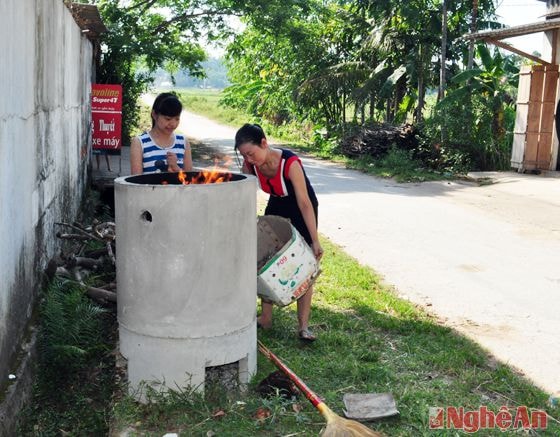 |
| The people of Thanh Lien commune are conscious of sorting and disposing of waste at the source. |
With construction costs ranging from 500,000 to 1 million VND per household, and families actively participating, the model has been widely replicated in many communes such as Thanh Linh, Thanh Hung, Thanh Duong, etc. Even in the resettlement area of Ngoc Lam commune, the policy of building household waste pits has been implemented by encouraging people to dig pits to collect, accumulate, and process waste. According to Mr. Luong Van Tuat, in Ma village, following the commune's initiative to encourage people to maintain "clean villages and hamlets," his family has dug a pit and collects all kinds of waste daily, burning it once a week. Mr. Luong Van Tich, an agricultural and environmental officer of the Ngoc Lam Commune People's Committee, said: Currently, many families have dug pits to collect and process waste, and some households that haven't dug pits have also processed their own waste. In particular, through awareness campaigns, the people have become more conscious of maintaining hygiene in their own families and villages by practicing clean eating and living habits, and not littering indiscriminately into streams, rivers, and forest edges as they did before.
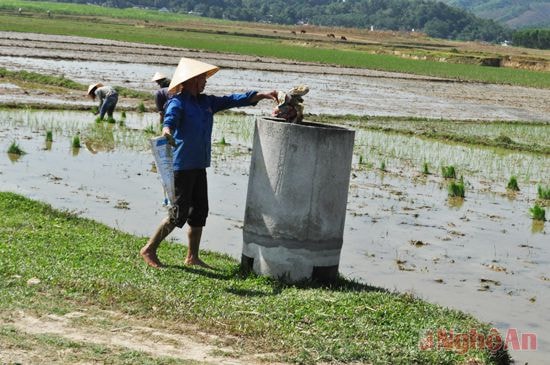 |
| Constructing a system of waste pits in the fields of Thanh Lien commune. |
According to Mr. Phan Dinh Ha, Vice Chairman of the District People's Committee, the policy of building one garbage pit per household to protect the environment has been widely implemented since 2013 after the District Party Committee issued Directive No. 11/CT-HU on March 25, 2013, and the District People's Committee issued Directive 05/2013/UBND/CT on strengthening leadership over state management in the field of natural resources and environment in the district. This policy is correct and in line with the people's wishes, gradually cleaning up fields, gardens, roads, canals, ponds, and lakes, reducing the risk of disease outbreaks in humans and livestock, and contributing to building clean and beautiful rural areas.
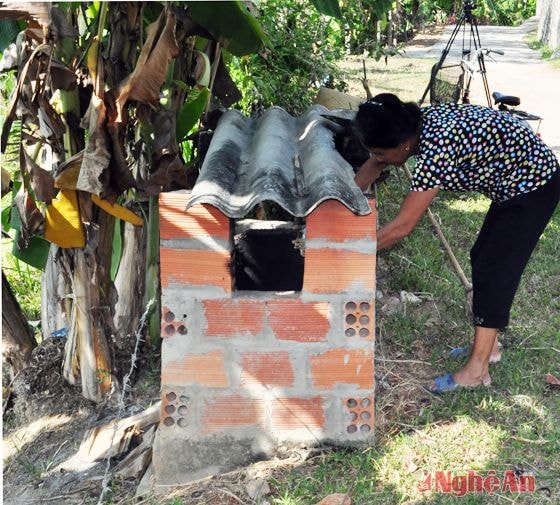 |
| Every day, household waste is collected and processed by Mrs. Nguyen Thi Nga, from Len Trung hamlet, Thanh Lien commune. |
To implement this policy, the District People's Committee assigned the Department of Industry and Trade to develop a model design for a two-compartment garbage pit to be implemented in the communes. Women's Unions, Veterans' Associations, Farmers' Associations, and Youth Unions set an example in implementing and promoting the policy among the people. To date, 40 out of 40 communes and towns have implemented the policy of building household garbage pits, with many localities doing well, reaching nearly 50% of the total number of households in the commune. The entire district has built over 9,000 garbage pits, striving to increase the total number to 20,000 by the end of 2015. Along with this, the communes and towns have also intensified environmental protection awareness campaigns; environmental sanitation teams have been established in hamlets and neighborhood groups to monitor and inspect environmental pollution in each residential area, thereby changing the behavior and habits of people littering indiscriminately. To date, the entire district has established more than 400 sanitation teams in the hamlets.
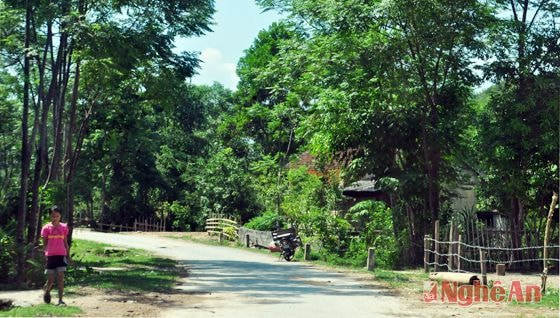 |
| Thanks to waste sorting and processing at the source, the villages of the ethnic minority people in the resettlement area have become cleaner and more beautiful. |
The construction of waste pits and the implementation of household waste disposal is a sound policy that yields practical results. Thanks to this policy, the indiscriminate dumping of waste in rural areas, especially in rivers, streams, ponds, lakes, dams, and along provincial, district, and commune roads, has significantly decreased. Centralized waste disposal sites, once planned and constructed, are becoming increasingly effective. While a professional waste collection system with modern processing technology is not yet in place, household waste collection and disposal truly contributes to building a clean and beautiful rural environment. This is an easy-to-implement solution due to its low cost and promotes the responsibility of each family and local organizations in achieving environmental protection goals, actively contributing to the success of the national target program for building new rural areas.
Mai Hoa


