
Iran's missile city: Underground tunnel strategy faces challenges from the US and Israel.
The airstrikes, focused on entry points and launch systems, threaten to turn Iran's massive ballistic missile arsenal into underground choke points.
Iran's strategic underground tunnel system, also known as its "missile cities," is becoming a prime target in airstrikes from the US and Israel. While designed to protect its weapons stockpiles from external attacks, the structure reveals deadly vulnerabilities when vital access points are blocked.
The scale of the arsenal and the underground defense strategy.
For decades, Iran has built a complex network of underground tunnels within its mountains to protect its ballistic missile stockpiles. According to estimates from the U.S. Central Command in 2022, Tehran possesses more than 3,000 ballistic missiles, one of the largest arsenals in the Middle East.
These facilities are believed to house various types of modern long-range missiles such as the Shahab-3, Sejil, and Khorramshahr, capable of striking targets within a range of 2,000 km. Propaganda footage released in March 2025 showed the scale of these bases with long corridors filled with trucks carrying missiles ready for combat. At some locations, Tehran has also built specialized underground silos that allow missiles to be launched directly from the ground without needing to bring them to the surface.
Risks from tactical bottlenecks
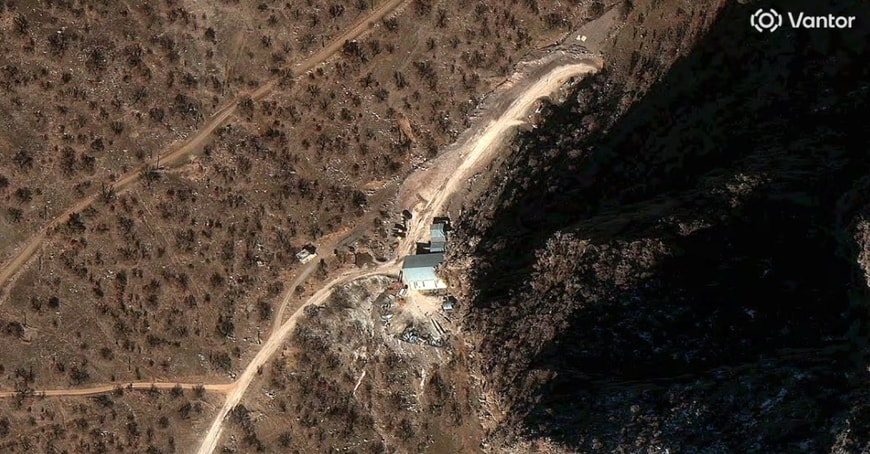
Despite their highly classified nature, the locations of these "missile cities" were closely monitored by US and Israeli intelligence through satellite imagery. Indicators such as road networks, control buildings, and tunnel entrances were crucial in determining the target coordinates.
According to reports from The Wall Street Journal, US and Israeli fighter jets and drones regularly monitor these areas. Current tactics focus on attacking the launch platforms as soon as they appear or dropping heavy bombs to destroy the tunnel entrance structures. Military analyst Guillermo Pulido argues that if the entrances are destroyed, these fortified underground bunkers will become "graveyards" for the weapons inside, trapping mobile launch vehicles and preventing them from deploying firepower.
The impact of successive airstrikes.
In the latest developments, Admiral Brad Cooper, commander of US forces in the Middle East, announced that the coalition had destroyed hundreds of Iranian missiles, launchers, and drones. The number of missile launches from Tehran has also seen a significant decrease recently.
Specifically, the attacks targeted strategic infrastructure in the Tabriz and Khorramabad areas of Lorestan province. Satellite imagery confirmed the collapse of several tunnels at ballistic missile bases. L'Express reported that Iran attempted to move some of its weapons out of the tunnels and disperse them throughout the country to avoid complete destruction, but the effectiveness of this tactic remains questionable under the pressure of continuous airstrikes.
Specifications table for some of Iran's strategic missile lines.
| Missile | Maximum firing range (km) | Key features |
|---|---|---|
| Shahab-3 | 2,000 | Common medium-range ballistic missiles |
| Sejil | 2,000 | Using solid fuels, rapid deployment time. |
| Khorramshahr | 2,000 | Capable of carrying heavy warheads with high destructive power. |


