
Removing investment bottlenecks for agriculture.
Agriculture is considered a strength of the country, but modest investment in this sector is significantly affecting its development as well as the lives of farmers. This reality necessitates a mechanism and policies to boost investment attraction in agriculture and rural areas.
There are still many obstacles.
Mr. Ho Xuan Hung, Chairman of the Vietnam General Association of Agriculture and Rural Development, stated that after a long period of investment and development, only over 60% of social resources are currently dedicated to agriculture. In particular, only about 1% of businesses invest in agriculture, over 80% of farmers have less than 1 hectare of land, and the number of companies with market capitalization on the stock exchange accounts for just over 3%...
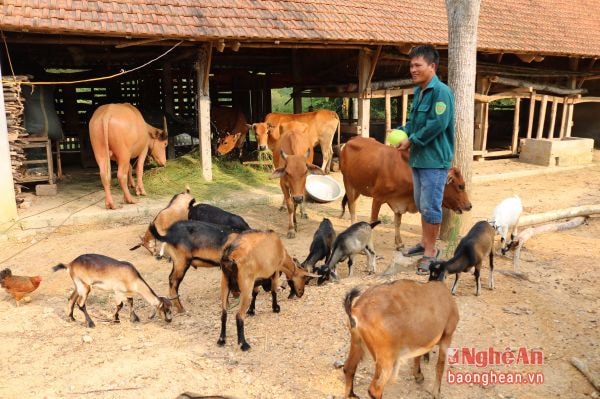 |
| Livestock farming is currently mainly on a small scale. (Photo: Archival image) |
"These figures show that the agricultural sector is still not attractive to businesses and foreign investors. There are many reasons, but mainly it is that policies to support large-scale production development, including land and capital, have not yet been resolved. Meanwhile, state management of the market, diseases, etc., is incomplete and fraught with risks," Mr. Hung emphasized.
According to industry experts, given the urgent need for innovation to adapt to increasingly stringent conditions in integration, the competitiveness of domestic businesses has revealed weaknesses that are not easily overcome without the support and assistance of the State. Most businesses wanting to invest in agriculture face difficulties with capital and hope that banks will change their lending methods to alleviate the stress of collateral requirements. For profitable projects, instead of requiring collateral, loans should be granted on a credit basis, based on project appraisal.
"Many preferential policies, as well as issues related to land and capital, have been clearly outlined in the government's guidelines, but their implementation at the ministerial and sectoral levels, especially at the local level, remains unclear. The decrees and circulars applied are still problematic and inconsistent, causing difficulties for businesses. To attract investment in agriculture, we must have stable policies that are regularly updated to suit new conditions and trends, ensuring long-term stability," said Mr. Tran Van Linh, General Director of Thuan Phuoc Company.
Step-by-step dismantling
According to businesses, the banking sector has made significant improvements in procedures for accessing capital and has implemented many measures to alleviate difficulties related to credit and interest rates for businesses. Currently, the State Bank of Vietnam has regulated and selected agriculture as one of the sectors where banks provide loans with preferential interest rates that are 1-2% lower than the interest rates for the general production sector.
Regulations regarding standards and conditions for granting credit to businesses in the agricultural sector have gradually been eased, making it easier for businesses to access banks. Most businesses that struggle to obtain loans are those without valuable products, with weak financial situations, and unable to demonstrate sufficient cash flow to ensure repayment capacity.
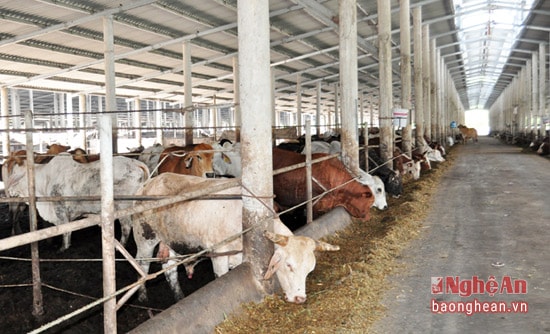 |
| Developing large-scale, concentrated livestock farming requires access to preferential capital. (Photo: Provided) |
Recently, Mr. Tiet Van Thanh, Member of the Board of Directors and General Director of the Vietnam Agricultural and Rural Development Bank (Agribank), announced that Agribank will allocate at least 50,000 billion VND to implement a preferential credit program serving "Clean Agriculture". Accordingly, starting in November 2016, Agribank will offer preferential loans to businesses, cooperatives, cooperative unions, and farm owners involved in large-scale, safe agricultural product production chains at interest rates 0.5-1.5% lower than Agribank's normal lending rates. Agribank will also prioritize short-term, unsecured loans for good, long-standing customers. This is considered a timely move to partially address credit constraints for investment in the agricultural sector.
Meanwhile, Mr. Vu Tien Loc, Chairman of the Vietnam Chamber of Commerce and Industry, argued that agriculture can only generate high added value when the primary role belongs to businesses, especially private enterprises. The State's role is to stand alongside businesses to share risks through support programs and policies. These programs and policies should directly invest in businesses and associations/cooperatives. Currently, the agricultural sector has established a bridge between businesses and the Ministry's management agencies through the "Agricultural Investment Attraction Group." To date, 30 large corporations and businesses have joined this group, contributing investment ideas aligned with the restructuring of agriculture in the sector and localities.
"We are researching and proposing to the Government the issuance of mechanisms and policies to promote investment attraction in agriculture and rural areas. Accordingly, in the last months of the year, the Ministry will continue to strengthen international cooperation, mobilize and call on donors to participate in supporting the implementation of the industry restructuring program, and national target programs related to agricultural development...", said Mr. Tran Kim Long, Director of the International Cooperation Department, Ministry of Agriculture and Rural Development.
Le Nghia/baotintuc


