
World in the past week: Political retaliations
(Baonghean.vn) - North Korea demolished the joint liaison office with South Korea in Kaesong on June 16, which served as the embassies of the two countries. Major American newspapers such as the Washington Post, the New York Times, and The Wall Street Journal published excerpts from "Political Retaliation," the memoir of former National Security Advisor John Bolton, on June 17, causing turmoil within the Trump administration.
The "death knell"
The accumulated frustration of North Korean leader Kim Jong-un since his return from his second summit with President Trump in 2019 erupted when he demolished the joint liaison office with South Korea. The collapse of this rare symbol of the two countries destroyed two years of détente on the Korean Peninsula, which had been hoped to lead to North Korean denuclearization or the signing of a formal peace treaty ending the Korean War. Kim Jong-un acted exactly as he had repeatedly warned, that he would take inter-Korean relations to a new stage, viewing South Korea not as a reconciliation partner, but as an "enemy."
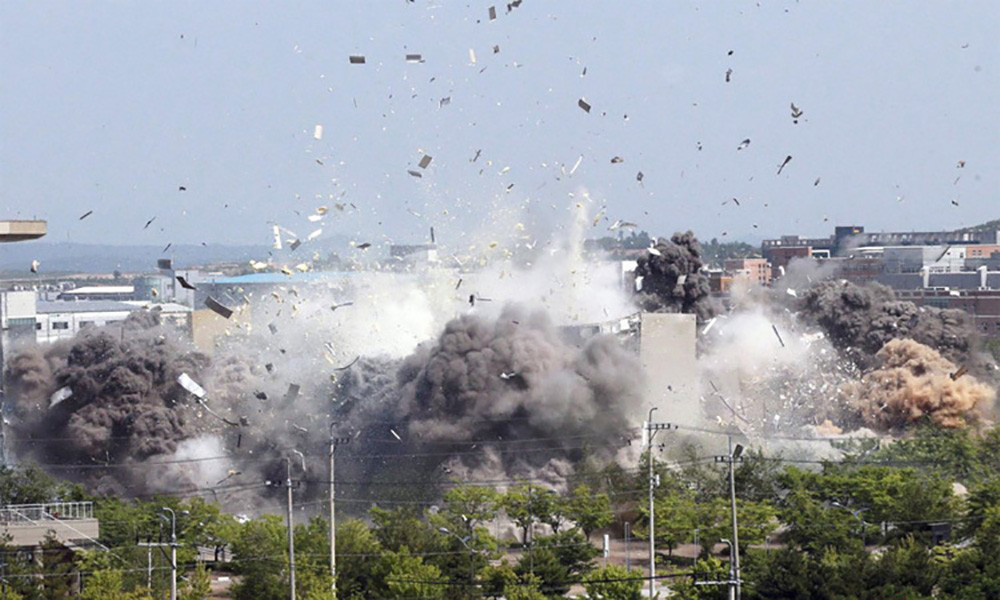 |
| North Korea demolished the joint liaison office with South Korea on June 16. Photo: KCNA |
The North Korean Central News Agency emphasized that the destruction of the building was an act of revenge by "angry people." Meanwhile, South Korea stated that North Korea had "betrayed the hope for peace on the peninsula," and that Pyongyang would be held accountable for its actions, warning that if Pyongyang continued to escalate the situation, Seoul would take commensurate countermeasures. Lee Byong-chul, a North Korea expert at the Institute for Far Eastern Studies of Kyungnam University in Seoul, commented: "These reciprocal actions between Pyongyang and Seoul signal that the terrible spiral in inter-Korean relations is irreversible. North Korea has officially sounded the death knell for relations under the Moon Jae-in administration."
The destruction of the South Korea-North Korea joint liaison office was also seen as a message to Washington.
The bombing of the liaison office not only destroyed one of the most concrete legacies of South Korean President Moon Jae-in's peaceful engagement with North Korea, but also highlighted the dramatic nature of the Kim-Moon-Trump triangle! The Trump-Kim relationship deteriorated after both sides left empty-handed following their second summit in Vietnam in 2019. After that failure, North Korea vented its frustration on mediator Moon Jae-in. Hidden behind North Korea's deep contempt for South Korea was disappointment with the Trump administration. Analysts suggest that the destruction of the liaison office was also seen as a message to Washington.
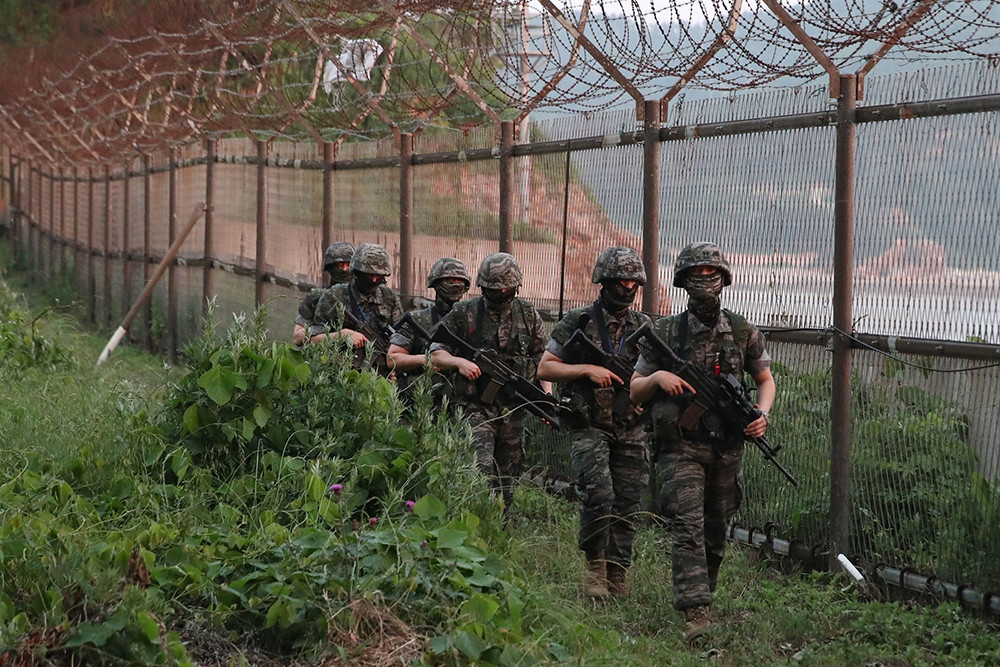 |
| South Korean troops patrol along a South Korean-controlled military fence near the border with North Korea on June 16. Photo: Getty |
"If the South Korean government now has the ability and courage to immediately do what it hasn't done in the past two years, why are North-South relations still at a standstill?" - quoting Kim Yo-jong, Kim Jong-un's sister, The Washington Post noted that her attitude reflects North Korea's frustration at its inability to obtain economic assistance packages from South Korea to cope with international sanctions. With foreign trade severely restricted, North Korea has been unable to develop its economy, while South Korea has not made any progress in joint cooperation projects between the two countries.
Leif-Eric Easley, a professor of international studies at Ewha University in Seoul, argues that North Korea is exerting strategic pressure on South Korea to secure concessions on sanctions. “It’s difficult to say whether such actions will get Kim Jong-un’s regime what it wants from the world, but clearly those images will continue to be propagated domestically. Therefore, Seoul needs to be firm, demonstrating to Pyongyang that threats against them are counterproductive.”
Political turmoil
Excerpts from former National Security Advisor John Bolton's memoir, "The Room Where It Happened: A White House Memoir," published by major American newspapers, have revealed behind-the-scenes exchanges between President Trump and President Xi Jinping regarding the US election. According to Bolton, President Trump tried to persuade President Xi Jinping to import agricultural products, arguing that it would help him gain more support from farmer voters in the election race.
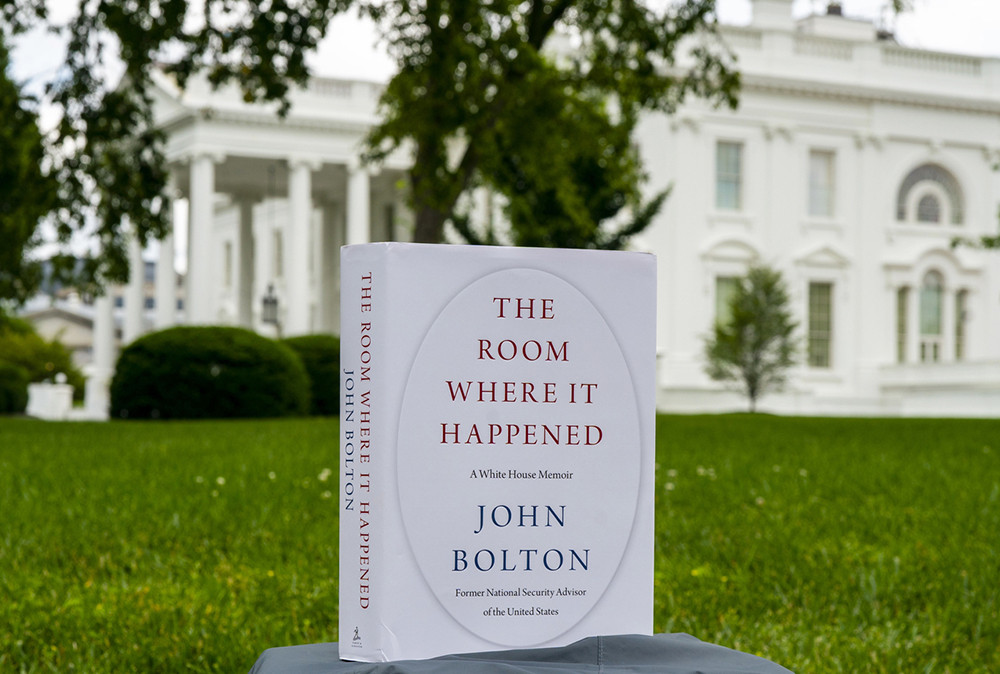 |
| The memoir of former National Security Advisor John Bolton has been described as an obsession of the Trump administration. (Photo: Straits Times) |
Defending the White House, US Secretary of State Mike Pompeo claimed that former National Security Advisor Bolton's upcoming memoir was fabricated and called him a "traitor." However, according to excerpts revealed by several major newspapers, Bolton wrote that Pompeo was one of the rare aides who publicly clashed with Trump, yet also "spoke ill of the president behind his back." According to the New York Times, Bolton wrote in his memoir that he received a letter from Pompeo during President Trump's historic first meeting with North Korean leader Kim Jong-un in Singapore in June 2018, in which the US Secretary of State wrote that what Trump said was "all nonsense."
The more President Trump tried to suppress and criticize it, the more famous the memoir became, and the more people became curious and wanted to own it.
The Trump administration sought to issue an emergency injunction to prevent the book's publication. White House lawyers claimed Bolton's book contained "a significant amount of classified information." President Trump also emphasized that the book "should not be released before the November election." The administration even requested a Washington judge issue a preliminary injunction to prevent the book's sale, arguing that the details in the book would harm national security.
The Trump administration couldn't prevent the memoir from being published, but at least it delayed its public release. In early March, the White House extended the censorship period. Then, in May, the release date was pushed back to June 23rd as the censorship process dragged on. Legal experts believe the Trump administration is unlikely to convince a judge to halt the memoir's publication, but it could prevent Bolton from profiting from book sales.
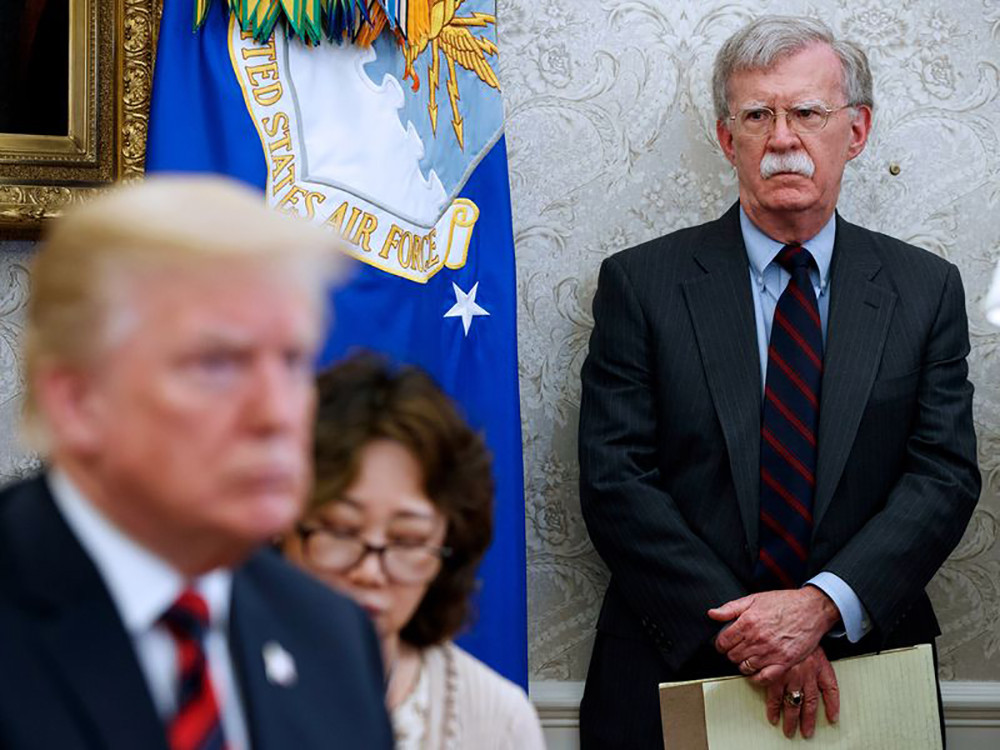 |
| President Donald Trump and former National Security Advisor John Bolton at a meeting at the White House in 2016. Photo: AP |
Although only scheduled for release on June 23rd, the book quickly topped Amazon's bestseller list. The White House demanded that Bolton halt all publishing activities, but Bolton stated he lacked the authority to do so. Simon & Schuster, the publisher of the memoir, argued: "The White House's lawsuit is an attempt to disrupt and delay the publication of the book, which they deem unfavorable to the president." This situation will undoubtedly have the opposite effect: the more President Trump tries to block and criticize it, the more popular the memoir becomes, and the more people become curious and want to own it.


