
Competing to… admit their mistakes!
(Baonghean) - Avoid the situation where people compete to receive criticism, but then remain silent; otherwise, shortcomings will not only fail to be limited or rectified, but may even increase.
Hey, the implementation of the review of cadres and Party members in accordance with the spirit of Resolution No. 4 of the 12th Central Committee has reached the grassroots and lower levels. According to general assessments, this resolution has been put into practice, with clear targets and content, sir!
- That's right! If we want to build and rectify, but keep "shooting aimlessly," hitting no one, the effectiveness will be low. This time, identifying 27 manifestations of degradation, "self-transformation," and "self-evolution," every cadre and every party member cannot stand aside. Everyone must identify them themselves and offer suggestions to their comrades. Therefore, it's difficult for anyone to avoid responsibility. Each individual and each collective has been clearly identified for their strengths and weaknesses, linked to the strengths and weaknesses in their respective areas of responsibility and work.
- At one facility we visited, we heard a very interesting "reversal of fortune." Initially, no one dared to admit their shortcomings, fearing disciplinary action. After listening to guidance from higher-level supervisors, they understood that the goal of identifying weaknesses was to confront them directly, frankly acknowledge and analyze them, and find solutions for improvement. Only when the situation became serious, and individuals or groups lacked a serious attitude towards identification, refused to accept feedback, refused to make corrections, or their corrections proved ineffective, would disciplinary action be proposed.
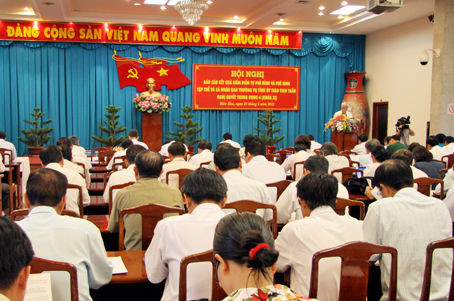 |
| Local authorities are conducting reviews in accordance with the spirit of Central Resolution 4. (Image: Internet) |
After receiving guidance and analysis, it became apparent that many party members were self-identifying their shortcomings. Some even considered admitting numerous flaws as a high-level display of exemplary conduct, leading other members to feel that this was excessive. The point is that "no one is perfect," meaning no one is absolutely flawless, so minor shortcomings are normal. However, admitting faults at every opportunity seems excessive!
- Actually, admitting shortcomings isn't something to be worried about. The real concern is whether, after admitting shortcomings, there are solutions to overcome them, whether there is genuine willingness to learn and a serious commitment to correcting those shortcomings.
- I also agree with this view. Admitting shortcomings is good. But it would be even better if there was a collective effort to overcome and correct those shortcomings. We should avoid a situation where, during self-criticism, people admit many shortcomings but then ignore them, reverting to their old ways. If you admit shortcomings but refuse to correct them, that's another shortcoming: "saying one thing and doing another," "saying one thing and doing another"... And it's also a sign of dishonesty, lack of sincerity, and a lack of seriousness in the self-criticism process.
Therefore, it is crucial for Party committees at all levels, after conducting self-criticism in accordance with the spirit of Central Resolution 4, to effectively inspect and supervise the implementation of solutions to overcome and correct shortcomings, deficiencies, and limitations. We must avoid a situation where people compete to acknowledge their mistakes, but then remain silent, preventing shortcomings from being addressed or rectified, and potentially leading to further deterioration.
Duc Duong
| RELATED NEWS |
|---|


