
Computer-based National High School Examination in Nghe An: Difficult to implement
(Baonghean) - From 2021 to 2025, the Ministry of Education and Training is considering and developing a plan for conducting the National High School Graduation Examination on computers. However, this plan is difficult to implement in areas with unfavorable conditions, including many schools in Nghe An.
Many concerns
Although the proposal is only currently being put forward for public consultation, many students, including those from specialized schools, are already quite worried.
Student Banh Thao Linh, a 11th-grade student specializing in Computer Science at Vinh University High School for Gifted Students, said: “I heard my teacher say that next year the National High School Graduation Exam will be conducted on computers, and I'm quite worried. Actually, we Computer Science students aren't worried about the procedures, but I think that if the method changes, the exam content will also change. Having taken the exam on paper for many years and practiced how to do it, I honestly hope that 2021 won't change because we only have a little over a year to prepare.”
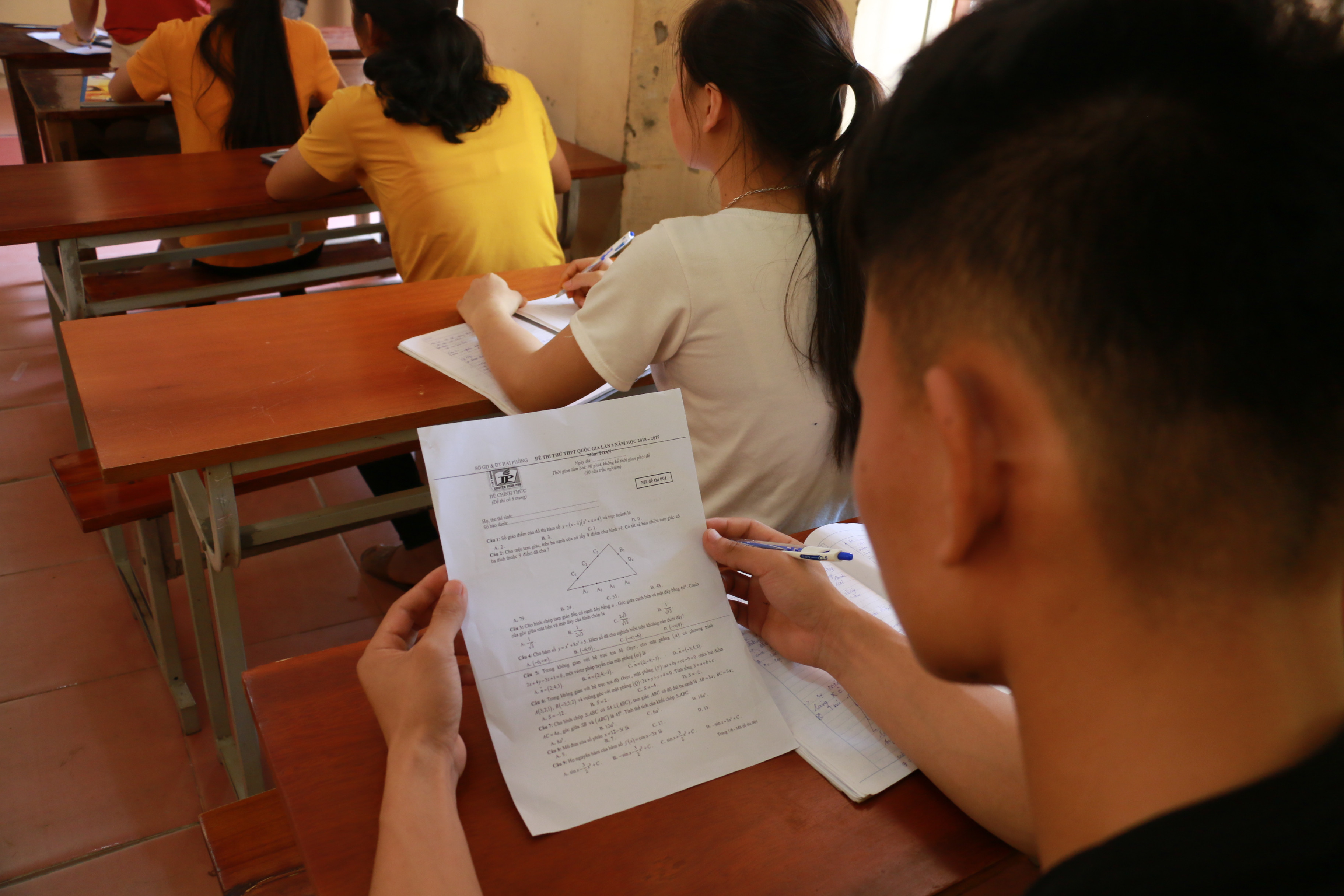 |
| Taking the exam on paper is suitable for the practical conditions in Nghe An. Photo: My Ha. |
At Tan Ky 3 High School, the computer-based exam system is causing considerable concern among teachers, students, and the school administration. Currently, the school has over 1,000 students but only 24 computers. Therefore, even with careful scheduling, each class can only practice in the computer lab for a maximum of 5-7 lessons per semester. This will undoubtedly affect students' computer skills and proficiency. Meanwhile, to be able to take computer-based exams, students need extensive practice and familiarization with various computers and computer-based exam questions.
According to the Ministry's plan, we will be taking the computer-based exam next school year, but in reality, due to a shortage of computers, we haven't had any practical sessions even after more than two months of studying. Therefore, if we take the computer-based exam, our skills will definitely be slower than students in other more accessible areas, and since the exam is nationwide, our chances of getting into university will be lower.”
As a computer science teacher at the school, Ms. Le Thi Thuy is also very concerned about this: “Currently, computer-based learning at the school is facing many difficulties due to inadequate facilities. Because the students live in remote areas and have limited exposure to computers, their computer skills are very slow. Students have to share computers with 2 or 3 students and require frequent teacher support. Given this reality, I believe the National High School Graduation Exam needs a long-term plan, and during that time, schools need investment in equipment to help students become familiar with it. Learning computer science should also be prioritized from the elementary school years, not just at the high school level...”
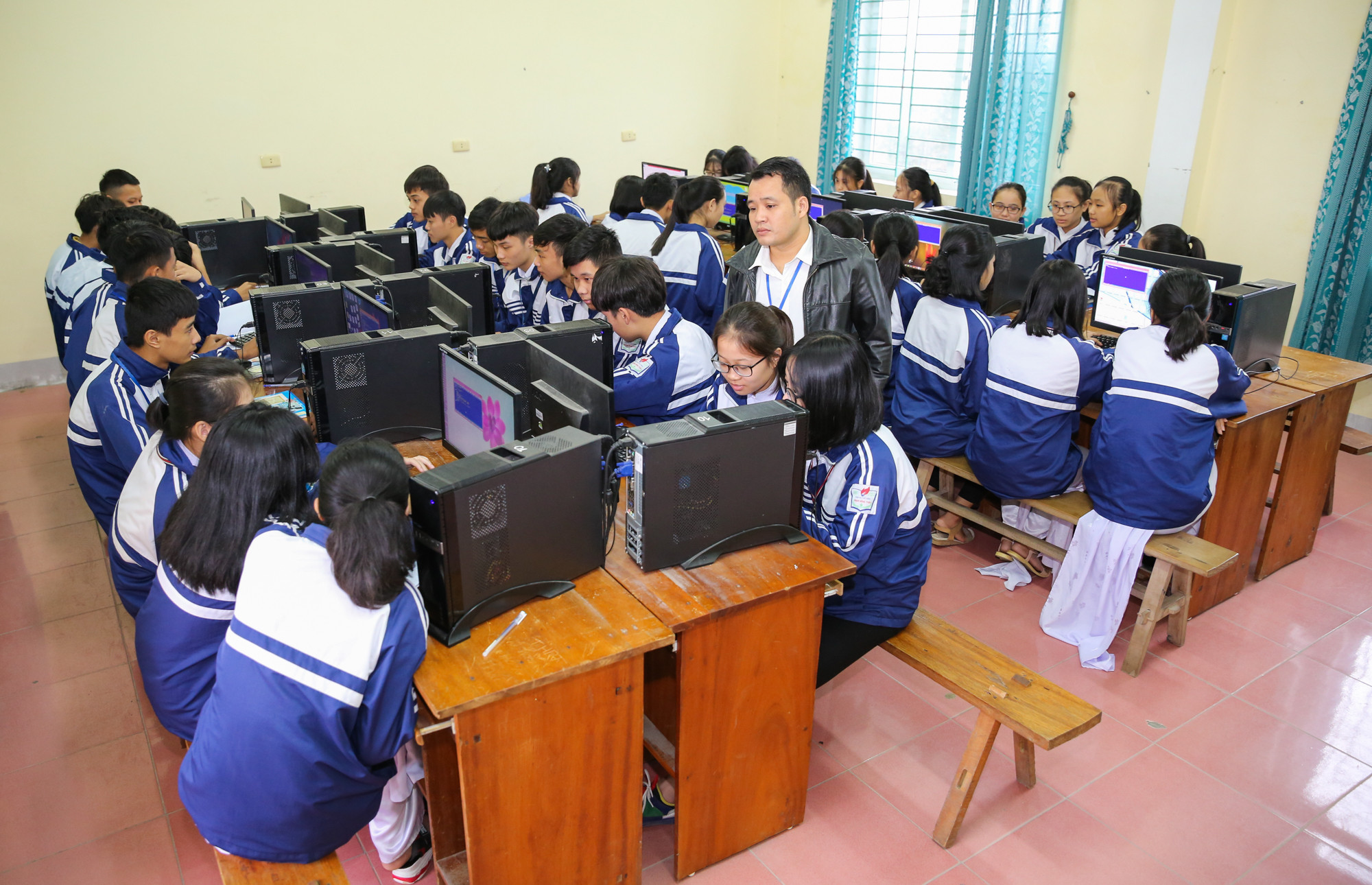 |
| Computer science class for students at Pham Hong Thai High School - Hung Nguyen. Photo: Duc Anh |
Previously, Tan Ky 3 High School also "experimented" with computer-based testing through two competitions: "Understanding the Communist Party" and "Learning and Following Uncle Ho's Teachings," and students at the school enthusiastically participated.
However, because the school's computer lab is not yet connected to the internet, students have to take the exam on their homeroom teacher's phone or computer. Some teachers even came up with the "innovative" idea of renting private internet cafes for students to take the exam to ensure they meet the requirements. Teachers here also believe that because students have very little practical time—only a little over 20 lessons a year—if a family doesn't have a computer, many students are not yet familiar with the keyboard symbols, making teaching extremely difficult.
Thorough preparation is necessary.
The policy of organizing the National High School Graduation Examination on computers began to be discussed by the Ministry of Education and Training at a meeting on the plan for organizing the exam, recognizing high school graduation, and university admissions after 2020. According to the roadmap set out by the Ministry of Education and Training, in the coming years, the Ministry will gradually pilot the National High School Graduation Examination on computers to align with global trends.
With this exam, candidates can participate in several rounds throughout the year at locations of independent testing organizations; the highest score will be selected for consideration of high school graduation and may be referenced and used by higher education and vocational education institutions in admissions (if needed).
 |
| National High School Graduation Examination 2018-2019. Photo: My Ha |
The proposal, upon its release, received mixed reactions, with many teachers arguing that computer-based testing is only feasible in more developed areas. They believed it would be impractical for disadvantaged, remote, and rural regions due to insufficient infrastructure and human resources.
In Nghe An, this is even more relevant given the current shortcomings in the teaching and learning of Information Technology. For example, at the primary school level, most schools currently lack IT teachers, so this subject can only be implemented effectively in schools located in cities, towns, or central areas.
At the lower secondary level, Information Technology is currently an elective subject. However, in more developed areas like Vinh City, even though Information Technology has been taught in secondary schools for over 10 years, parents are still not in agreement at the beginning of this school year because many schools are collecting fees for IT courses illegally. Meanwhile, schools face many difficulties because they do not have full-time IT teachers, and hiring visiting lecturers is beyond their budget.
In the remaining districts, although the education departments strongly encourage the teaching of Informatics, only schools with qualified teachers organize classes; most other schools choose other cultural subjects as elective courses.
In light of this situation, Mr. Nguyen Dinh Nhung, Principal of Con Cuong Ethnic Boarding Junior High School, stated: “I see that the quality of teaching and learning Informatics in junior high schools today is uneven, and students themselves are only just beginning to familiarize themselves with Informatics. This will certainly affect the quality of teaching and learning Informatics in high schools, and without investment, it will be difficult to meet the requirements of computer-based Informatics exams.”
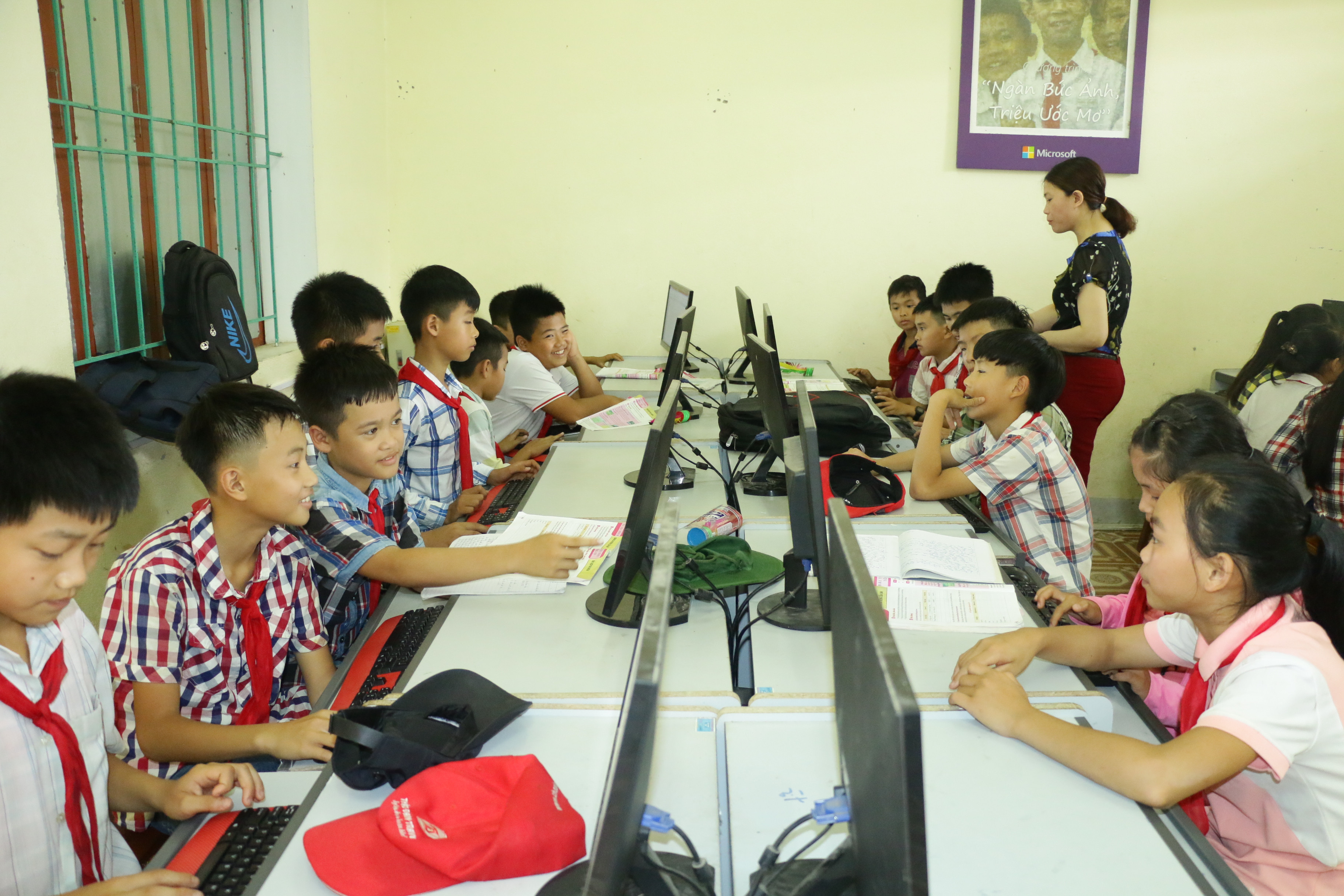 |
| Computer science class for students at Nguyen Bieu Secondary School - Hung Nguyen. Photo: My Ha |
At the high school level, although Information Technology is a compulsory subject, practical training has long been limited and ineffective. For example, at Que Phong High School, which currently has over 1,600 students in 42 classes, only 50 computers are still usable.
Recently, a supervisory team from the Provincial People's Council also surveyed the teaching of Information Technology in several standard schools in Quynh Luu district and found many shortcomings, including the low utilization rate of the computer labs.
For example, at Quynh Luu 1 High School, a survey of an 11th-grade class revealed that while there have been 8 computer science lessons since the beginning of the school year, the first practical session was only held at the end of October. Given these difficulties, it is clear that implementing the National High School Graduation Examination on computers requires a specific roadmap.
In my opinion, in the first year, the Ministry should organize the exam on a voluntary basis, allowing students to register on their own. Once the implementation is smooth, the Ministry can then standardize it so that schools have time to adapt and implement it thoroughly.”


