
The human organ trade market in China.
It was a decision that Lian Ronghua could never have imagined in her life. She would have to choose between her two sons, which one would live and which one would die.
Having to choose which of her two children would live was the most agonizing decision for a mother. Both of her sons suffered from uraemia, a condition that caused kidney failure, but only one could receive a kidney from their mother, as her husband had high blood pressure and was unable to donate a kidney.
"I can't understand why both my sons are sick," she said, tears streaming down her face. Finally, earlier this year, her eldest son, Li Haiqing, 26, decided to give up his chance at a kidney transplant to his 24-year-old younger brother.
"I want to donate a kidney to my younger sibling because they are young and have a better chance of recovery. Of course, I also hope I can find a kidney before it's too late. But if not, I will still continue with dialysis," Haiqing said.
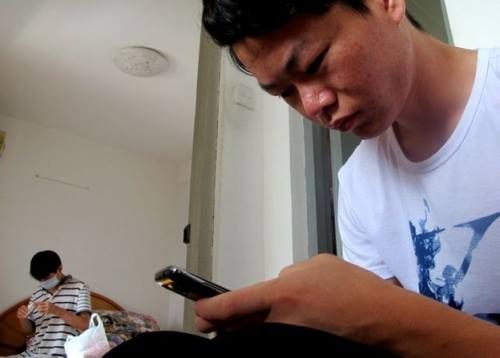 |
| Li Haiqing, right, has decided to give up her chance at a kidney transplant to her 24-year-old younger brother. Photo: BBC |
Supply is insufficient to meet demand.
Many Chinese people resort to buying kidneys on the black market due to a shortage of organs supplied by the government, while those who refuse have to wait with slim hope.
According to the BBC, for many years, the Chinese government had to use organs taken from executed prisoners to meet domestic needs. Following international condemnation, Beijing announced this practice earlier this year, but officials admit it will be difficult to enforce. The government now relies entirely on voluntary organ donations.
Authorities have established a national organ bank to distribute organs to those most in need. However, many critics argue that this banking system is being abused and that those with connections are often given priority.
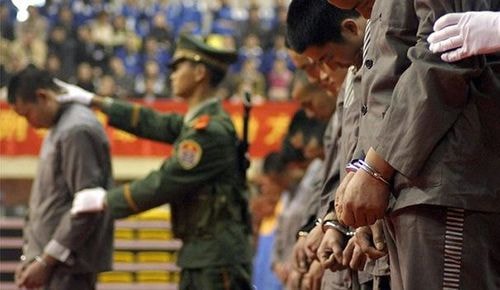 |
| China once had to use organs harvested from executed prisoners to meet domestic demand. Photo: AFP |
The biggest challenge facing the government right now is convincing people to donate organs.
Many Chinese people believe that the bodies of the deceased are sacred and should be buried intact to show respect to their ancestors. For this reason, the rate of organ donation in China is among the lowest in the world, at only 0.6 per million people. In Spain, the rate is 37 per million people.
The "black market" is thriving.
The government says more than 12,000 transplants will be performed this year, an increase from when organs from prisoners were used for surgery. However, with an estimated 300,000 people needing organs for transplants, this enormous demand has fueled a thriving "black market."
A 21-year-old man, who wished to remain anonymous, said he agreed to sell his kidney for $7,000 to pay off gambling debts. He described a clandestine world where organ traffickers organize transactions via the internet.
"Initially, I was taken to a hospital where they collected blood samples and conducted tests," he recounted. "Then I had to wait at a hotel for several weeks until they found a suitable match."
"Then one day a car came to pick me up. The driver asked me to blindfold myself. We drove for about half an hour on a bumpy road. When the blindfold was removed, I found myself on a farm. Inside, there was a fully equipped operating room, and doctors and nurses in uniforms," he continued. "The woman who received my kidney was there with her family. We didn't say anything to each other. I felt scared, but then the doctors proceeded with the anesthesia. I woke up on a different farm, and my kidney was gone. The buyer wanted to live, and I wanted the money."
The case of this young man has lifted the veil on lucrative illegal organ trafficking operations where traffickers employ military-style tactics to operate in the shadows.
One of those who refused to buy a kidney illegally is Li Haiqing. Although he desperately wants a transplant, he says he will only accept a legally obtained kidney. While waiting for the surgery, he has to go to the hospital three times a week for dialysis.
Haiqing dreams of building a successful business career, but that dream may never come true. His life has come to a standstill. Like many others here, Haiqing fears he will die before receiving a transplant.
According to VNE


