Every household in Huaxi Village was provided with a villa and a car, while each resident was said to have at least $140,000 in their bank account.
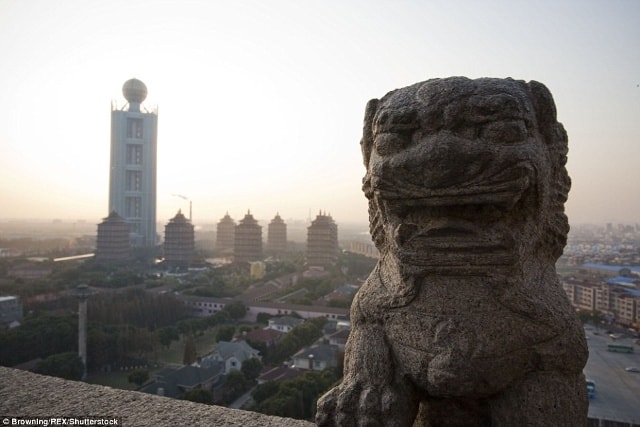 |
| Established in 1961, Huaxi Village in Wuxi City, Jiangsu Province, is considered the wealthiest village in China. The village covers a total area of 97 hectares, just over twice the size of Vatican City. Photo: Browning. |
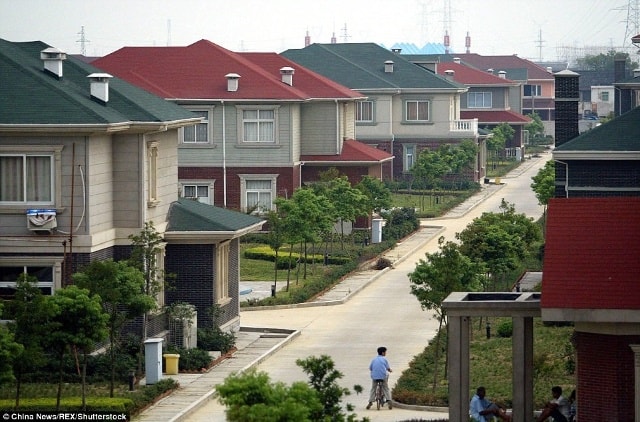 |
| Rising from a backward, purely agricultural village with a population of 600, Huaxi Village now has approximately 2,000 residents alongside over 20,000 migrant workers. Each household in Huaxi Village is provided with a European-style house and a car. Photo: China News. |
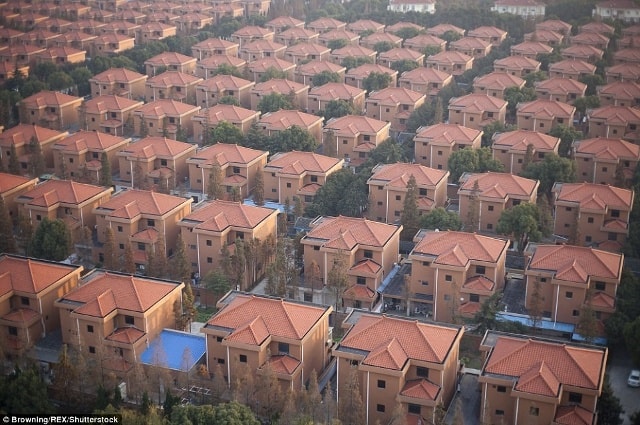 |
| In 2004, Huaxi Village claimed its average annual income was nearly $18,000, 40 times the average income of Chinese farmers. Each of the village's 2,000 residents was said to have at least $140,000 in their bank accounts. Photo: Browning. |
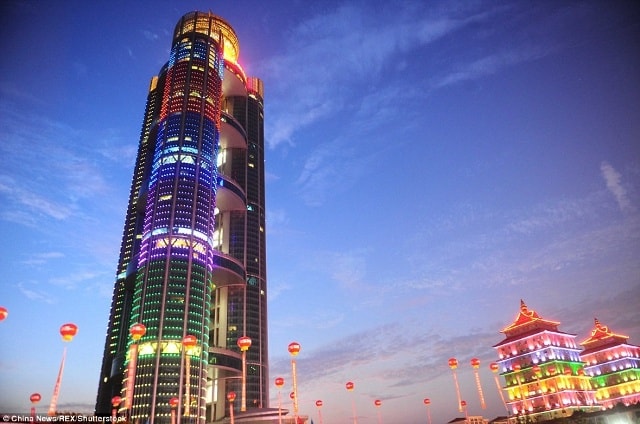 |
| The 72-story Longxi Hotel, built at a total cost of $430 million, was completed to commemorate the 50th anniversary of Huaxi Village in 2011. At 328 meters tall, it is taller than the Eiffel Tower in Paris, the Chrysler Building in New York, or the Shard in London. Photo: China News. |
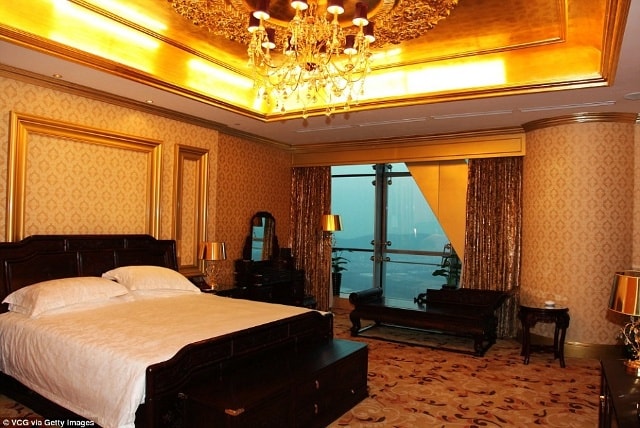 |
| The hotel has a total of 826 rooms, including 16 presidential suites, one of which is decorated in gold and costs up to $14,500 per night. Photo: Getty Images. |
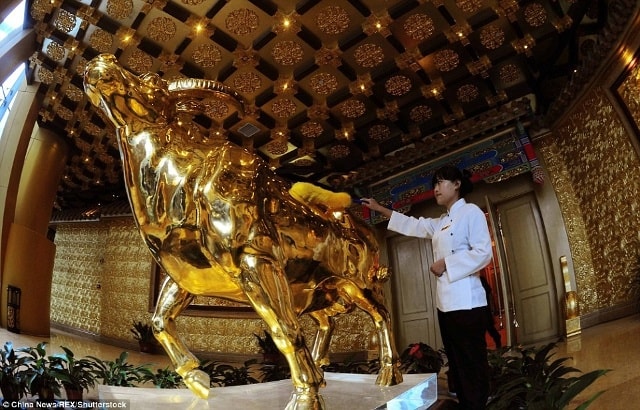 |
| On the 60th floor of Longxi, there is a statue of a buffalo made of gold, weighing one ton. Photo: China News. |
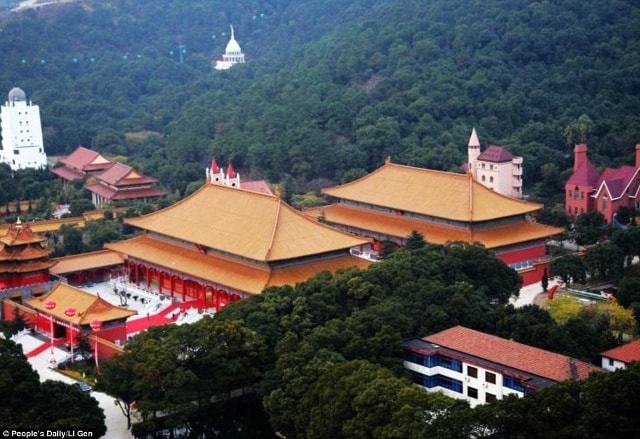 |
| Huaxi Village features a theme park with replicas of famous architectural landmarks in China and around the world. The photo shows a replica of the Forbidden City, the imperial residence of the Ming and Qing dynasties in Beijing. (Photo: People's Daily) |
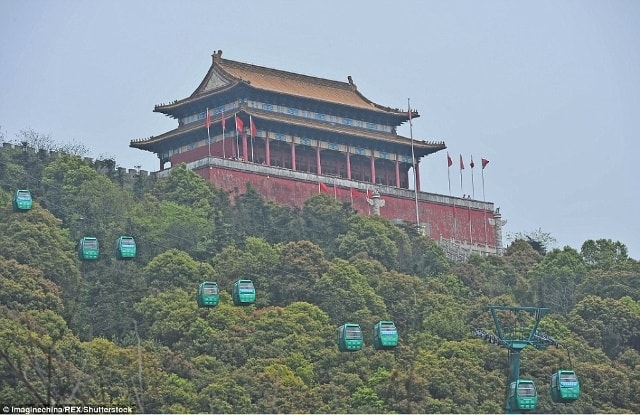 |
| Tiananmen Square, the main gate leading to the Forbidden City in Beijing, stands out against the green backdrop of trees and the tourist cable car system in Huaxi. Photo: Imaginechina. |
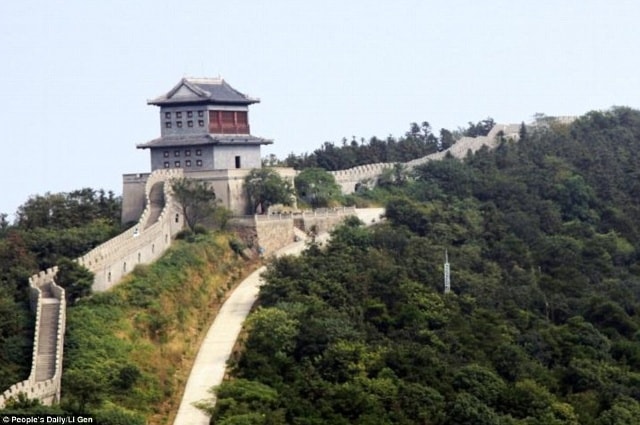 |
| Huaxi Village recreates a section of the Great Wall of China. The theme park was built to serve people who don't have time to travel because they work seven days a week in factories. Photo: People's Daily. |
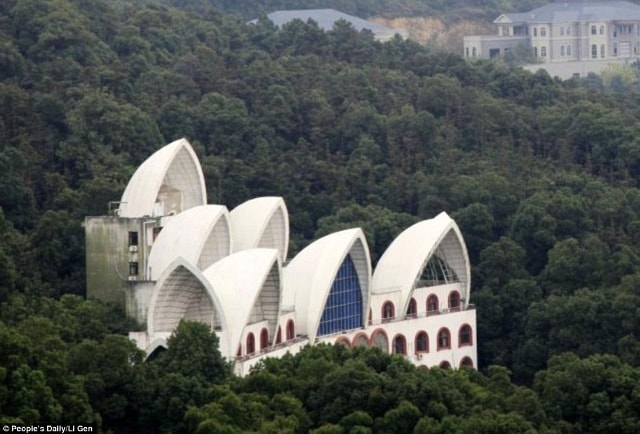 |
| Sydney's famous "shell-shaped" opera house (Australia) was also brought to Huaxi. Photo: People's Daily. |
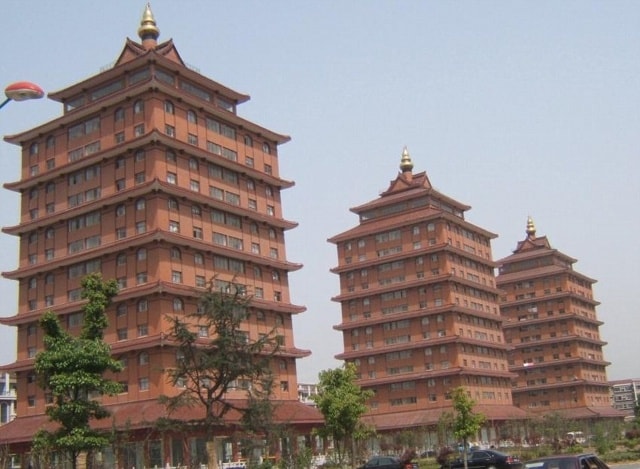 |
| Shopping malls built in the style of temples are an architectural highlight in West China. The spires of these structures are said to be made of gold. Photo: Daily Mail. |
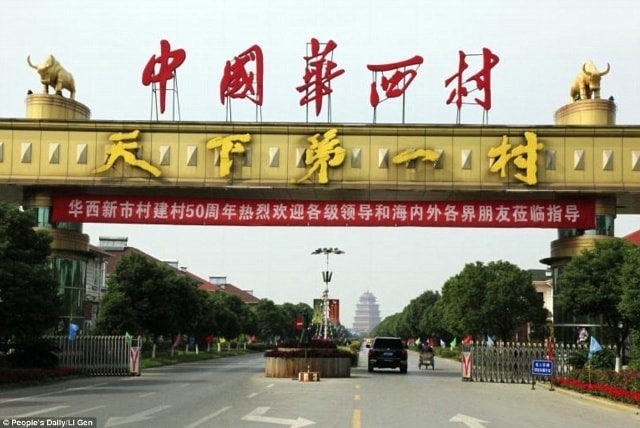 |
| The main gate leading into Huaxi Village bears the inscription "The world's first village." For many years, the Chinese government has promoted Huaxi as a model of economic reform in the country. Photo: People's Daily. |
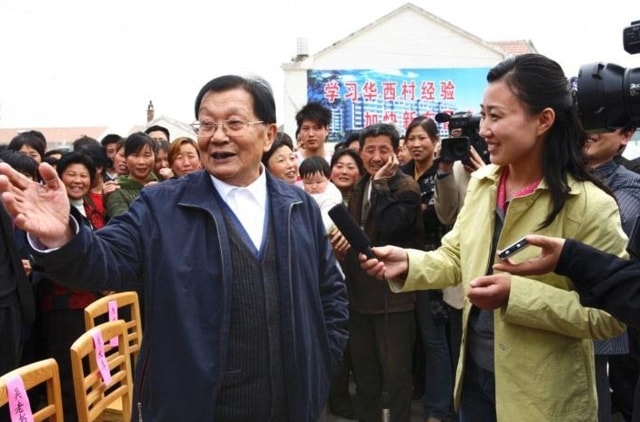 |
| Former Party Secretary Wu Renbao (left), who passed away in 2013, is considered the man behind the miraculous transformation of Huaxi. The village's main source of income comes from mining and metallurgy, however, how Huaxi rose from poverty to its current wealth remains largely a mystery. Photo: Daily Mail. |
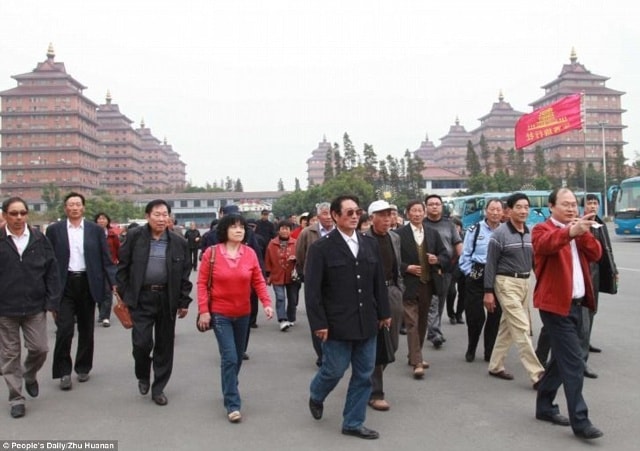 |
| Huaxi's budget now also comes from tourism, with a large number of visitors flocking there each year to witness the village's wealth firsthand. Photo: People's Daily. |
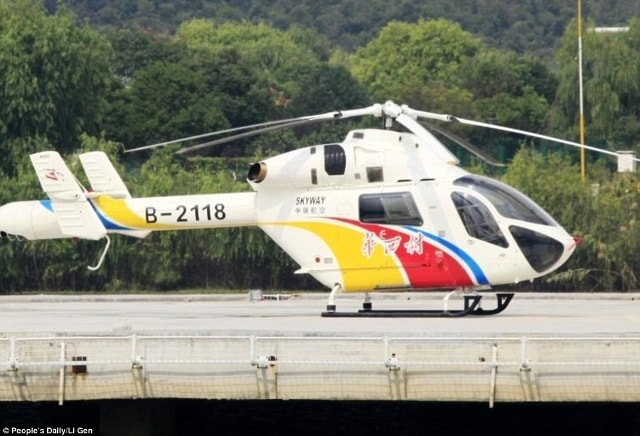 |
| China's "number one village" even has its own helicopter to serve its residents. People in Huaxi also enjoy completely free healthcare and education services. Photo: People's Daily. |
According to Zing



