
Natural disasters on the Korean Peninsula
(Baonghean) - Natural disasters have never been absent from world history. On the one hand, they pose a threat to humanity, but some argue that they are a natural balancing act. However, there are times when natural disasters are "exploited" by humans to serve their own personal purposes…
South Korea "weakened" by COVID-19
On Wednesday, June 17th, the World Health Organization (WHO) released its conclusions regarding the MERS outbreak in South Korea and warned that "this is a wake-up call for all countries." Since then, the South Korean Ministry of Health has continuously released updates on the increasing number of new infections and deaths.
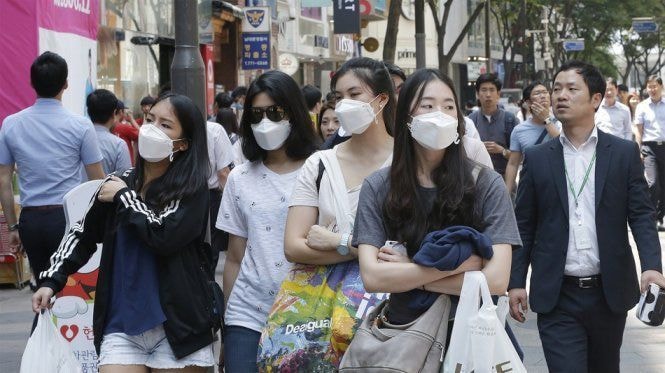 |
| Many tourists wear face masks when visiting South Korea due to concerns about the MERS outbreak. Photo: AP |
Earlier, on Tuesday, June 16th, the WHO's emergency committee met to discuss the uncontrolled spread of the virus in South Korea. This is also the largest outbreak outside of Saudi Arabia – the initial source of the disease caused by this group of viruses. Speaking at a press conference in Geneva, WHO Deputy Director for Health and Safety, Keiji Fukuda, said: “The outbreak in South Korea was truly a surprise to the world,” and this was one of the reasons for the somewhat delayed response from health agencies and organizations. He concluded that it serves as a lesson for other countries to “be prepared” to respond to outbreaks of this type.
He also stated that the Committee's general view was that "the epidemic situation is of great concern and requires attention, but it is not serious enough to pose an urgent threat to public health at the global level." At the time of his statement, 162 people in South Korea had been diagnosed with COVID-19, and 19 had been officially declared recovered. With a mortality rate of 10.7%, the disease has caused fewer deaths in South Korea than in the main outbreak area of Saudi Arabia, which has recorded 412 deaths out of 950 infections (35%) since 2012. There is currently no specific vaccine for the disease.
Similar to other respiratory diseases, MERS not only threatens public health but also has serious impacts on other sectors of society. One of these is the tourism industry: according to statistics from the Korea Tourism Organization on June 14th, more than 100,000 tourists (mainly from Taiwan, China, and Japan) decided to cancel their tours to South Korea after receiving information about the outbreak. This number will certainly increase after the WHO's conclusion on June 17th, recommending that tourists limit travel to South Korea.
Not only for foreigners, but also for locals, movement has been significantly restricted. People are advised to avoid crowded places, wear masks, and take preventative measures – leading to a noticeable decrease in consumer spending. Large shopping malls recorded a 16.5% decrease, while supermarkets saw a 3.4% drop in the first week of June compared to the same period last year. Movie theater attendance decreased by 54.9% and museum visits by 81.5%.
The South Korean government has implemented measures such as free insurance for foreign tourists, lowered loan interest rates, and provided financial support to small and medium-sized enterprises (SMEs) in sectors severely affected by the epidemic. Currently, according to calculations by the Nomura Research Institute, COVID-19 is causing South Korea to lose 0.3% of its 2015 GDP, and if timely measures are not taken to contain the crisis, the final figure could reach 1%. That is enough to "shake" an economy already in a "sensitive" state with public debt exceeding 760 billion won (609 billion euros). In this context, COVID-19 seems to have "added fuel to the fire"—not good news for South Koreans.
Red alert regarding food security in North Korea.
Representatives of the World Food Program have expressed concern about potato, wheat, and barley production in North Korea, which is predicted to be up to 50% lower than 2014 levels. The crop failure is attributed to severe droughts that have lasted since the beginning of summer.
On June 16, the state news agency KCNA issued a warning: "This is the worst drought in the past 100 years in the history of the Democratic People's Republic of Korea, causing serious damage to agriculture." The rare rain predicted for June 20 is eagerly awaited across the peninsula, as the drought means a threat to food security.
On June 18, Liliana Balbi of the United Nations Food and Agriculture Organization (FAO) stated, "The situation is very serious and worrying." FAO representatives conducted on-site surveys on June 10 and reported that many wells and reservoirs have dried up. This year's rice production is expected to reach only 2.3 million tons, a 12% decrease compared to 2014.
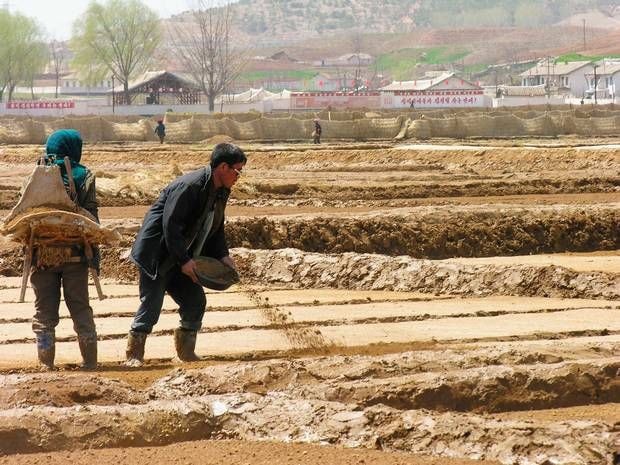 |
| The worst drought in 100 years is ongoing in North Korea, causing extensive damage. |
According to a UN report from April, 70% of North Korea's population faces the risk of "food insecurity." In response, the World Food Programme has raised $111 million to help this community. David Kaatrud, the program's director, stated: "Our mission is not just to be 'guards,' but also to be ready to respond if necessary." However, receiving assistance from international organizations is a complex issue for Pyongyang, as North Korea wants to control the distribution of aid packages.
On June 18, China also announced its intention to provide food aid to North Korea, while the US remained silent on the issue – an understandable given the economic sanctions imposed on North Korea due to its nuclear and ballistic missile activities. Also on June 18, Danny Russell, the US State Department's East Asia correspondent, urged North Korea to abandon its "illusion of being free to pursue its nuclear program while simultaneously receiving economic support from the international community." North Korea has yet to respond to this message.
It seems that nature is not on North Korea's side, especially in the context of tense negotiations between the country and other nations on the nuclear issue. Many have recalled the famine of 1994-1997, which killed over a million people. And even more dangerous than the famine itself is the turning of it into a political weapon – something many experts have noted and warned against.
Thuc Anh
(According to Le Monde)


