
The impetus for innovation in the journey of creation.
Time renews itself with spring. Forests "renew" themselves by shedding their leaves. A country must renew itself, according to the laws of reality, in order to develop.
Time has an age. More accurately, it is the cycle of nature, of creation – it has a beginning and an end. Spring marks the beginning of a new year. It is also a sign of time, marking the end of a unit of time – the old year. Thus, self-renewal is not only present in all things but is also an attribute of time.
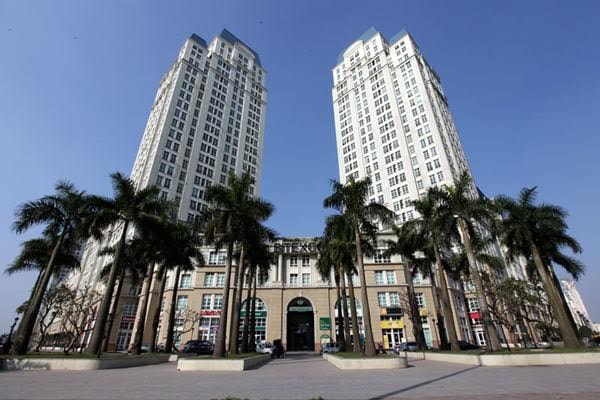 |
Self-renewal is not only present in all things but is also an attribute of time. (Photo: VNN) |
The stages of social and scientific and technological development are often referred to as revolutions. From the 18th century to the present, the industrial revolution has occurred four times, while social revolutions, although occurring continuously, have not yet met expectations. The lag between social revolutions and scientific and technological revolutions is natural, but if the lag is too great, it leads to stagnation. Progress can be predicted, but stagnation has unpredictable complications.
If we liken the four industrial revolutions to four "carriages" of a train running on a 300-year timeline, then Vietnam is a "passenger" who boarded the third "carriage" 40 years ago – the electronics, semiconductor, computer, and internet communications revolution – but was a mechanic in the first "carriage" more than 200 years ago – the steam engine and mechanical revolution – and the second "carriage" more than 100 years ago – the internal combustion engine, electromechanical, and electrification revolution – in the mid-19th century.
At a press conference on January 18th, on the sidelines of the Davos conference, Prime Minister Nguyen Xuan Phuc also shared with international media outlets Vietnam's determination to integrate comprehensively and deeply into the global economy. He affirmed, "Vietnam is focusing on building an honest, constructive government that best serves the people and businesses, considering the success of investors as its own success."
Reforming is not about changing concepts, but about changing ways of thinking, changing specific ways of doing things, which falls under the category of institutions. If the government is reforming but the institutions do not keep pace with the reforms, it will be difficult to achieve the goal. Therefore, a second wave of reform is necessary.
Specific assignments, delegation of authority, and responsibilities are necessary to create a balance and checks and balances on power. These are the solid pillars of the institutional framework.
We must "create" a legal framework for business activities; resolutely enforce legal sanctions against economic violations, breaches of contract, and harmful environmental impacts caused by human activities. Alternatively, the government can reclaim land from citizens by creating projects, developing plans, and implementing compensation "according to procedures" and "legal regulations." Poor traffic and urban management leads to road closures whenever there's a traffic jam, and creating difficulties for air travel to alleviate congestion. Anything difficult to manage is simply banned! This means that if we manage by exploiting subjective shortcomings to burden objective ones, how can society develop? Citizens are left with no choice but to comply with "the law" and "the procedures."
To overcome the inertia of the organizational structure, there must be a law on talent competition. Recruitment into the system must be transparent, and the phenomenon of nepotism and cronyism within a locality or government agency—familial infighting, nepotism, and clinging to power—must be combated.
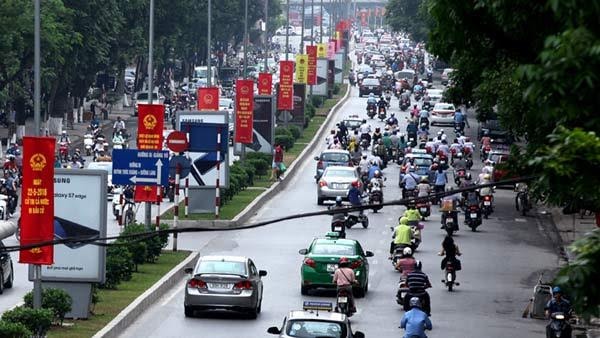 |
A proactive government model also requires the creation of a more open and innovative legal framework. (Photo: VNN) |
A constructive government model also requires the creation of a more open and innovative legal framework: Citizens need legal recognition of their property rights over land, the abolition of land ownership limits, and protection of copyrights; loss-making state-owned enterprises must be dissolved. All state activities, except for matters of national security and defense, must be transparent and open. Without timely institutional reform, the journey towards a constructive government will be slow.
Spring is the beginning. Hopefully, this Spring of 1917 will mark the beginning of a socially significant institutional and institutional reform, laying the foundation for a constructive government to operate the administration and economy at the pace of the world's Fourth Industrial Revolution. The time lag from bureaucratic centrally planned economy to "Reform" was only 10 years. Reform has now lasted 30 years; the novelty is gone, and the delay, as reflected in the situation, has lasted at least 15 years without any sign of "newness." Are we perhaps falling into stagnation and trapped in the "middle-income trap"?
Time renews itself with spring. Forests "renew" themselves by shedding their leaves. A country must renew itself, according to the laws of reality, in order to develop.
According to VNN


