
Agarwood from Quy Chau
(Baonghean) - Now, Quy Chau is entering the peak season for making incense sticks for the Lunar New Year. Throughout the villages, the air is filled with a warm, sweet, and familiar fragrance… A scent that evokes reunion and the deep human connection of the land and people of Quy Chau.
In Quy Chau district, almost everyone in Tan Lac town knows about Mr. Ho Viet Thang. His family's incense is famously fragrant, and he was also the first to start cultivating the root of the incense tree – the main ingredient in incense production…
| RELATED NEWS |
|---|
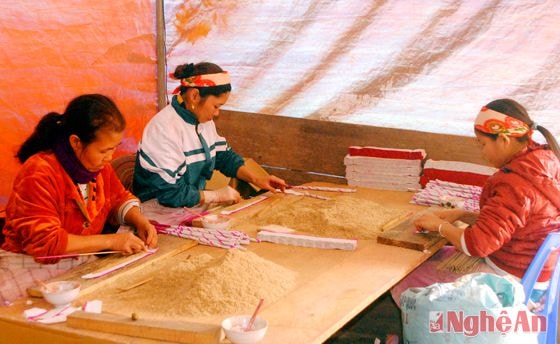 |
| The incense production workshop of war veteran Nguyen Ngoc Oanh, Tan Lac town, Quy Chau district. |
In his small house nestled amidst a vast garden of fragrant roots, Mr. Thang paused his work wrapping incense sticks and recounted: "The root plant..."
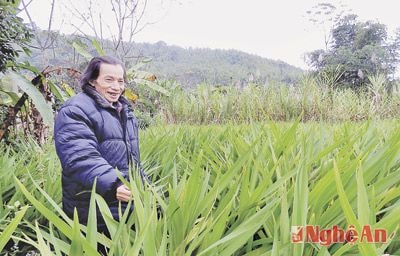 |
| Mr. Ho Viet Thang with his nursery of fragrant root plants. |
Incense roots were discovered by chance around the 1960s, and the incense-making craft here dates back to that time. At that time, incense roots grew naturally in abundance in this mountainous forest region. However, over time, with the development of the incense-making industry, incense roots in Quy Chau gradually became depleted, forcing incense producers to purchase raw materials from other places. About 5-6 years ago, incense-making villages in Tan Lac town had to spend approximately 6 billion VND per year to buy incense roots from other districts…
To ensure self-sufficiency in production materials, Mr. Thang considered cultivating fragrant root plants using the method of dividing clumps. He put his idea into action, planting 3 sao (approximately 0.3 hectares) as a trial. The initial trial faced many difficulties, but after some time, it proved effective, providing him with enough raw materials to produce hundreds of thousands of incense sticks. Seeing his family's success, other villagers came to learn from him and follow suit. Without keeping his methods a secret, he shared his cultivation experience with them. Now, fragrant root plants are grown throughout Quy Chau district.
Although the fragrant root plants had taken root in his garden, Mr. Ho Viet Thang was still not satisfied. He continued to worry about propagating fragrant root plants using the method of dividing clumps, as the yield was not high enough and supply could not meet demand. Mr. Thang thought about propagating them using cuttings and seeds to reduce the cost of seedlings and increase productivity. However, lacking sufficient production experience, he presented this idea to the district and provincial authorities. In 2012, a project to build a fragrant root plant nursery, implemented by the Department of Science and Technology and with the district's agricultural extension station as the investor, was established, with Mr. Thang's family as the contractor. This elderly farmer, over seventy years old, invested nearly 50 million VND to build a 500m2 nursery for cuttings and seeds.
Lighting a large, homemade incense stick, the sweet, warm fragrance wafting through the air, Mr. Thang sipped his tea and slowly recounted: After nearly two years of experimentation, the nursery has yielded its first results. Last year, he sold about 7,000 saplings to several households near his home in Tan Huong 1 and 2 blocks, each priced at 700 dong. These young trees all grew quickly, ensuring quality, high yields, and a distinctive fragrance unique to Quy Chau, unlike incense grown in other regions. He also shared his secrets of grafting and seed propagation with these families… Mr. Thang not only enriched his own family but also created opportunities and helped many other families follow suit, gradually rising out of poverty.
The entire Quy Chau district currently has 7 incense-making villages, with Tan Lac town having 2 villages producing incense sticks, comprising over 100 households. Each year, these villages supply millions of incense sticks to the market. Many incense-making households in Quy Chau have established reputations and brands, and the Nguyen Ngoc Oanh incense-making household in Tan Lac town is one of them. Five years ago, driven by a desire to overcome difficulties and rise above challenges, Mr. Oanh sought out experienced incense makers to learn the craft, then passed the knowledge on to his family members. Mr. Oanh shared: "The essence of incense making lies in hard work and dedication. Making an incense stick requires many preparation steps, such as making the base, preparing the paper, gathering the raw materials, and wrapping the incense. For the incense to be fragrant, the most important thing is the secret of mixing the ingredients. Incense roots, sugarcane bagasse, cloves, cardamom, cinnamon, star anise, and agarwood powder must be in specific proportions."
To ensure a warm and fragrant incense during the Lunar New Year, incense makers in Quy Chau in general, and Mr. Oanh's family in particular, must prepare from the beginning of the year. Immediately after the incense-making competition at the Hang Bua Festival, families buy young bamboo and saw it into sections for different lengths of incense sticks. These sections are then soaked in a pond. After two months, the bamboo is retrieved, cleaned, dried, and chopped; they also buy incense roots and other ingredients to prepare the incense powder. By the ninth lunar month, the incense makers cut the paper, dye it red, dry the sticks again, and begin wrapping the incense. From the tenth to the twelfth lunar month is the peak season for incense production.
After two years, the incense sticks made by Mr. Oanh's family were well-received by consumers, and demand for incense during Tet (Lunar New Year) exceeded supply. Family members participated, but even that wasn't enough to keep up with demand. Mr. Oanh then considered hiring workers. He approached impoverished families in surrounding villages, inviting them to work at his workshop. Last Tet, his workshop employed five workers, producing over 1 million incense sticks. Each worker received 6 million dong per month. After deducting expenses, Mr. Nguyen Ngoc Oanh's family earned a profit of over 50 million dong. In 2013, his family was recognized by Quy Chau district as a policy beneficiary household that overcame difficulties and achieved economic development. Even more commendable, by engaging in incense making, Mr. Oanh not only created jobs for his family but also helped several needy people in the surrounding area earn a living.
Mr. Oanh said: "Now, the incense-making industry in Quy Chau has developed throughout the district, from Tan Lac to Chau Tien, Chau Hoi, and Chau Binh. Quy Chau incense has a nationwide brand and is favored by many people. Each Tet incense season brings in 15-17 billion VND in revenue, providing employment and decent income for thousands of workers... Quy Chau incense has a rich, fragrant aroma, adding flavor to the spring season, and is favored by consumers; helping the people of Quy Chau escape poverty and rise to prosperity..."
Thanh Son


