
Ebola vaccine trials have been successful.
More than 7,500 people participating in the trial did not contract the Ebola virus thanks to the VSV-EBOV vaccine. Scientists say the vaccine is 100% effective, raising hopes of completely controlling the pandemic.
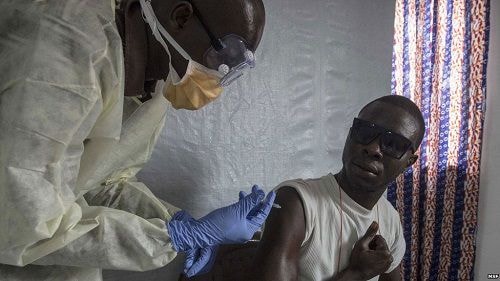 |
| Information about the success of the VSV-EBOV vaccine opens up prospects for controlling and eradicating the Ebola epidemic in West Africa. Photo: BBC |
Since the deadly Ebola virus swept through West Africa last March, scientists worldwide have been racing tirelessly to find a way to contain this novel and deadly infectious disease within days. On July 31, the World Health Organization (WHO) announced the first results of an ongoing trial in Guinea. According to the WHO, the VSV-EBOV vaccine successfully protected all 7,500 people at risk of exposure to the deadly virus.
Trials are ongoing, and the WHO views the results as "promising." The Wellcome Trust, one of the organizations funding the research, described the vaccine trial success as a breakthrough.
According to the Telegraph, clinical trials began on March 23rd with family members, neighbors, and healthcare workers who had contact with Ebola patients. Currently, no cases have tested positive for the virus despite close contact with infected individuals. “This is a very promising result, a testament to the efforts of the Guinean government, its people, and our partners in this project. An effective vaccine is a crucial tool for containing the current Ebola outbreak and the risk of future outbreaks,” said Dr. Margaret Chan, Director-General of the WHO.
“The vaccine’s success is a commendable achievement that demonstrates the power of international collaboration and resilience,” Jeremy Farrar, Director of the Wellcome Trust, one of the program’s sponsors, expressed his enthusiasm for the newly announced results.
More than 11,000 people have died since the Ebola outbreak began last March in West African countries such as Liberia, Guinea, Sierra Leone, Nigeria, and Mali. The number of infections has reached over 27,000. Studies show that the Ebola epidemic originated from the first patient, a young boy playing near a colony of fruit bats in the village of Meliandou in Guinea. He died on December 3, 2013, but was not detected as having Ebola. A week later, his mother, his 3-year-old sister, and his grandmother also died. Those who attended the grandmother's funeral subsequently contracted the disease, causing the virus to spread rapidly to other villages.
The VSV-EBOV vaccine, developed by the Canadian pharmaceutical company Merck, is being deployed in collaboration with the WHO, Doctors Without Borders (MSF), and the governments of Canada, Norway, and Guinea. According to the BBC, the vaccine combines a portion of the Ebola virus with another, safer virus to "train" the immune system to fight against Ebola. The trial is being conducted using a ring vaccination method, meaning all individuals at risk of infection in a designated outbreak area are vaccinated – a method previously used to eradicate measles.
Scientists have expressed delight at the initial successes in the trials and confidence in the prospect of quickly containing the Ebola outbreak. “This news is a gift to West Africa and the world,” said Dr. Sakoba Keita, Guinea’s Ebola response coordinator.
According to VnExpress


