
Earning 20 million VND per month allows you to buy social housing.
This is one of the provisions decided by the Government in Decree 261 amending and supplementing decrees on social housing, issued on October 10, 2025 and effective from the date of signing.
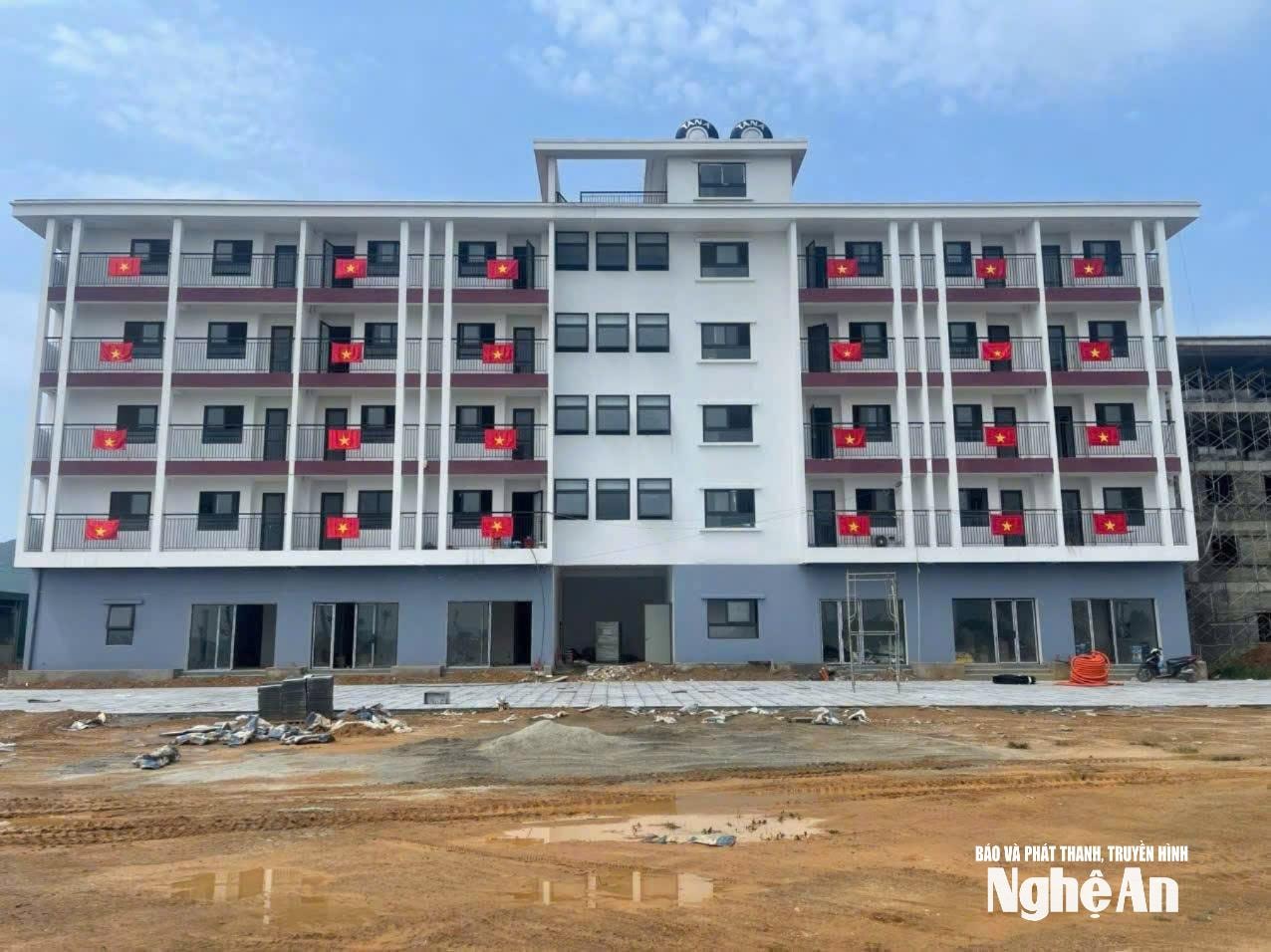
Raise the income ceiling.to be considered for purchasing or renting social housing.
Decree 261/2025/ND-CP amends and supplements several articles of Decree 100/2024/ND-CP detailing some provisions of the Law on Housing regarding the development and management of social housing, and Decree 192/2025/ND-CP detailing some provisions and measures for implementing Resolution 201/2025/QH15 of 2025 on piloting some specific mechanisms and policies for the development of social housing.
Based on Clause 2, Article 1 of Decree 261/2025/ND-CP amending and supplementing Clauses 1 and 2, Article 30 of Decree No. 100/2024/ND-CP as follows:
Article 30. Income requirements
1. For the subjects specified in Clauses 5, 6, and 8 of Article 76 of the Housing Law, the following income conditions must be met:
a) In cases where the applicant is unmarried or confirmed as single, their average monthly net income must not exceed 20 million VND, based on the wage and salary table certified by the agency, unit, or enterprise where the applicant works.
In cases where the applicant is unmarried or certified as single and raising minor children, their average monthly net income must not exceed 30 million VND, calculated according to the wage and salary table certified by the agency, unit, or enterprise where the applicant works.
b) If the applicant is legally married, the applicant and their spouse must have a combined average monthly income of no more than 40 million VND, based on the wage and salary table certified by the agency, unit, or enterprise where the applicant works.
c) The period for determining income eligibility as stipulated in points a and b of this clause is within 12 consecutive months, calculated from the time the competent authority makes the confirmation.
d) Based on the conditions and income levels of each area in the locality, preferential housing policies for officials, civil servants, and public employees, and the number of dependents as prescribed by law, the Provincial People's Committee may decide on the adjustment coefficient of income levels specified in points a and b of this clause, but not exceeding the ratio between the average per capita income in the locality and the average per capita income of the whole country; and decide on policies to encourage access to social housing for beneficiaries of social housing support policies with three (03) or more dependents in the same household.
2. In the case of individuals specified in Clause 5, Article 76 of the Housing Law who do not have an employment contract, they must meet the income requirements stipulated in Clause 1 of this Article and have this confirmed by the commune-level police agency where they reside permanently, temporarily, or currently live.
Within 7 days from the date of receiving the application for verification, the commune-level police agency where the applicant resides permanently or temporarily, or where they reside at the time of the application, shall use the information from the population database to verify the income eligibility.
Download full textDecree 261 is here!
Simultaneously developing commercial housing and making breakthroughs in promoting social housing.
Regarding this matter, in his concluding remarks at the second meeting of the Central Steering Committee on Housing Policy and Real Estate Market on October 11th, Prime Minister Pham Minh Chinh highly appreciated the preparation by the Ministry of Construction and the Government Office, as well as the responsible, insightful, and practical contributions of the delegates. These contributions frankly pointed out existing shortcomings, limitations, difficulties, and obstacles, and proposed tasks and solutions to further remove "bottlenecks" to create breakthroughs in social housing development.
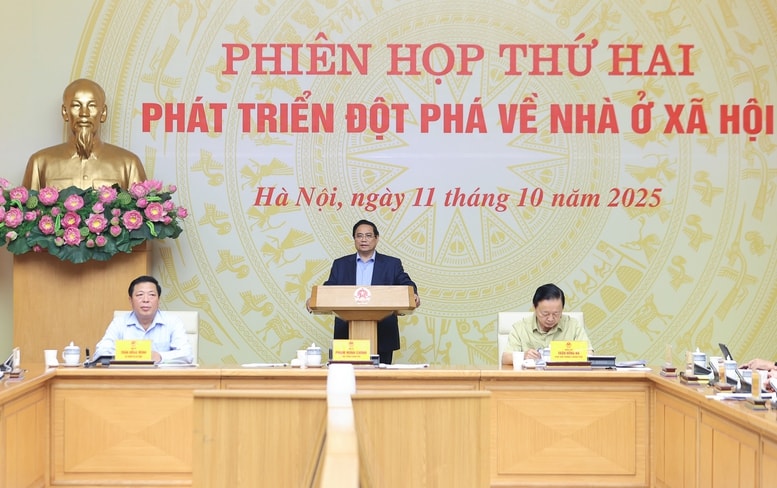
The Prime Minister assigned the Ministry of Construction to take the lead, in coordination with the Government Office, in fully incorporating relevant opinions, finalizing and submitting appropriate documents for promulgation to ensure unified, rapid, and effective implementation, meeting practical requirements and conforming to the regulations of the Party and the State.
Summarizing the tasks that have been implemented actively and effectively in the past, while still having shortcomings and limitations, the Prime Minister emphasized that this is a humane policy but must comply with regulations. If there is a lack of mechanisms and policies, proposals should be submitted to the competent authorities; at the same time, it must adhere to market principles, contributing to promoting the healthy and sustainable development of the real estate market, economic development, ensuring social security, political stability, social order and safety, rapid and sustainable national development, and improving the spiritual and material lives of the people.
At the same time, the development of the real estate market and the implementation of social housing policies are closely related and mutually reinforcing. It is necessary to develop commercial housing in a way that is appropriate, in accordance with regulations, while also implementing groundbreaking policies to develop social housing.
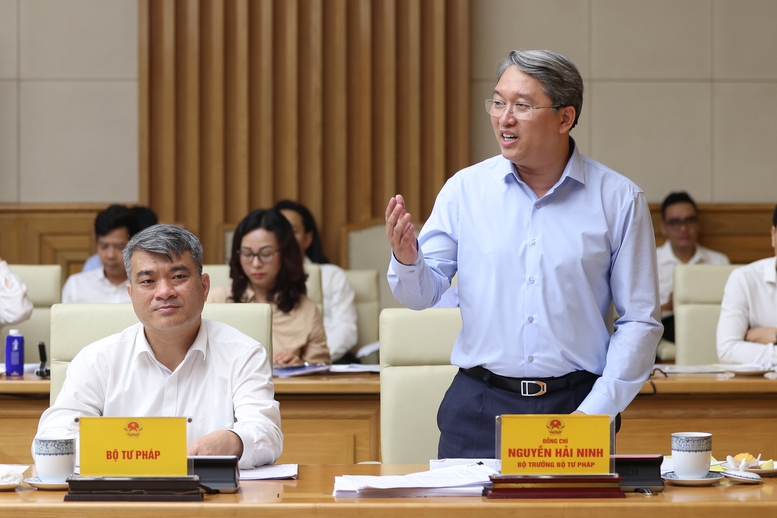
Minister of Justice Nguyen Hai Ninh delivers a speech. Photo: VGP/Nhat Bac
Opinions expressed at the meeting indicated that all localities have a need for social housing, including mountainous, border, and remote areas, with many members of the armed forces, police, and teachers still lacking adequate housing.
According to the Prime Minister, it is necessary to recognize that social housing is not limited to high-rise buildings but can also include low-rise buildings; social housing should not be located in remote, isolated areas or on undeveloped land, but must have complete infrastructure including transportation, electricity, water, telecommunications, social services, healthcare, culture, and education. The Prime Minister emphasized that "no province is without need," the key is to find the right approach, providing housing that suits the conditions and circumstances of each locality and region, and balancing supply and demand.
Regarding the key tasks and solutions for the coming period, the Prime Minister requested the Ministry of Construction to take the lead and coordinate with other agencies to continue reviewing and perfecting the institutional framework, aiming to remove difficulties and obstacles. If the obstacles lie in the law, the National Assembly should issue appropriate documents at the upcoming session; if they lie in the decree, the Government should resolve them; and ministries and agencies should issue appropriate guiding circulars.
The second set of tasks and solutions is that planning must be stable and long-term, without disrupting existing plans; localities must be proactive in land allocation, carrying out land procedures, and resolving obstacles within their authority. If the issue exceeds their authority or lacks policies, they should continue to propose solutions.
The Prime Minister noted that housing development should encompass multiple segments, including high-end, mid-range, and low-income housing, ensuring harmonious development and avoiding excessive disparities in essential infrastructure (transportation, electricity, water, telecommunications) and social infrastructure (education, healthcare, sports, culture, etc.).
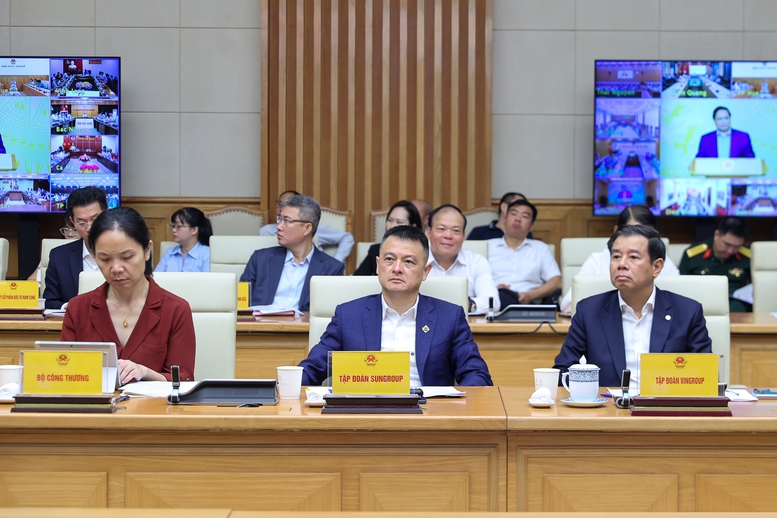
Delegates attending the meeting. Photo: VGP/Nhat Bac
The third group of solutions, the Prime Minister emphasized, must diversify resources, including state support (both central and local); credit capital; bond issuance; private resources, etc.
The Prime Minister also requested that decentralization and delegation of power be promoted, coupled with appropriate resource allocation, improved implementation capacity, enhanced inspection and supervision, streamlined procedures, and reduced input costs. Furthermore, the law stipulates that localities must actively and proactively formulate policies suitable to their local conditions based on the central government's overall policies and be responsible for this.
The Prime Minister urged businesses to cut costs and reduce unnecessary expenses so that the price of social housing would be more reasonable and acceptable; harmonizing the interests of the State, the people, and businesses, and sharing any risks that may arise.
In addition, the Prime Minister requested continued improvements in technology, information systems, databases, and regulations related to the management and supervision of real estate brokerage activities, the operation of real estate exchanges, and the establishment of real estate transaction centers and land use rights managed by the State, in a way that is open, transparent, appropriate, effective, within the proper authority, building upon and further enhancing successful practices, and making additions for greater effectiveness.
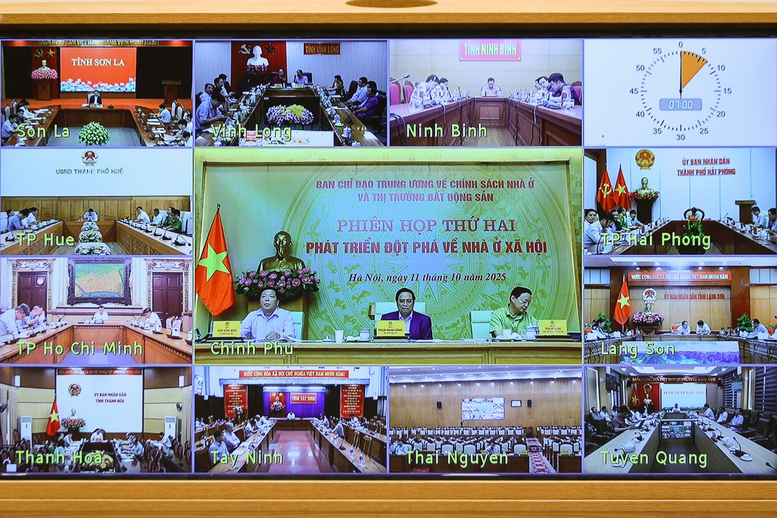
Localities participated in the session online. Photo: VGP/Nhat Bac
Noting a number of specific tasks and solutions, the Prime Minister stated that the mechanisms and policies are relatively good so far, and localities must continue to be proactive and implement them more effectively.
The Prime Minister instructed the Ministry of Construction to continue issuing detailed regulations after the Government has issued Decree 261/2025/ND-CP to provide more specific guidance, such as on the time limit for carrying out procedures for social housing projects.
In addition, the Government will issue appropriate documents, establishing criteria, principles, and guidelines that are not limited to any particular province or enterprise, so that localities can assign tasks to enterprises to build social housing; urging enterprises to proactively and voluntarily undertake tasks, fulfilling their responsibilities to the people, especially low-income individuals and vulnerable groups who need the help of the community and enterprises; and establishing mechanisms to monitor, combat corruption, negative practices, vested interests, and policy abuse.
The Prime Minister instructed the Ministry of Construction to urgently submit a draft decree detailing the National Housing Fund, stating that a more comprehensive and inclusive policy is needed; the scope of beneficiaries should be expanded and more flexible, including officials affected by the restructuring of the administrative apparatus; and preferential policies for renting and lease-to-own options should be implemented in a convenient and flexible manner.
Regarding the proposal to support people in remote areas, the Prime Minister suggested that it is necessary to study the integration of related policies in the implementation of national target programs to avoid duplication.
The Prime Minister instructed the State Bank of Vietnam to expedite the disbursement of the 145 trillion VND credit program for social housing and workers' housing, making it more convenient and accessible while maintaining manageability. Simultaneously, credit extended to speculative real estate projects that could cause a real estate bubble should be controlled. Banks should continue to reduce costs and apply technology to lower lending interest rates for both investors and homebuyers.
The Prime Minister urged strengthening policy communication so that people understand and follow it, and encouraged the replication of advanced examples, good models, effective and innovative practices.
Compiled from chinhphu.vn


