
By using supplementary pollination and forcing custard apples to bear fruit out of season, farmers in Nghe An province are earning considerable profits.
Thanks to the application of supplemental pollination and forcing custard apples to bear fruit out of season, farmers in Nghe An province are earning considerable profits from growing custard apples.
.jpg)
High productivity achieved through the application of pollination methods.
Mr. Le Van Quang's household in Kim Nghia hamlet, Nghi An commune (Vinh City) cultivates 200 custard apple trees. Currently in the peak harvest season, Mr. Quang supplies the market with approximately 2-3 quintals of custard apples daily. The price at the beginning of the season reached 50,000-60,000 VND/kg, but now fluctuates between 30,000-40,000 VND/kg. On average, each custard apple tree yields 30-50 kg of fruit during its productive period.
Mr. Quang said: "Previously, my family only planted a few trees for personal consumption. Later, we realized that custard apple trees thrived in the soil and climate, and were easy to sell, so we expanded the planting area. On average, each custard apple tree yields an income of 1-1.5 million VND per year (2 harvests)."
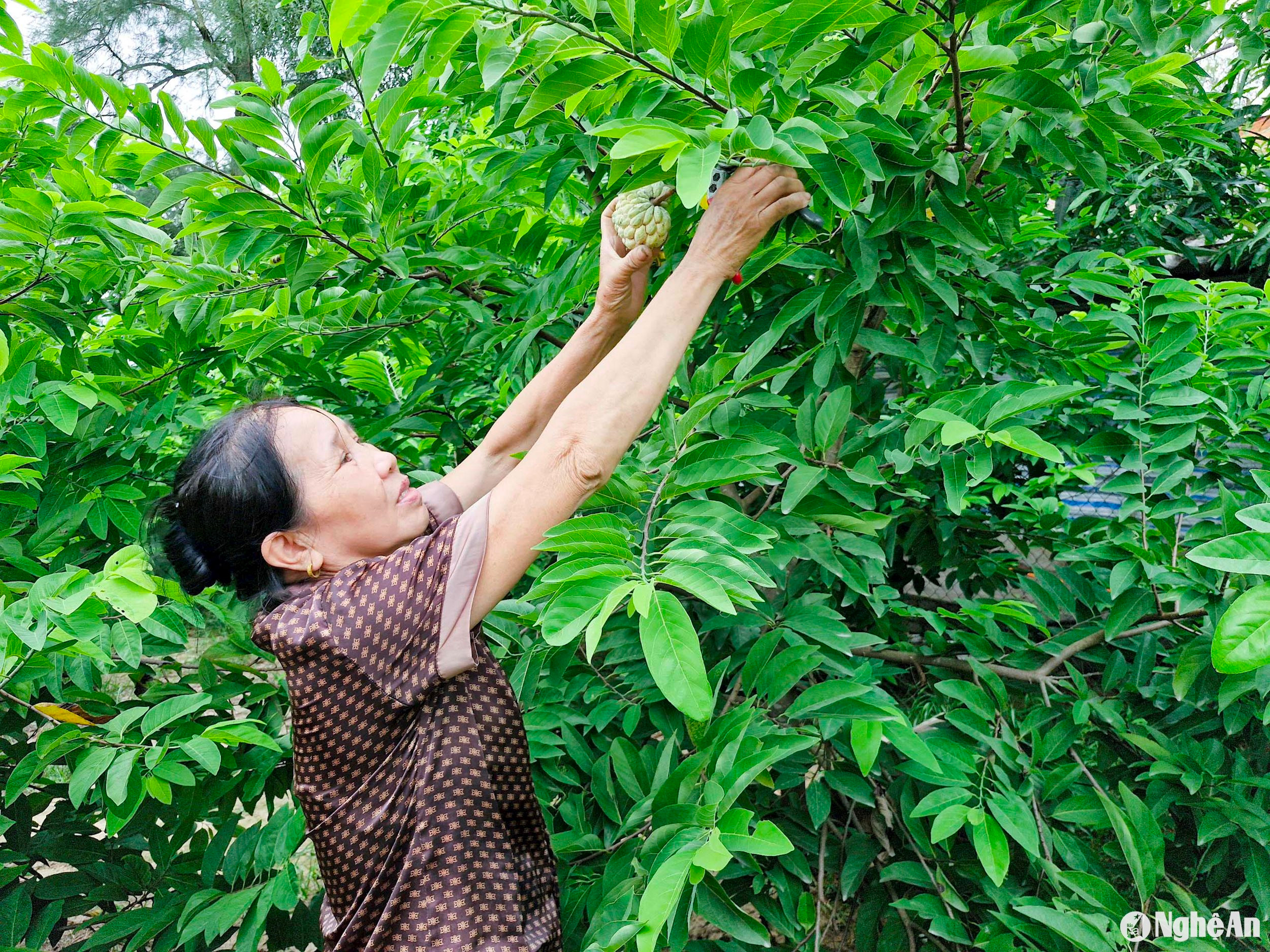
In Nghi An commune, custard apple trees have become the main crop in household gardening. It is estimated that the entire commune has about 10 hectares of custard apple trees, mainly concentrated in Kim Nghia hamlet. Some households have around 300-400 trees, while others have at least a few dozen trees in their gardens.
Over the years, in order to improve the economic efficiency of custard apple cultivation, people in Nghi An and Nghi Duc communes (Vinh City), and Nghi Thai commune (Nghi Loc district) have applied techniques to intensive cultivation of custard apple trees. Accordingly, artificial pollination has been successfully applied by households.
Ms. Pham Thi Phuong, a custard apple grower in Nghi Duc commune, said: "Custard apples bloom abundantly, but the fruit set rate is low. Therefore, if we rely entirely on nature, the efficiency and yield will be low. To achieve high yields and production, we apply supplementary pollination."
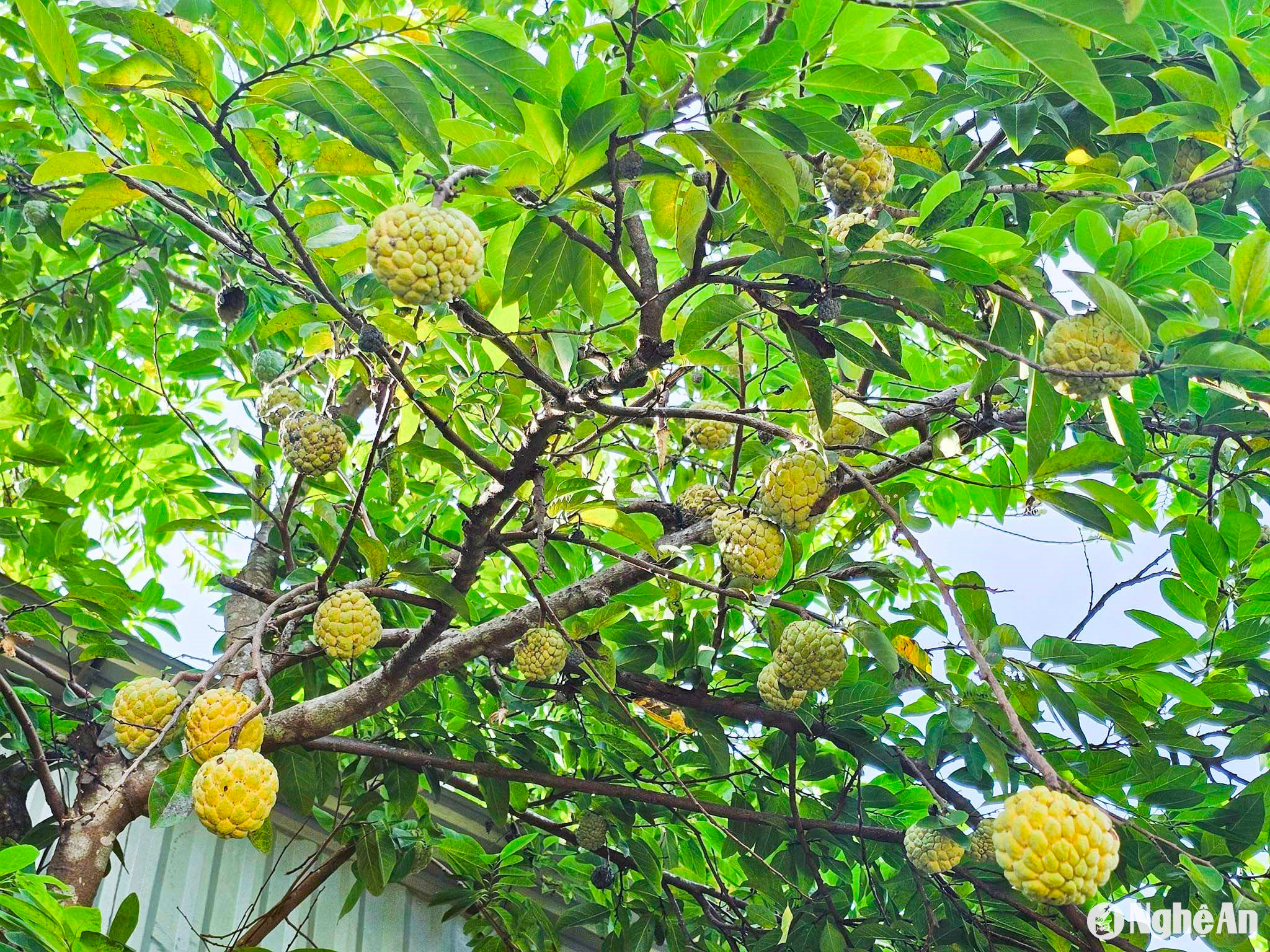
According to Ms. Phuong's experience, before pollination, growers must select and pick flowers with long petals and stamens that have begun to turn opaque white to collect pollen. After picking, all the flowers are placed in sealed paper bags and left overnight for the flowers to bloom and the pollen to fully ripen. The next morning, the petals are removed, the pollen grains are shaken out, and then the flowers are used for pollination.
The flowers selected for pollination are those that have just bloomed, with their petals fully separated. Simply use a pollination tool to collect pollen, then gently push the tip of the bamboo stick and rotate it to ensure the pollen adheres to the stigmas on the plant. Pollinated flowers are marked with a small indentation at the tip of each petal; flowers that bloomed first are pollinated first, and later-blooming flowers are pollinated in subsequent attempts. Importantly, pollination should only be done on sunny days, as pollen will not adhere to the stigmas on rainy or windy days. Thanks to this technique, the custard apple fruit set rate reaches 90%.
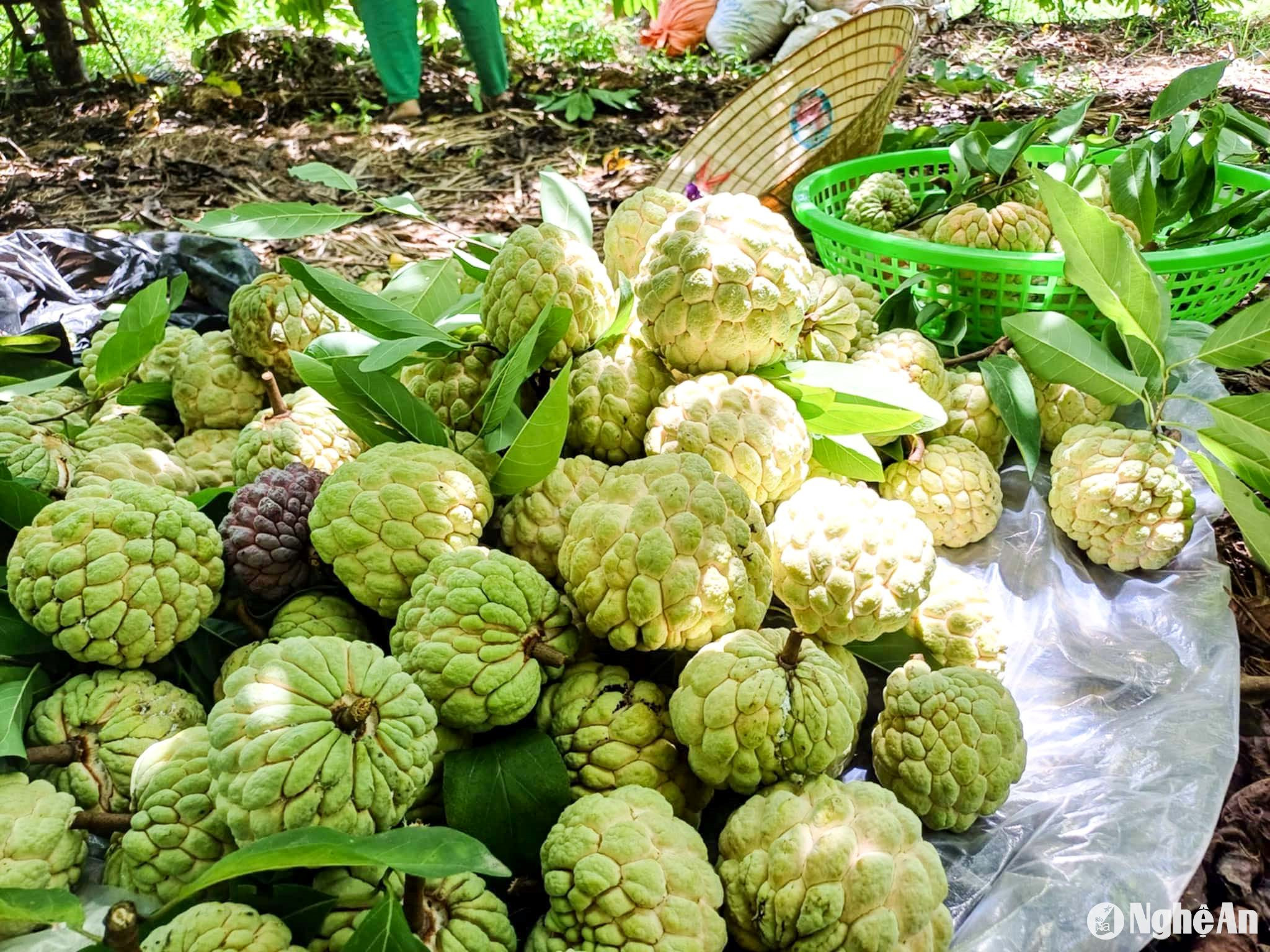
Taking advantage of the custard apple tree's strong regenerative properties, growers have pruned old shoots to encourage the growth of new, flowering shoots. These shoots are then pollinated to produce late-season fruit. Instead of just one main harvest in July-August as before, custard apples now yield a late harvest around October-November. Late-season custard apples require less care, lower investment costs, and fetch higher prices than the main harvest.
“Late-season custard apples mostly grow inside the tree trunk, so they are larger and fetch a higher price than those in the main season. Therefore, the yield of late-season custard apples may be lower, but the income generated can be equivalent to that of the main season. However, to be able to grow custard apples in staggered seasons, the branches need to be mature, and the canopy must be relatively sparse so that sunlight can penetrate and stimulate new shoots inside the tree,” said Mr. Le Quang.
Building a brand for custard apples.
In Nghia Hieu commune, Nghia Dan district, custard apple trees were planted about 30 years ago, but only became a commercial crop and a key crop in the development of hillside farming in the last 5 years. The entire commune has about 8 hectares of custard apple trees, planted by 30 households, of which about 4 hectares are planted in concentrated areas, the largest being owned by Mr. Nguyen Quang Trung (1.1 hectares), Mr. Cao Thanh Vinh (0.7 hectares), and Mr. Nguyen Phuong Duong (0.5 hectares).
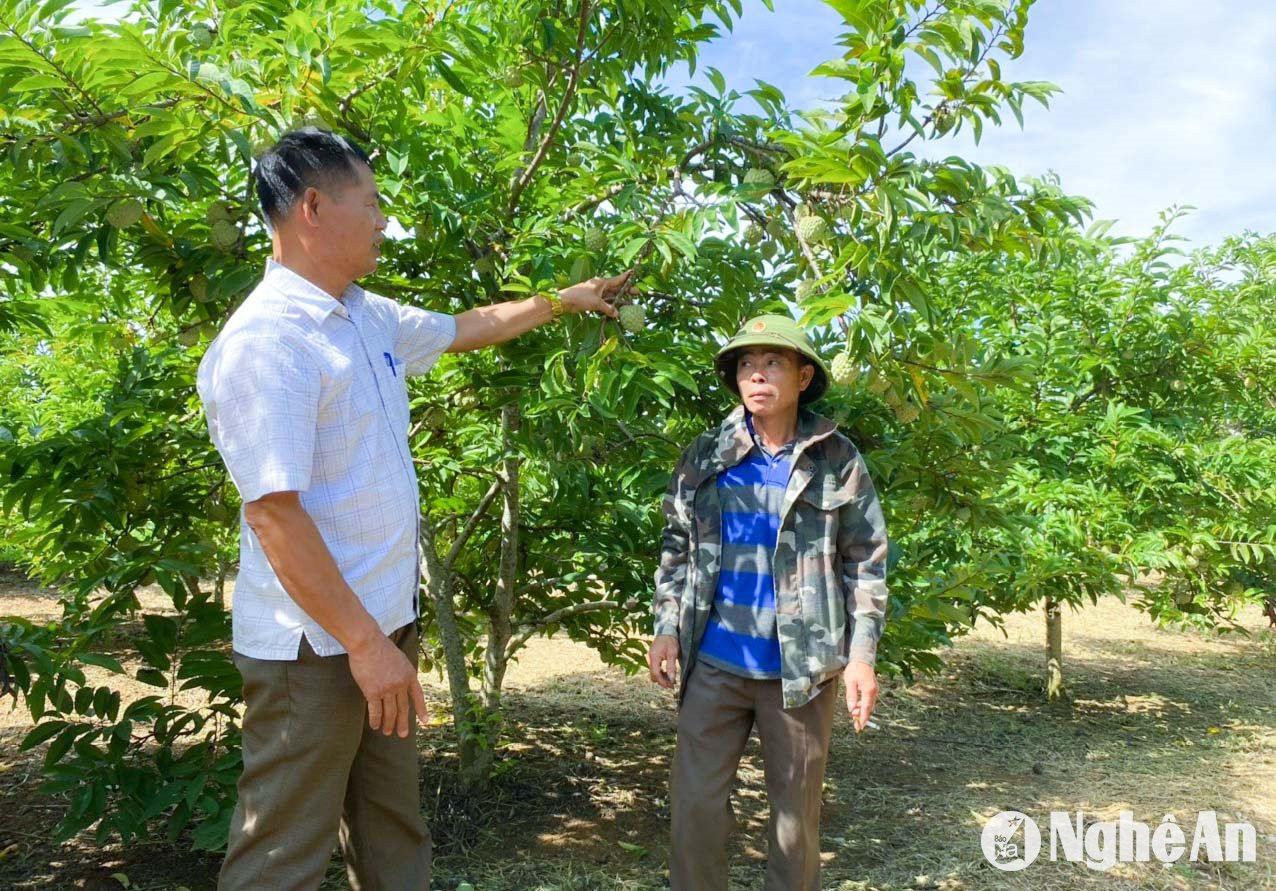
In addition to traditional techniques for intensive custard apple cultivation such as leaf stripping, pruning, and fertilizing to achieve high yields, custard apple growers in Nghia Hieu commune have also introduced new varieties such as Thai custard apple and Taiwanese custard apple.
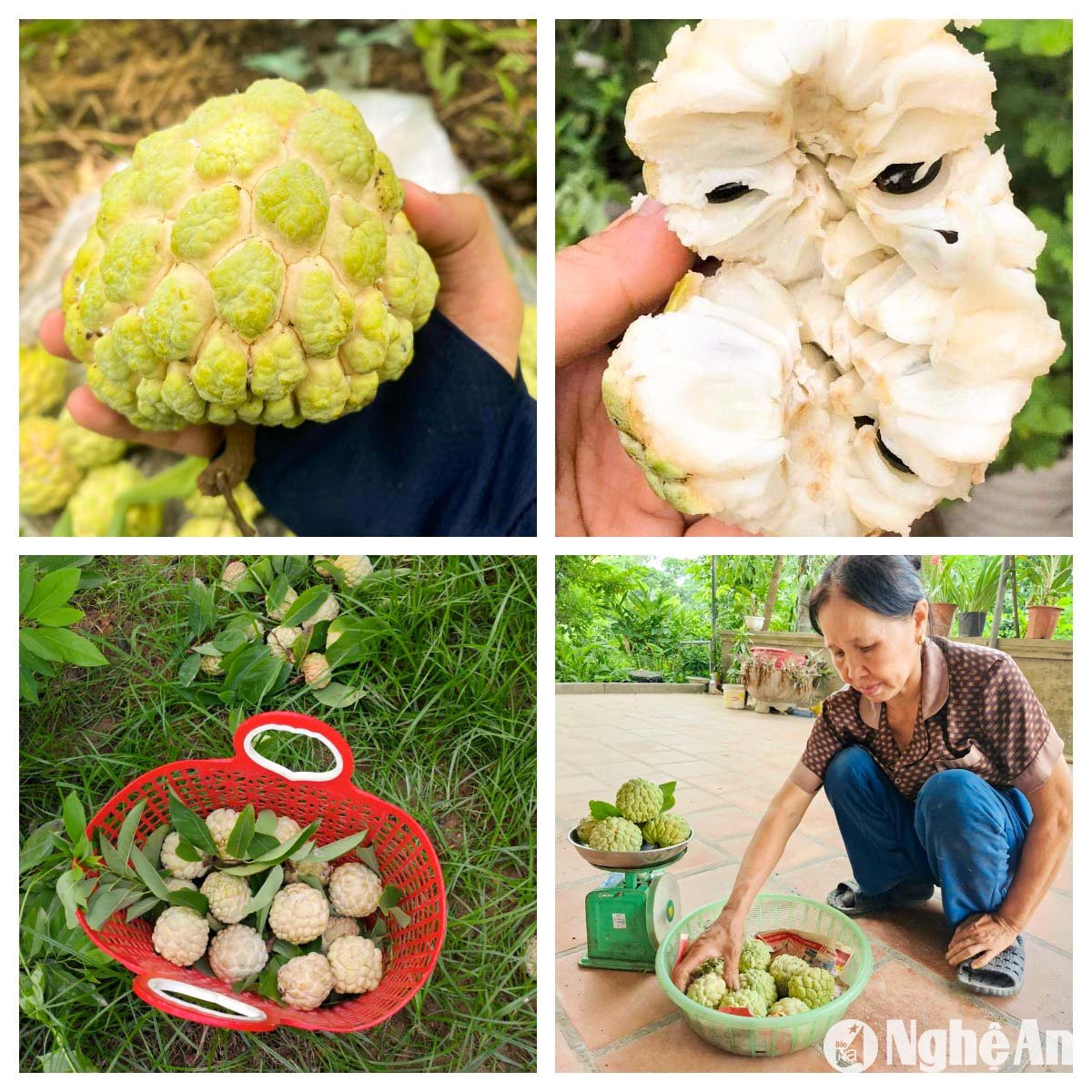
“Thai custard apples have a beautiful appearance, with evenly spaced eyes on each fruit. Smaller ones weigh about 3 fruits per kilogram, while most weigh between 0.5 and 0.8 kg per fruit. The quality of Thai custard apples is sweet, firm, with few seeds, lots of flesh, and a refreshing taste. Thai custard apples also yield 4.5 tons per hectare, and the selling price is particularly high, reaching 80,000 VND per kilogram, more than double that of traditional custard apples. Thanks to this, the economic efficiency is also higher,” said Mr. Cao Thanh Vinh, a custard apple grower in Son Mong hamlet, Nghia Hieu commune.
Specifically, in order to create a link between custard apple growers, share experiences on planting and caring for custard apple trees, and provide timely information on market prices, the Nghia Hieu Commune Custard Apple Growing Cooperative was established.
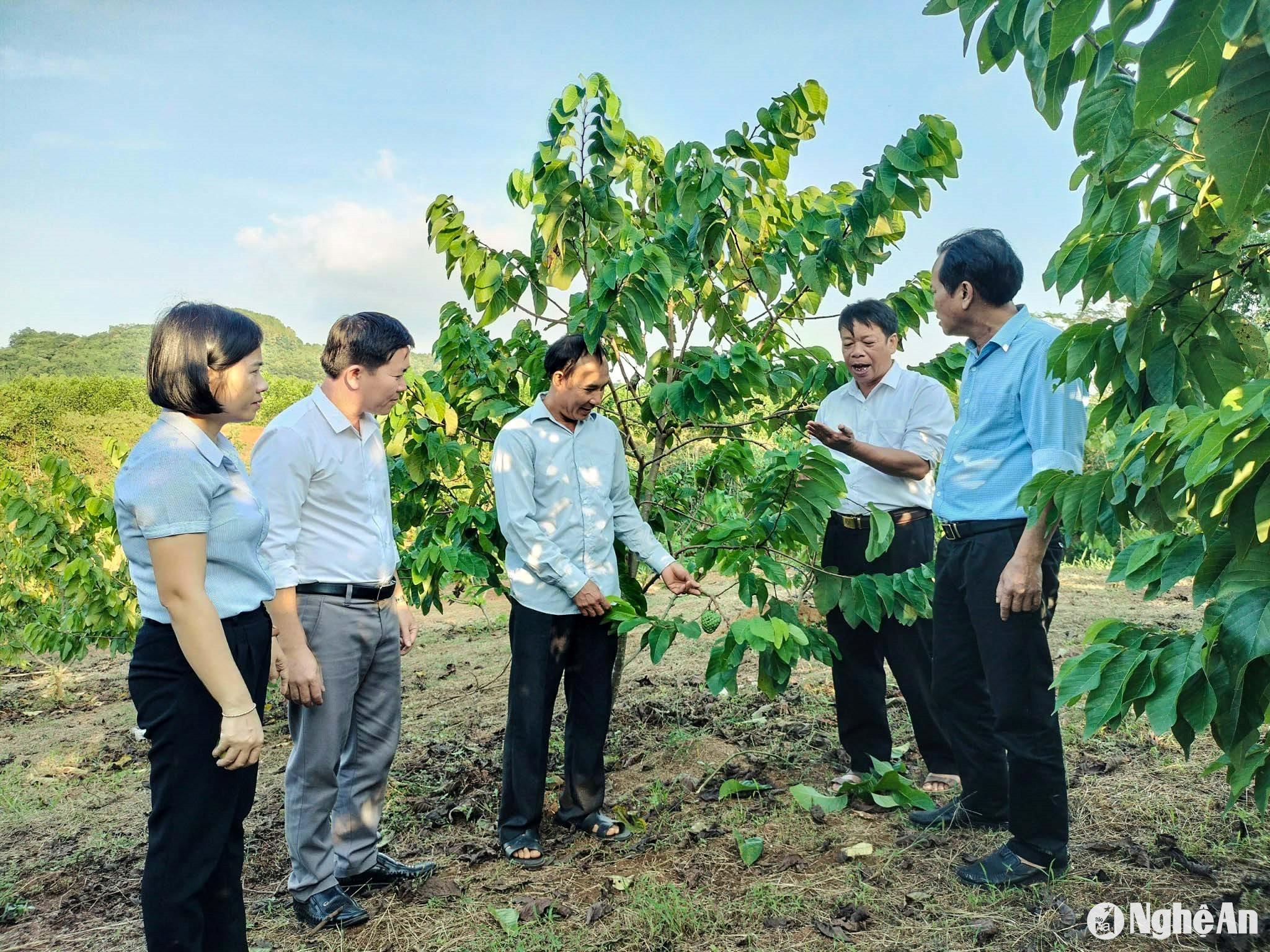
"Experienced growers guide younger growers on the process of planting and caring for custard apple trees; high-yielding custard apple varieties are brought in by people for trial planting; and building the Nghia Hieu custard apple brand on digital platforms is being given attention."
"Na Nghia Hieu has been certified VietGAP and achieved 3-star OCOP, so the selling price is basically stable. Traders buy up everything harvested, bringing high income to the growers," shared Mr. Phan Trung Vinh - Chairman of the Farmers' Association of Nghia Hieu commune.


