
Prime Minister: 'We work for the sake of national pride and brotherhood.'
On the morning of September 15th, following the directives of the Politburo, Prime Minister Pham Minh Chinh chaired a meeting of the Government Standing Committee with localities affected by Typhoon No. 3 to discuss solutions for overcoming the consequences and supporting people and businesses.
According to reports, Typhoon No. 3 was the strongest typhoon in the East Sea in the past 30 years and on land in Vietnam in the past 70 years, causing extremely heavy damage to people and property of the people and the State.
As of 6:00 AM on September 15th, 348 people had died or were missing, 1,921 were injured; nearly 232,000 houses were damaged; over 190,000 hectares of rice fields were flooded and damaged; nearly 48,000 hectares of other crops were flooded and damaged; nearly 32,000 hectares of fruit trees were damaged; 3,269 aquaculture cages were damaged or swept away; and over 2.6 million poultry and livestock died…
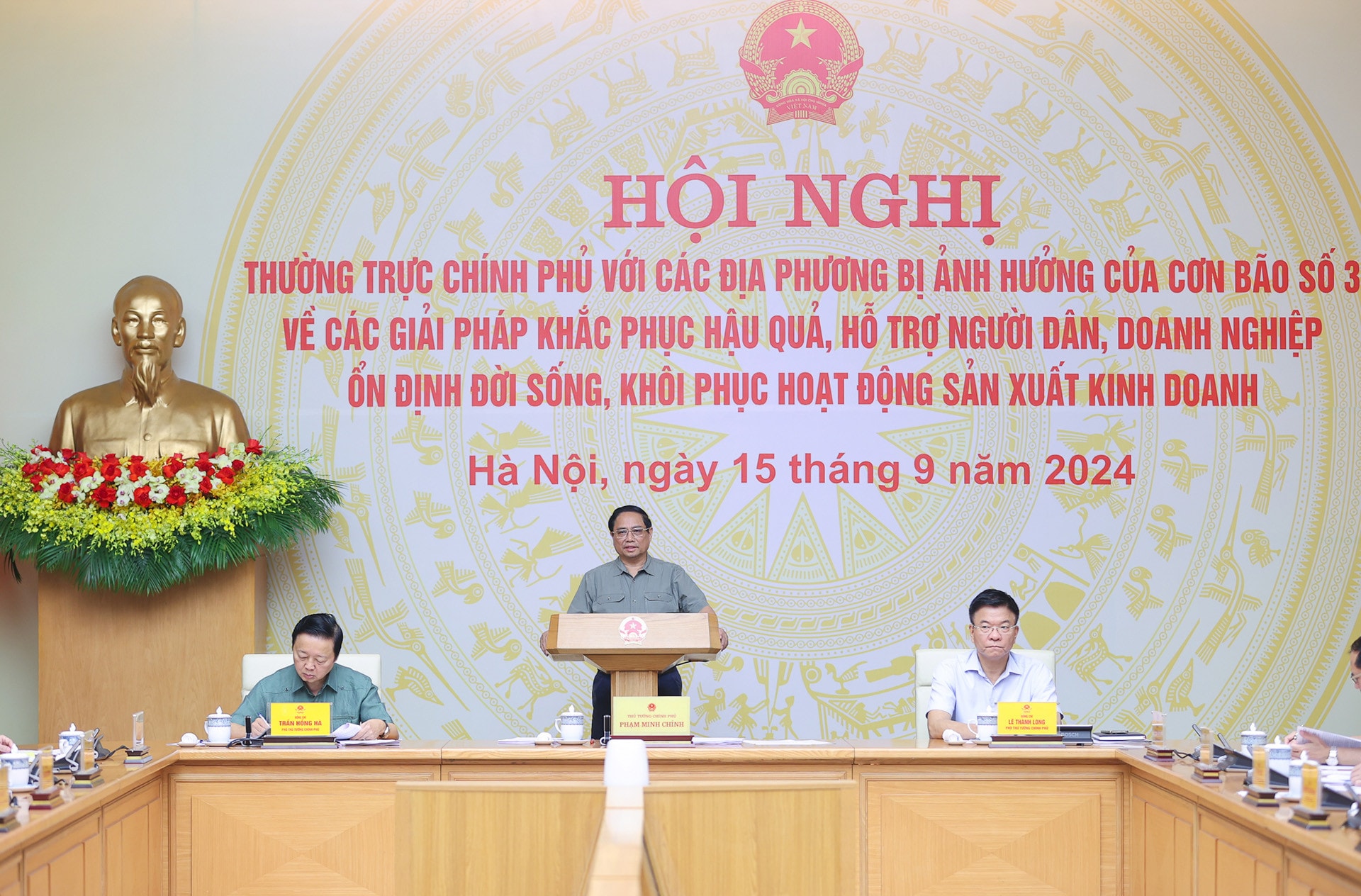
In his opening remarks, Prime Minister Pham Minh Chinh stated that Typhoon Yagi was a historic storm with seven key characteristics: high intensity; high speed; wide scope; numerous affected areas; prolonged landfall; heavy and prolonged rainfall and flooding across a wide area from Thanh Hoa northward; and extremely serious consequences in terms of human lives, property, and both material and psychological damage.
The Politburo, chaired by General Secretary and President To Lam, held a meeting and issued timely conclusions; Party and State leaders went to localities to directly supervise the work of overcoming the consequences of the storm.
The Prime Minister issued nine directives, emphasizing the importance of closely monitoring the situation, responding accurately, quickly, appropriately, and effectively, and continuously updating the directives. Typical examples include directing flood diversion measures from upstream to protect the Thac Ba hydroelectric dam in Yen Bai and the Hoang Long dike in Ninh Binh, and ensuring close and coordinated cooperation among forces and localities, preparing contingency plans for various situations.
The Prime Minister commended the Deputy Prime Ministers, members of the Government, leaders of ministries, sectors, localities, the armed forces, police, and the people for their support, unity, and trust in the Party and the State in seriously implementing the Central Government's directives in responding to and overcoming the consequences of storms, floods, and natural disasters.
The Prime Minister emphasized that this conference aims to assess the leadership and direction in responding to and mitigating the consequences of the storm, and to implement solutions with four major objectives.
That is, to urgently address the consequences of the storm, quickly stabilize the situation for the people, restore production and business, and promote economic growth.
"We work out of national pride and brotherhood, all for the people and for the development of the country," the Prime Minister stated.
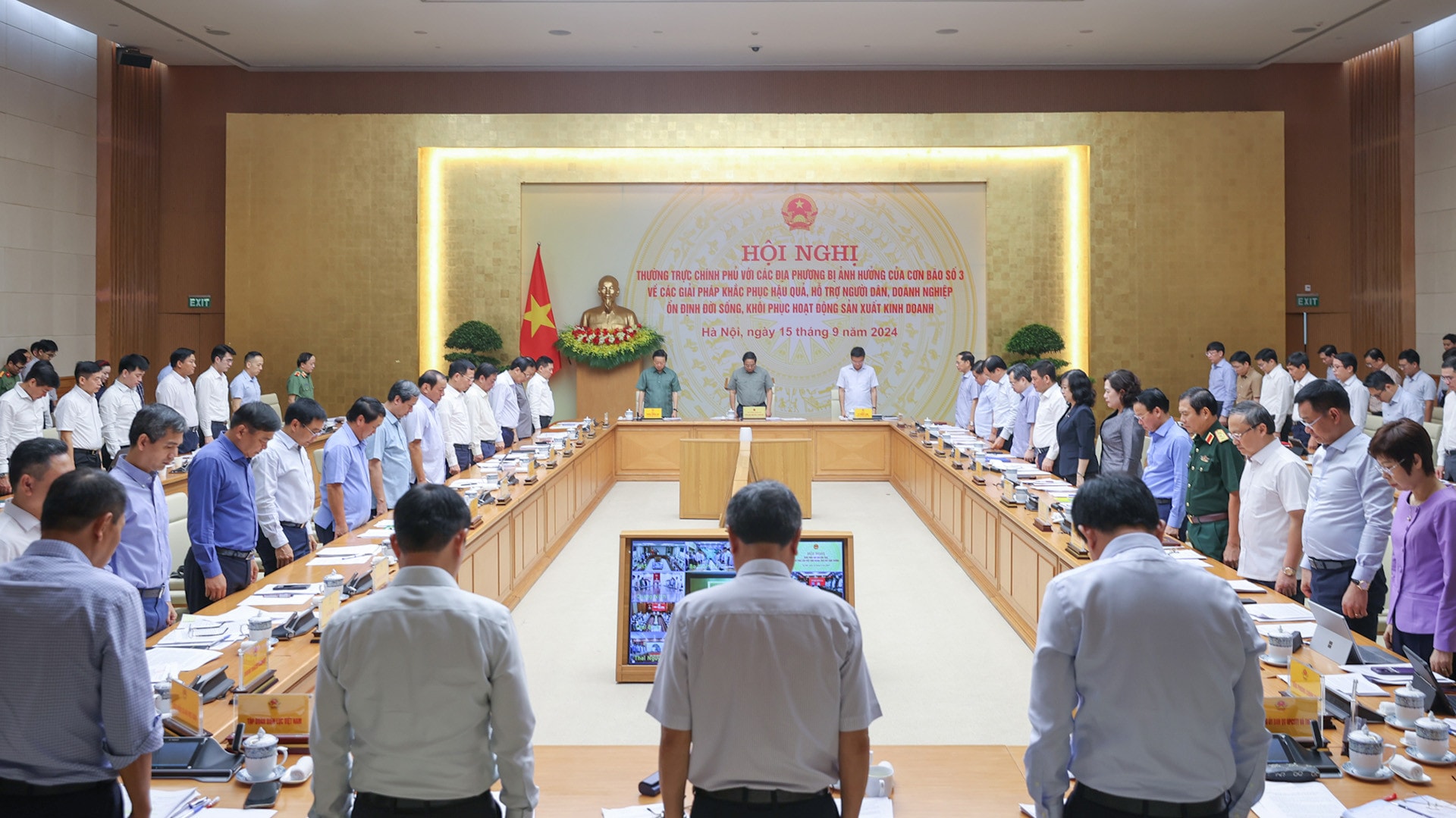
According to the Ministry of Agriculture and Rural Development, the Government, the Prime Minister, ministries, sectors, and localities have proactively directed and closely monitored the situation regarding storms, rain, and floods from an early stage and from afar.
The forces, especially the army, police, and other forces.Emergency responseLocal authorities have thoroughly implemented the Prime Minister's directives, guiding 51,319 fishing vessels with 219,913 people and vehicles, as well as transport vessels operating at sea, to move out of dangerous areas or to safe shelters; organizing the evacuation of 52,979 people from aquaculture rafts, watchtowers, and weak houses to safe places; and evacuating and relocating 74,526 households with 130,246 people in deeply flooded areas to safe locations.
The military mobilized 438,275 personnel and 6,642 vehicles to respond to the storm; 107,911 personnel and 2,142 vehicles responded to heavy rain, landslides, and flash floods; the police mobilized more than 150,000 officers and soldiers to participate in responding to and mitigating the consequences of Typhoon No. 3 and the subsequent heavy rain and flooding.
Local authorities, rapid response forces, youth organizations, and other organizations were mobilized to the fullest extent to respond to and mitigate the consequences of the storm and floods.


