
The Prime Minister urged countries to take five proactive steps to implement the Hanoi Convention so that 'no one is left behind in the digital age'.
At the high-level discussion within the framework of the opening ceremony for the signing of the United Nations Convention against Cybercrime, recognizing that "no single nation is strong enough to fight cybercrime alone," and that peace, security, and prosperity in the 21st century must begin with a safe cyberspace, Prime Minister Pham Minh Chinh called on nations to join hands in implementing the spirit of "5 enhancements."
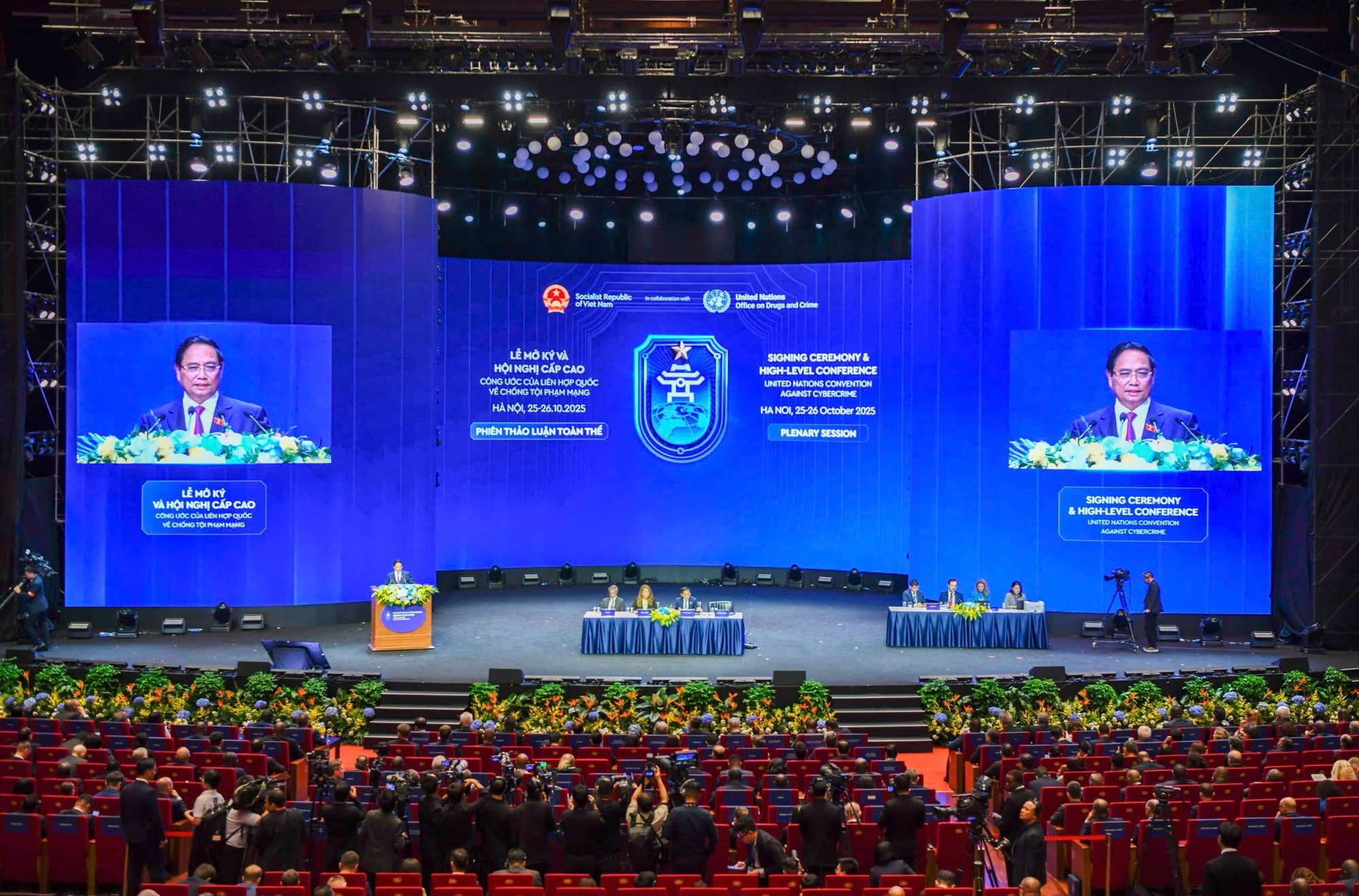
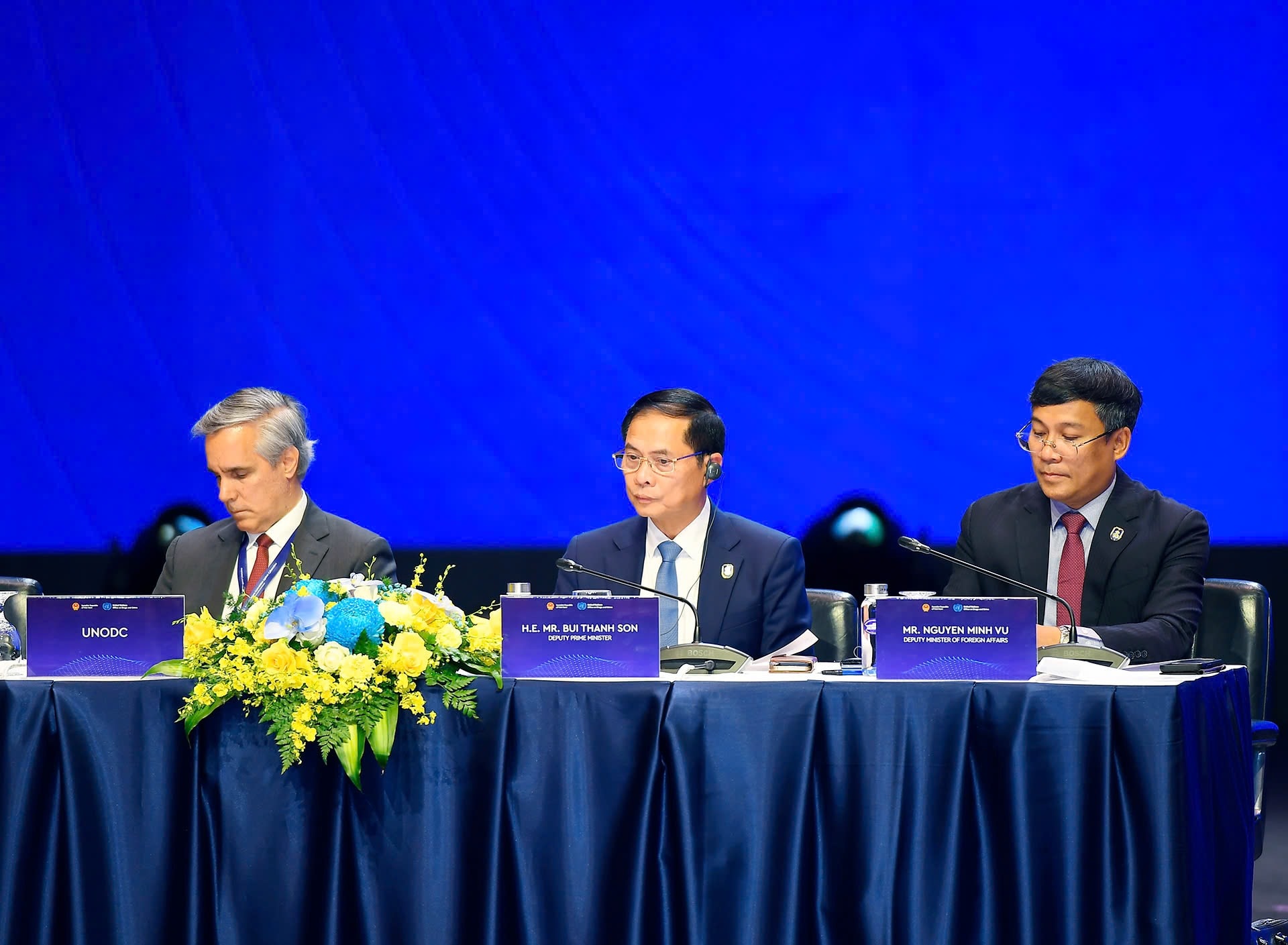
On the afternoon of October 25th, in Hanoi, within the framework of the opening ceremony for the signing of the United Nations Convention against Cybercrime, a high-level discussion session was held, co-chaired by Deputy Prime Minister Bui Thanh Son and Ms. Ghada Waly, Executive Director of UNODC; with the participation of Prime Minister Pham Minh Chinh, UN Secretary-General Antonio Guterres, heads of state and government, and representatives from more than 110 countries; and many international and regional organizations.
In his opening remarks at the discussion session, Prime Minister Pham Minh Chinh thanked the Secretary-General and representatives of the United Nations member states for attending the signing ceremony, noting that nearly 70 countries and organizations had signed the Convention, thereby promoting and supporting Vietnam in undertaking the responsibility of organizing the signing ceremony, a historic event marking the beginning of a new phase in global cooperation on combating cybercrime.
Acknowledging that unprecedented achievements in science and technology have fundamentally changed the structure of the global economy, production methods, and social governance, the Prime Minister emphasized that digital transformation is not only an inevitable trend and an objective requirement, but also a strategic choice and top priority for all nations to achieve rapid and sustainable development. However, this also brings unprecedented risks such as cybercrime and cyberattacks.
"This is a common challenge for all of humanity, encompassing all people and the entire globe: Without robust cybersecurity – there will be no safe digital society!" In this context, the Prime Minister affirmed that ensuring cybersecurity and preventing and combating cybercrime is not only a matter for each nation and people, but also a shared responsibility of the entire international community.
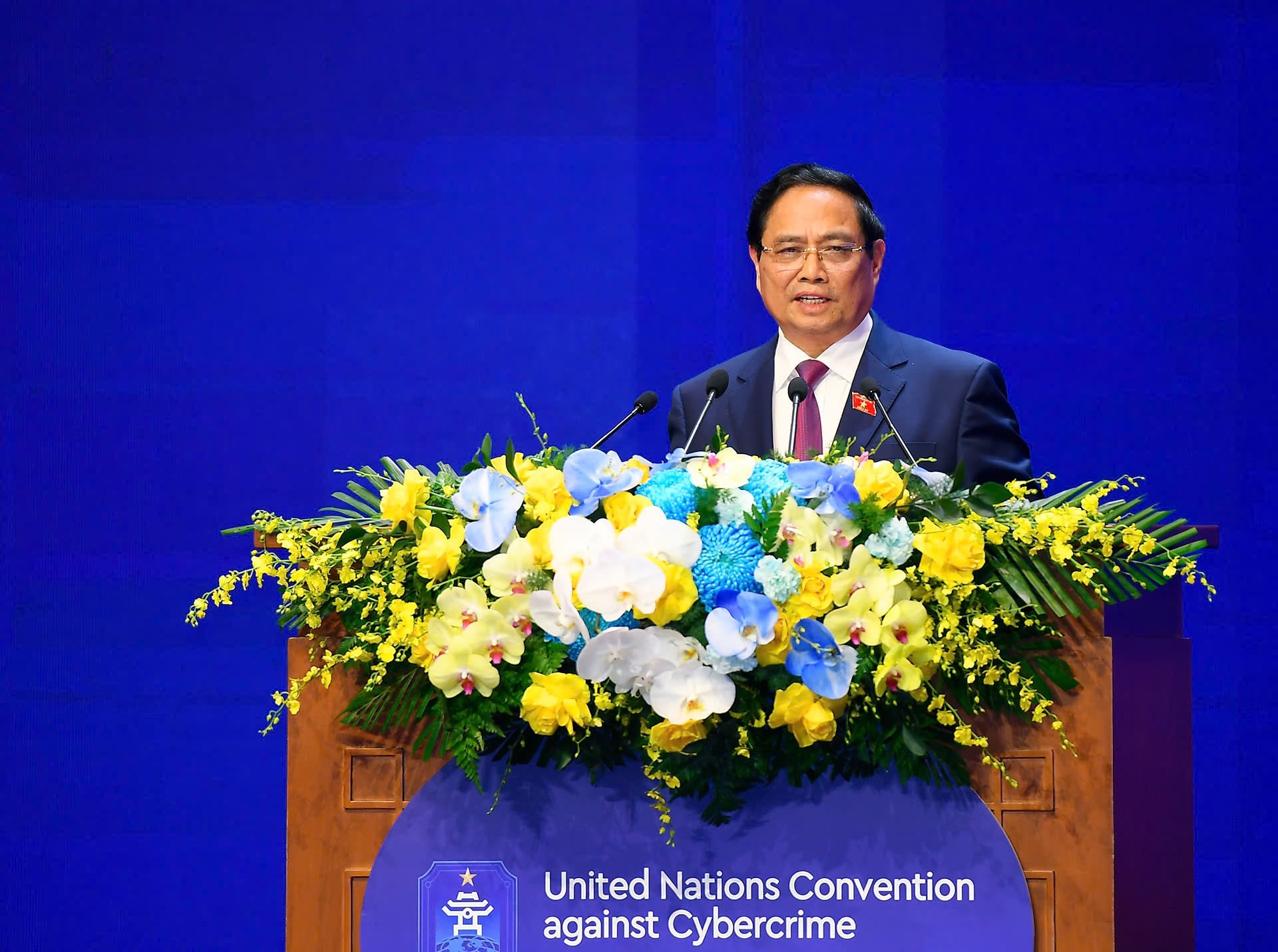
The Prime Minister stated that, deeply aware that ensuring cybersecurity and combating cybercrime is a pillar and "backbone" of the national digital transformation, Vietnam has issued numerous strategies, laws, and action programs on combating crime, shifting its strategic thinking from "passive defense" to "proactive and aggressive offensive," building a "proactive, comprehensive, and all-people cybersecurity posture," and gradually enhancing its capacity for "self-reliance, self-strength, self-confidence" in cybersecurity.
At the same time, recognizing that "no single nation is strong enough to fight cybercrime alone," Vietnam has always demonstrated a proactive and responsible spirit, always ready to contribute to the goal of ensuring global cybersecurity. Participating in, promoting, and hosting the Hanoi Open Signing Ceremony is important evidence of this commitment and effort.
The Prime Minister called on countries to work together to implement the spirit of "5 initiatives":
The first,Promote international cooperation and establish close partnerships between countries, international organizations, and major technology corporations.
Monday,Promote the improvement of the national legal framework in accordance with the Convention.
Tuesday,Promote cooperation and investment in cybersecurity infrastructure.
Wednesday,Promote the development of specialized human resources and enhance the capacity to investigate, respond to, and handle cybercrime.
Thursday,Promote participation in international legal frameworks on cyberspace.
According to the Prime Minister, the spirit of "5 initiatives" will be a call to action for the times so that the Hanoi Convention will truly become a source of inspiration for global cooperation, shared trust and responsibility of humanity in protecting the digital future.
The Prime Minister highlighted the message of a nation that has always cherished peace and aspired to progress, a country that has experienced many wars and faced numerous difficulties and challenges in its development process, yet has always been resilient, steadfast, confident, compassionate, and humane: "Vietnam is ready to work with international friends to build a safe, healthy, and sustainable cyberspace for the common good of all nations, for the happiness of all citizens, and for the future of generations to come." The Prime Minister strongly reaffirmed the commitment to fully and seriously fulfill all obligations set forth, and to work alongside member states in implementing the Convention so that "no one is left behind in the digital age."
Following the Prime Minister's opening remarks, representatives from 18 countries delivered speeches. The countries emphasized the Convention's role as a significant step in establishing the first global legal framework to coordinate joint efforts to combat cybercrime – a cross-border challenge that is growing in both number and complexity. All countries acknowledged the enormous impact cybercrime has on individual economies and the lives of their citizens.
Many opinions expressed national commitment to combating cybercrime, international cooperation in sharing information and evidence, building common standards for cyberspace governance, and strengthening capacity and technical support. Countries highly appreciated Vietnam's leadership role through its initiative to host the signing ceremony; and expressed their determination to act together to bring the Convention into life and ensure its full and effective implementation.


Notably, in his message to the Debate, the Russian President congratulated the UN members on their unity and consensus in adopting a universal international treaty on combating cybercrime, emphasizing that "Russia is always ready to cooperate as closely as possible with the international community" in this field.
The Vice President of Ecuador stated that technological development must go hand in hand with promoting human security, human rights, and human values.
The Speaker of the Uzbek Parliament stated that the rapid development of digital technology, artificial intelligence, and cryptocurrencies has opened up many opportunities for social and economic progress, while also giving rise to new forms of crime, affecting the financial system, critical infrastructure, personal data, and human rights, calling for cybersecurity to be an essential part of national security.
The Polish Deputy Prime Minister called on countries to continue maintaining consensus in developing additional protocols, cooperating to enhance capacity, and supporting responses to cybercrime in a spirit of responsibility, solidarity, and based on the rule of law.
The Cambodian Deputy Prime Minister affirmed the commitment to building cybersecurity capacity, protecting citizens from online threats, and cooperating with the private sector. Australia pledged $83.5 million in investment for its cybersecurity program in Southeast Asia and the Pacific.


