
The Prime Minister has requested clarification on the proposal to tax second homes.
Prime Minister Nguyen Xuan Phuc has just requested the Ministry of Finance to carefully study the information regarding the proposal to tax second and subsequent homes.
On August 18th, the Government Office stated that, prior to this, the press had reported that, regarding the Ministry of Finance's proposal to tax second and subsequent homes, while some supported the idea of a property tax on houses, others argued that the real estate market, after years of stagnation, urgently needed policy support, and therefore, imposing an additional tax on the purchase of a second home at this time was inappropriate.
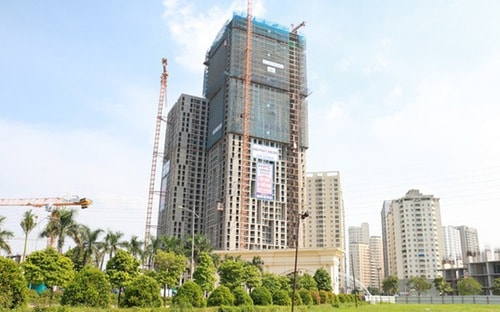 |
| The Prime Minister has requested clarification on the proposal to tax second homes. |
Earlier this August, in a government report on the development of a plan to assess the market situation, forecast medium-term trends, and propose solutions, mechanisms, and policies to promote healthy and stable real estate market development, the Ministry of Finance stated that the holding, ownership, and investment in real estate by the people is on the rise. Therefore, a separate Law on Property Tax should be enacted to make land use more efficient.
The Ministry of Finance cites that revenue from land use tax in Vietnam currently accounts for only about 0.03% of GDP and about 0.15% of total state budget revenue. In contrast, in many countries, revenue from property taxes – especially land use tax – is one of the major sources of budget revenue.
In Vietnam, the real estate market is expected to develop more stably and sustainably in the coming period, as a series of new policies such as the Housing Law, the amended Real Estate Business Law, and policies on real estate lending credit have come into effect since July 2016.
The Ministry of Finance emphasized that Vietnam's per capita income has been steadily increasing in recent years, from US$1,400 (2013) to US$2,200 (2016) and is projected to rise to US$3,400 by 2020.
Previously, the Ministry of Finance had proposed a plan to tax second and subsequent properties owned by citizens; however, this proposal did not receive widespread public support.
According to Deputy Minister of Finance Huynh Quang Hai, the Ministry has assigned the Tax Policy Department to research a draft tax on housing, especially for those who own two or three houses or more.
However, according to Mr. Hai, this tax could not be implemented in 2017 because it needed time for development and careful consideration. In the future, it will certainly have to be collected, not only because of budget constraints, but also because other countries have been imposing this tax for many years.
Regarding this issue, the Ho Chi Minh City Real Estate Association (HoREA) also proposed that a tax should be imposed on individuals who own multiple houses and land (from the second property onwards) to prevent speculation and wasteful use of real estate. This approach could help increase the supply to the market, creating more opportunities for those with genuine housing needs to access housing.
In the event of a potential real estate bubble, consideration should be given to imposing high taxes on the transfer of houses and land immediately after purchase. The tax could be levied in the first year of the transaction after purchase to prevent speculation and help stabilize the real estate market.
However, HoREA proposes that this tax should not be levied on poor households even if they already own a house but are living in cramped conditions (in Ho Chi Minh City, this means below the average of 10 m²).2(per person) now buys a second and third house, but the total area of these small apartments does not exceed 77 m².2.
According to VnEconomy
| RELATED NEWS |
|---|


