
Foods pregnant women should eat to support fetal brain development.
The fetal brain is greatly influenced by the mother's nutritional status. Therefore, maintaining a healthy diet before and during early pregnancy is very important.
Fetal brain development
Signs of brain development occur quite early, about 16 days after conception, with the formation of the neural sheet (this structure then begins to curl and fold, forming the neural tube).
By day 27, the neural tube closes, beginning its transformation into the spinal cord and brain. The developing brain then separates into distinct regions, which will later form the forebrain, midbrain, and hindbrain.
Between weeks 24 and 44 of pregnancy, these areas undergo significant structural and functional changes, progressing from a simple structure to one that resembles the adult human brain.
The closure of the neural tube is one of the most crucial steps in early brain development. Mothers need to be aware of the nutritional requirements during this period to avoid complications.
Nutrients for fetal brain development
All nutrients are important for brain development, but some are more significant than others. These include protein, iron, zinc, selenium, iodine, folate, vitamin A, choline, and polyunsaturated fatty acids.
Folate and choline are especially important during early pregnancy to prevent neural tube defects. Iodine is also particularly important; iodine deficiency is the leading cause of intellectual disability.
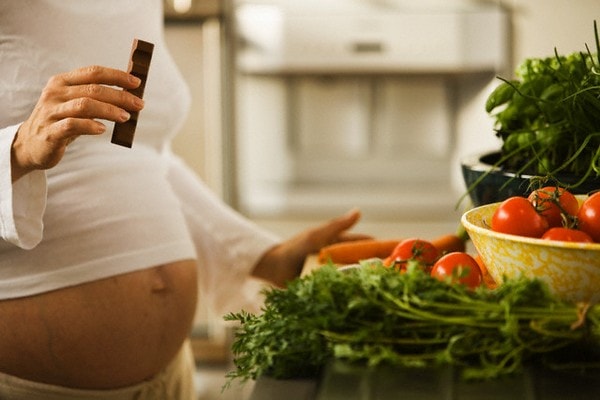 |
Foods that promote healthy brain development.
Folate is abundant in leafy green vegetables such as spinach and asparagus, as well as in legumes like peas. Folate is also plentiful in beef liver. Folic acid (the synthetic form of folate) is added to some foods such as wheat flour, milk, and cereals.
Choline is found in many foods such as fish, eggs, and meat. It is also particularly abundant in beef liver.
Women with iodine deficiency are encouraged to supplement their iodine intake. Fish contains high levels of iodine, but pregnant women are advised to avoid fish containing mercury. Therefore, supplementing iodine through other foods such as iodized salt is the safest option.
Risks associated with poor maternal nutrition
Nutritional deficiencies are often caused by insufficient food intake or a poor diet, or by malnutrition. Therefore, a balanced and healthy diet is always encouraged, especially for those who are pregnant or planning to become pregnant.
Certain medications can also affect the body's nutritional balance. Alcohol addiction increases the risk of nutrient deficiencies and makes one particularly susceptible to folate and choline deficiencies. Additionally, women with liver and kidney disease are also more prone to nutritional deficiencies.
Abnormal fetal development due to malnutrition.
Nutrient deficiencies during early pregnancy (especially vitamin B and choline deficiencies) often lead to neural tube defects, with spina bifida and anencephaly being the most common.
- Spina bifida occurs when the neural tube doesn't close properly, leading to damage to the spinal cord and causing paralysis.
- Anencephaly is a more severe condition that occurs when parts of the brain fail to develop. Babies with this condition often die prematurely or shortly after birth.
According to Alobacsi.vn


