
Revealing details about the Pentagon's most mysterious army.
For the past 14 years, the spearhead of U.S. military campaigns against al-Qaeda has been an organization that is now little known.
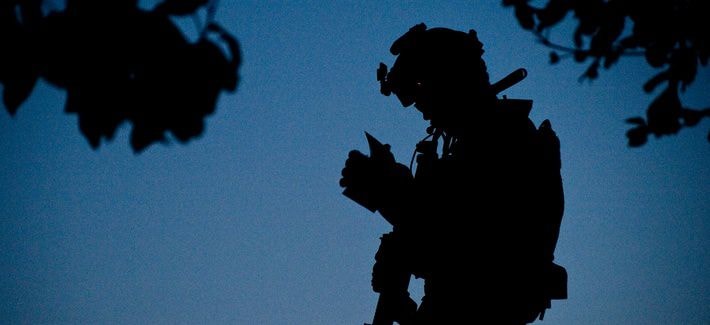 |
The Joint Special Operations Command (JSOC) was established in 1980, following the failed attempt to free American hostages in Iran. To this day, JSOC remains a mysterious force. Even though its headquarters are located in Fayetteville, North Carolina, its existence is largely unknown.
According to DI, although JSOC had developed significantly in its first two decades, up until the events of September 11, 2001, this force remained 'on the periphery' of the US military, with very limited responsibilities, including short-term counterterrorism missions and operations to protect weapons of mass destruction.
However, as the U.S. became entangled in Islamic terrorist networks around the world, leaders increasingly relied on a particular specialty of JSOC: its 'manhunt' capabilities. One of the most recent examples is the killing of terrorist leader Osama bin Laden in May 2011.
That is also the skill this force has painstakingly honed throughout its existence, and it has now become one of the focal points in the U.S. campaign against the self-proclaimed 'Islamic State' (IS) militants. Given this role, the history of JSOC's development will speak volumes about America's future in the Middle East.
'The most intense manhunt in history'
To date, JSOC's most ambitious campaign has been the U.S.-led landing in Panama.
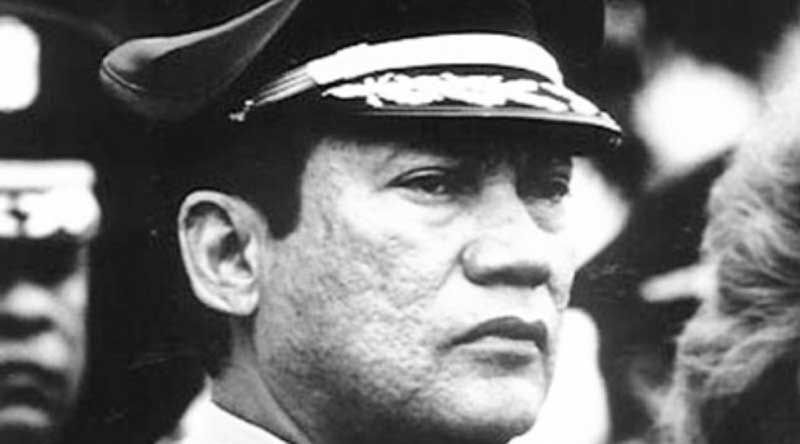 |
After years of escalating tensions between the US and Panama (under Manuel Noriega's leadership), culminating in the killing of a US Marine by a Panamanian Defence Force soldier in mid-December 1989, President George Bush (Sr.) ordered Noriega's removal from office.
The leader was overthrown within hours of the landing, and soldiers from Delta Force and Navy SEAL Team 6 – the core 'elite special operations' units of JSOC – pursued Noriega and his close associates.
Former JSOC Commander Carl Stiner, who led the operation, called it "one of the most intense manhunts in history." Operational members broke down the doors of every layer of security, interrogated every person they found, and launched new operations based on intelligence.
These relentless campaigns set a precedent for future missions in Afghanistan and especially in Iraq. Although no one in 1989 spoke of Noriega's 'network,' that is precisely what JSOC attacked.
The hunt for Noriega gave JSOC agents a taste of the difficulty of searching for someone so well hidden in their own soil. Noriega was always one step ahead of JSOC. It wasn't until December 24, 1989, that he was discovered hiding in the papal embassy in Panama.
Noriega surrendered on January 3, 1990, and subsequently fled to the United States.
From Saddam Hussein to drug lord Escobar
When Iraq invaded Kuwait in August 1980, JSOC also played a significant role in planning the most sensitive mission, such as sending special forces members under cover to Baghdad to assassinate then-Iraqi President Saddam Hussein.
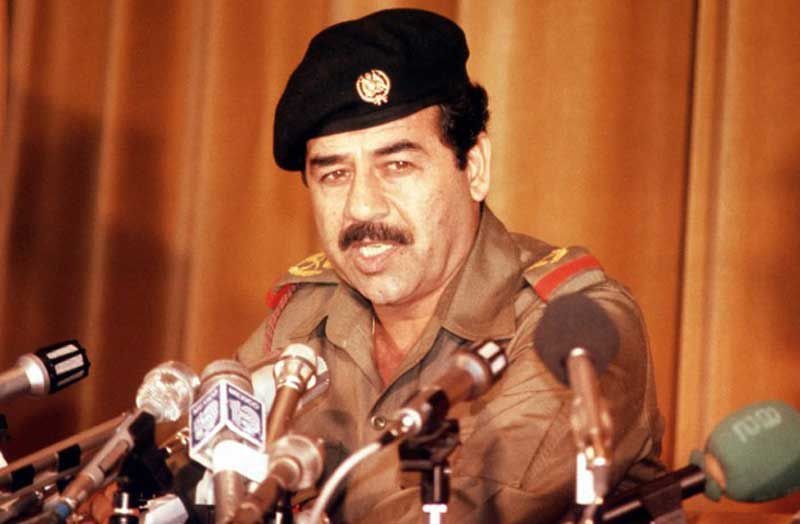 |
JSOC considered a range of options, from eliminating the leader with a handgun to a missile strike. Ultimately, 'intelligence sources did not provide sufficient information to carry out such a mission.'
In the process of 'hunting', reliable intelligence is key. Nowhere is this more evident than in Colombia, where JSOC soon became involved in another 'hunt' – that of drug lord Pablo Escobar.
For over a year, JSOC rotated Delta Force and Team 6 across the country, maintaining a force of about 12 people in Bogota (the capital) and Medellin (Escobar's hometown).
Their mission was supposed to be limited to training the 'Search Bloc' – the Colombian force responsible for hunting down Escobar – but the American special forces found ways to involve their trainees in real missions.
Escobar was well aware he was being followed. He always spoke very briefly and often tried to distract his stalkers. On December 2, 1993, Escobar finally made a mistake during a conversation with his son that lasted six minutes, instead of the usual 20 seconds.
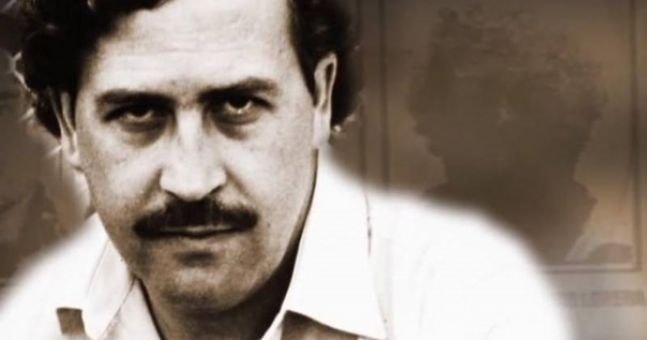 |
The phone tracking device that the U.S. instructed the Colombians to use led the Search Bloc team directly to a two-story house. Escobar and a bodyguard were shot dead while trying to escape. However, rumors persist to this day that a U.S. special forces operative fired the shot that killed the drug lord.
However, no one has ever provided any evidence or witnesses to confirm that rumor. And Jerry Boykin – who later became the commander of Delta Force – has stated that none of his men pulled the trigger on the day Escobar was shot.
According to VNN


