
Criteria for identifying concentrated aquaculture areas
The Ministry of Agriculture and Rural Development is drafting a circular guiding the criteria for identifying concentrated aquaculture areas that meet food safety requirements.
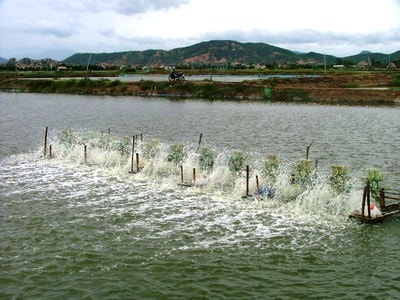
Shrimp farming area in Tuy Phuoc, Binh Dinh
First, regarding the criteria for identifying concentrated aquaculture areas, the draft regulations stipulate that they must meet 7 criteria: Concentrated aquaculture areas must be located within production planning zones, with the size of the area determined by the Chairman of the People's Committee of the province or centrally-governed city, in accordance with each aquaculture species and the specific conditions of the locality.
A concentrated aquaculture zone is an area specializing in aquaculture production, strictly adhering to state regulations. It meets the specific aquaculture production requirements for each species being farmed.
At the same time, it is not directly affected by industrial waste, domestic waste from residential areas, hospitals, centralized livestock and poultry slaughterhouses, cemeteries, or other potential sources of pollution.
In addition, aquaculture facilities located in concentrated farming areas must have valid business registration documents for aquaculture production activities with the competent authorities as prescribed by the State. At the same time, water quality must meet the quality standards currently prescribed by the Ministry of Agriculture and Rural Development.
Infrastructure conditions in concentrated shrimp farming areas
Regarding the infrastructure conditions of concentrated aquaculture areas, the draft regulations stipulate: Concentrated aquaculture areas must have a convenient transportation system to serve production and product consumption. At the same time, they must have separate, robust, leak-proof water supply and drainage canals, ensuring sufficient water supply and drainage when needed. The water supply and drainage systems must be independent of each other and managed to ensure that they do not pollute the water source.
In addition, there must be an electrical system with a capacity suitable for the specific conditions of each region, meeting production requirements, and with no leakage in the circuits to ensure the safety of workers.
There must also be a system for containing and treating wastewater and waste from the farming area before discharging it into the environment. Wastewater from the fish ponds, after treatment, must meet the prescribed quality standards before being released into the environment.
At the same time, each aquaculture facility must have a sludge disposal area to ensure that all sludge is processed after each farming cycle. The sludge disposal area must have embankments to prevent sludge and leachate from escaping into the surrounding environment. In addition, the farming area must have a system for collecting, sorting, accumulating, and treating waste and refuse.
According to (Chinhphu.vn) - LT


