
Fake news that Obama was injured caused the Dow Jones to drop 100 points.
A fake Twitter message about an attack on the White House sent US financial markets into turmoil on the afternoon of April 23. The Federal Bureau of Investigation (FBI) and securities regulators in the US launched an investigation into the incident.
The Associated Press's Twitter account was hacked and posted a story about explosions at the White House injuring President Barack Obama. Almost immediately, the stock market plummeted, but then quickly recovered when the rumor was verified as false.
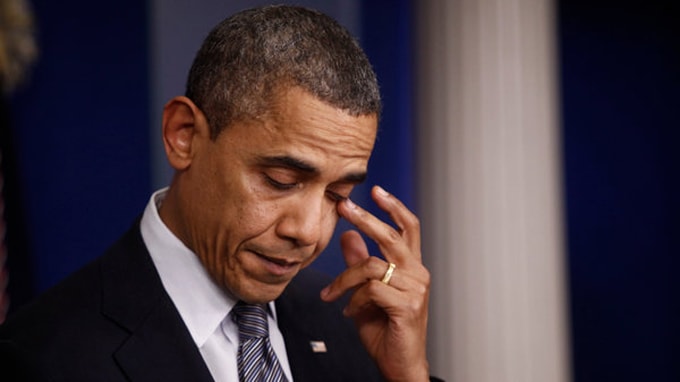
President Obama - Photo: The New York Times.
This swift reaction once again demonstrates how vulnerable markets are to cyberattacks. Last week's Boston bombing and the manhunt for the suspect likely contributed to the ripple effect of these recent rumors.
Around 1 p.m. (local time), these messages were posted on the Associated Press's Twitter page. The news agency then quickly announced on its website, blogs, and social media that its account had been hacked and stolen. They said they were cooperating with Twitter to investigate, while the White House urged calm.
“The president is fine,” the Washington Post quoted White House spokesman Jay Carney as saying. “I just spoke with him.” However, the reassurance didn’t arrive quickly enough for the internet-era stock market. The Dow Jones index fell by an average of more than 100 points between 1:08 a.m. and 1:10 a.m.
“And it wasn’t just the stock market, the bond market, and commodity trading and everything else,” Joseph Saluzzi, head of financial asset trading firm Themis Trading, told the Washington Post. “The incident had enough repercussions even before many people realized it.” |
“And it wasn’t just the stock market, the bond market, and commodity trading and everything else,” Joseph Saluzzi, head of financial asset trading firm Themis Trading, told the Washington Post. “The incident had enough repercussions even before many people realized it.”
Saluzzi said he saw the message on Twitter shortly after it was posted because he has to monitor the social media site throughout the trading day to know about events that could affect the market. According to The Wall Street Journal, the S&P 500 index alone dropped by the equivalent of $136 billion two minutes after the message appeared on Twitter.
“Companies are tracking information across all platforms,” said Larry Tabb, CEO of Tabb Group, a financial research and advisory firm. “They’re analyzing news posts on social media, websites, and digging through Twitter… News is incredibly valuable now.”
But these measures are also risky and this time they backfired. In February, hackers also infiltrated the Twitter accounts of major brands Burger King and Jeep, spreading fake news about these companies being acquired by rivals.
The FBI is currently investigating the latest case of fake news involving Obama, according to FBI spokesperson Jenny Shearer. Commissioners Daniel Gallagher and Luis Aguilar of the U.S. Securities and Exchange Commission (SEC) have also requested an investigation. The SEC is now also being much more cautious with social media.
In July 2012, they informed Netflix that they could be sued by authorities because the company's CEO used a personal Facebook account to claim that his internet video streaming service had over a billion hours of content. The SEC considered this a potential insider disclosure to a select group of customers, meaning those connected to the Netflix boss via Facebook. The SEC subsequently ruled that companies can use social media to disclose sensitive information about their operations as long as they inform investors in advance where the information can be found.
According to Tuoi Tre - DT


