
British intelligence views Russia as the 'greatest threat'.
(Baonghean.vn) - In a rare public appearance at an event hosted by the RUSI Institute on May 30, the head of the UK's Defence Intelligence (DI), Adrian Bird, stated that Moscow will remain the main threat to London until the end of this decade.
Mr. Bird said: “The UK’s non-discretionary security priority must be our home area in Euro-Atlantic and here we assess that Russia will remain the greatest threat to mainland Britain until 2030.”
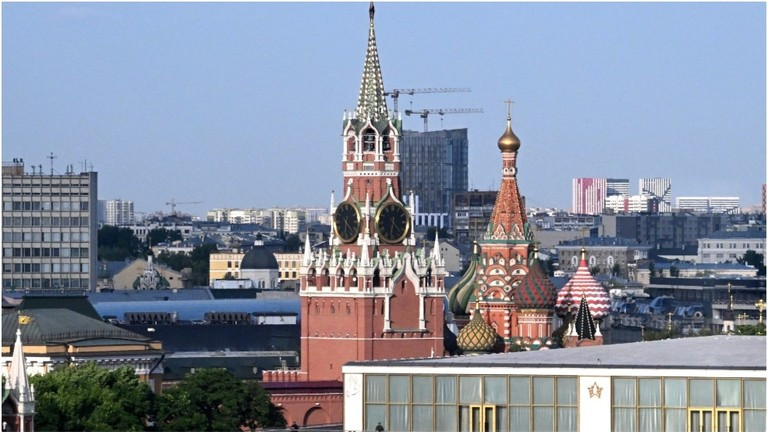 |
| The Kremlin. Photo: Sputnik |
He did not explain why the spies thought Russia would no longer be a threat after 2030. Instead, Mr. Bird argued that from 2030 onward, “China will be the biggest challenge to the UK’s overseas interests and economic security.” Mr. Bird said London should “adapt to the long-term challenges posed by China,” because the country will “compete more directly with the UK in areas of interest to us and will have the potential to disrupt the supply of critical technologies and materials,” such as semiconductors, microchips and rare earth minerals. He described China’s military, intelligence, aerospace and cyber capabilities as posing a “growing threat” to the UK.
The UK's chief intelligence officer also stressed that European security is "inseparable from the security of the wider world," citing issues such as climate change and pandemics. He argued that Britain is facing increasingly complex and interconnected threats due to geopolitical instability, competition between nations, and "rapidly accelerating technological advancements" such as artificial intelligence (AI). AI technology will drive "faster decision-making speeds in future conflicts," Bird argued, revealing that DI has already used machine learning (a branch of AI) to some extent. According to Bird, British military intelligence is hoping to use AI to process raw information quickly enough, something that human personnel are struggling to do.
In another development, British Foreign Secretary James Cleverly declared on the same day that Ukraine has the right to attack targets on Russian territory for self-defense. Speaking at a joint press conference with his Estonian counterpart Margus Tsahkna in Tallinn, Cleverly declined to comment on the drones shot down in Moscow. He stated: “I don’t have the details and I will not speculate on the nature of the drone attack on Moscow.” However, according to the British Foreign Secretary, in principle, conducting attacks outside its territory is part of Kyiv’s right to self-defense to reduce the risk of Moscow attacking Ukrainian territory. He argued that legitimate military targets outside its borders are part of Ukraine’s right to self-defense. This statement by the British Foreign Secretary comes after the US announced its continued opposition to attacks on Russian territory.


