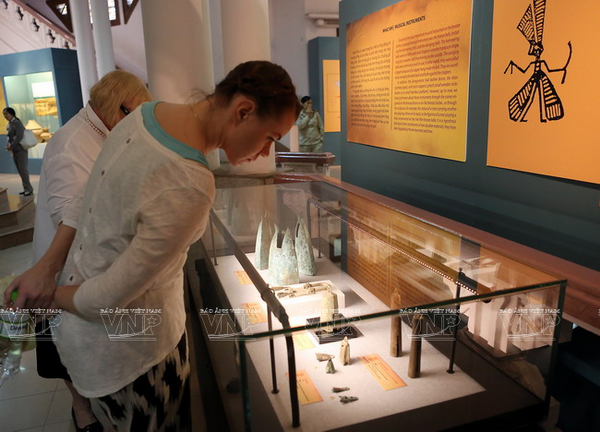
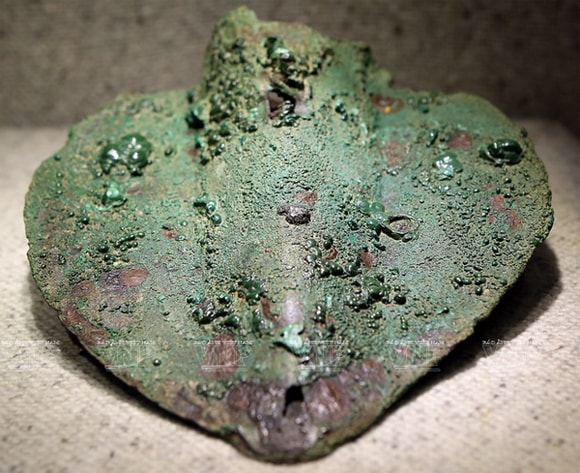
The Dong Son culture is an ancient culture that holds a particularly important position and role in Vietnamese culture. To commemorate the 90th anniversary of the discovery of this culture (1914-2014), the Vietnam National Museum of History, in collaboration with six provinces and cities – Hanoi, Hung Yen, Lao Cai, Nghe An, Thanh Hoa, and Yen Bai – is organizing a thematic exhibition on “Dong Son Culture” to honor this unique heritage.
The Dong Son culture (700 BC - 100 AD) was an ancient culture that existed in several provinces of northern and north-central Vietnam. According to scientists, the Dong Son culture was a continuous development and inheritance from the preceding pre-Dong Son periods: the Phung Nguyen culture (2000 - 1500 BC), the Dong Dau culture (1500 - 1000 BC), and the Go Mun culture (1000 - 600 BC).
The Dong Son culture was discovered in 1924 on the banks of the Ma River, in Dong Son village, south of Thanh Hoa City. Throughout its formation, existence, and development, the Dong Son culture left behind a vast treasure trove of artifacts.
This heritage was built by the ancient Vietnamese people on the foundation of their inherent strength, with knowledge and experience in bronze casting, boat building, and agricultural cultivation accumulated over thousands of years.
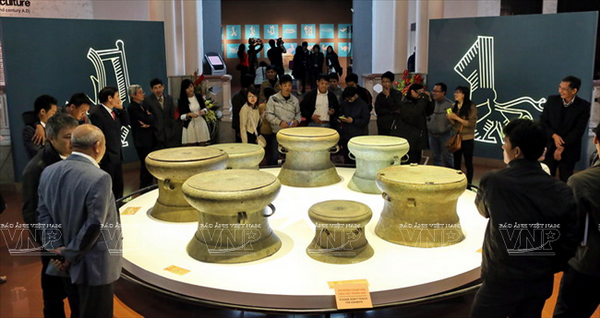 |
| Domestic and international visitors admire the national treasure, the Dong Son bronze drum, at the exhibition. |
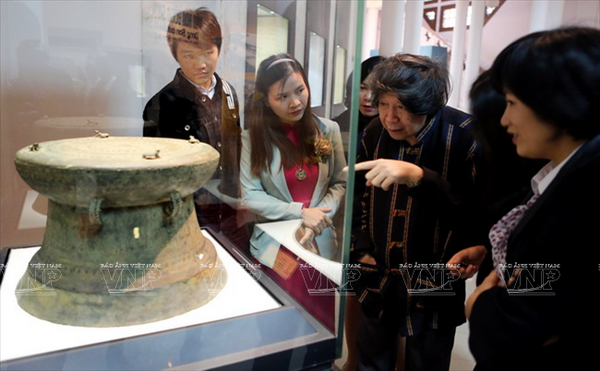 |
| Professor of history Le Van Lan introduces the artifacts to visitors at the "Dong Son Culture" exhibition. |
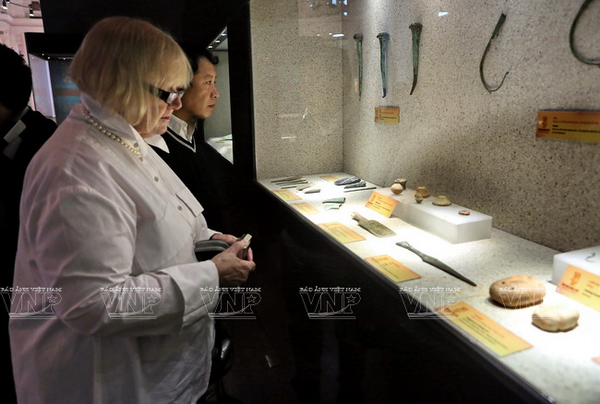 |
| Foreign visitors carefully observe the artifacts at the exhibition. |
Visiting the main exhibition hall of the Vietnam National History Museum, tourists can admire national treasures such as: Hop Minh bronze jar, Dao Thinh bronze jar, Dong Son bronze drum, Nua Mountain sword, Viet Khe boat tomb, along with many other precious burial artifacts and funerary objects...
Here, visitors can also admire 272 unique and distinctive artifacts from the Dong Son Culture period, such as plowshares, chisels, awls, fishhooks, weights, jars, bowls, vases, ladles, plates, kneeling human-shaped lamps, deer-shaped lamp holders, rings, earrings, hairpins, beads, belt buckles, etc.
For example, the collection of weapons, encompassing various types such as battle axes, daggers, spears, arrows, crossbows, short swords, breastplates, etc., provides evidence that warfare and social conflict occurred during the Dong Son culture period.
These exceptional artifacts have, to some extent, revealed the social life of the Dong Son people more than two thousand years ago. Particularly noteworthy are the cultural practices of our ancestors regarding the deceased, as seen in their burial goods, and the ancient Vietnamese people's conceptions of the universe, as evidenced by national treasures such as bronze drums and bronze jars.
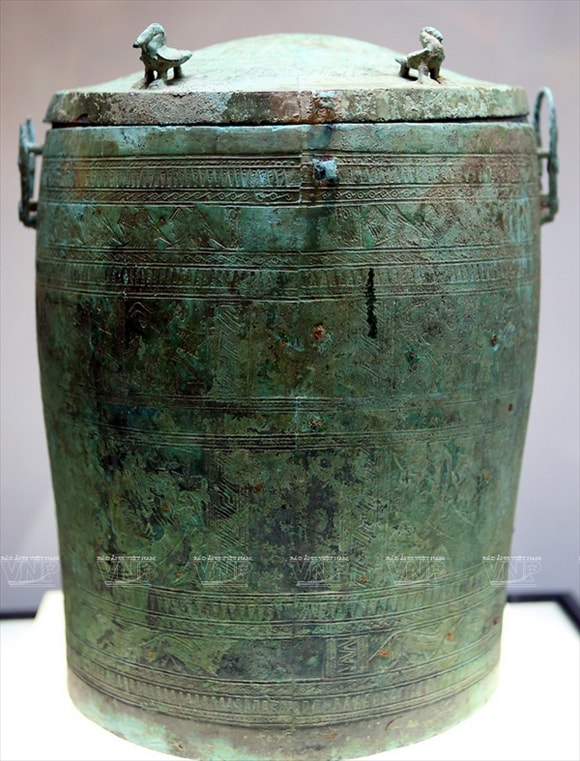 |
| The Dao Thinh bronze jar, a national treasure, was discovered in Yen Bai. |
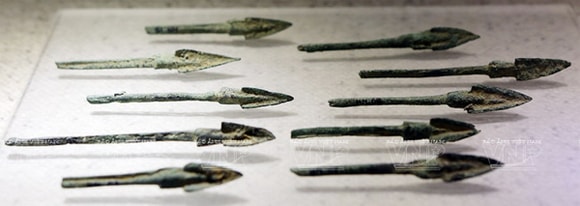 |
| Bronze arrowheads were discovered at Co Loa (Hanoi). |
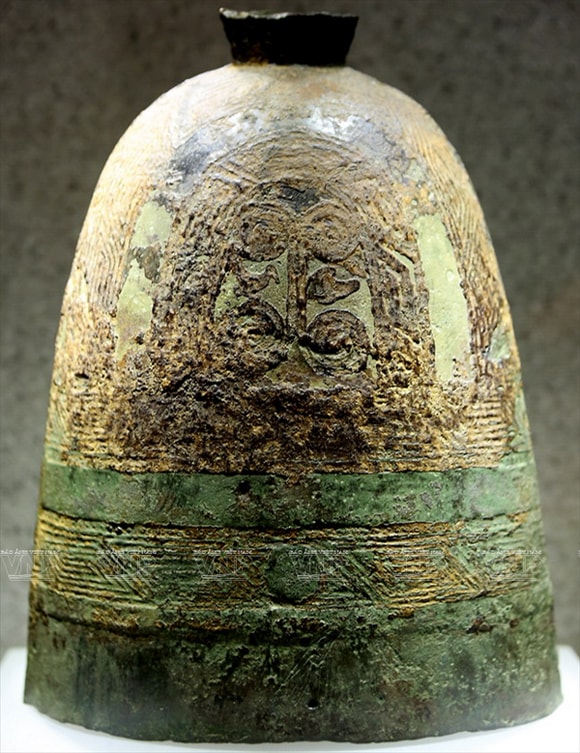 |
| Bronze bell discovered in Thanh Hoa. |
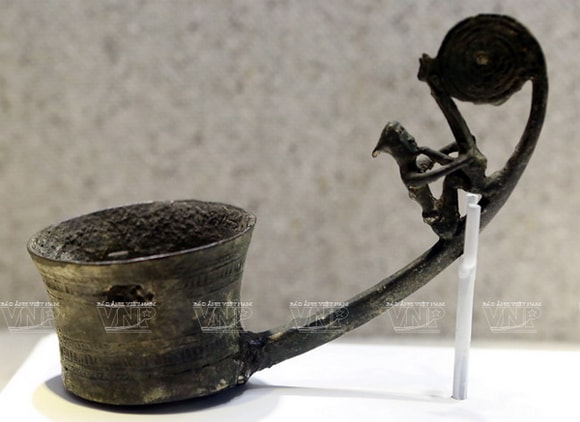 |
| The Viet Khe ladle was discovered in Hai Phong. |
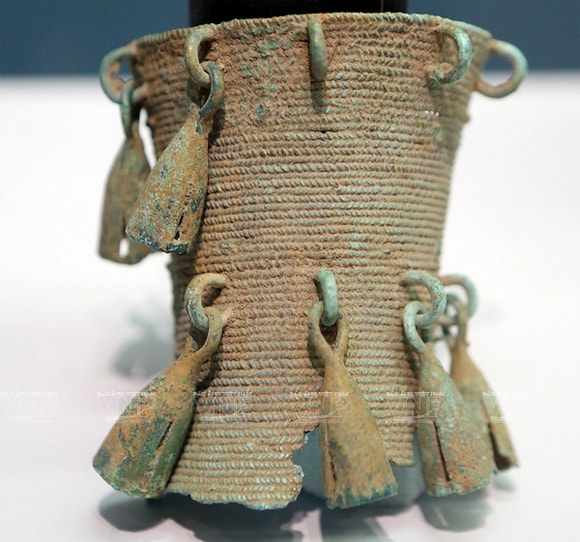 |
| Footrests fitted with bronze bells were discovered at the Lang Vac archaeological site (Nghe An province). |
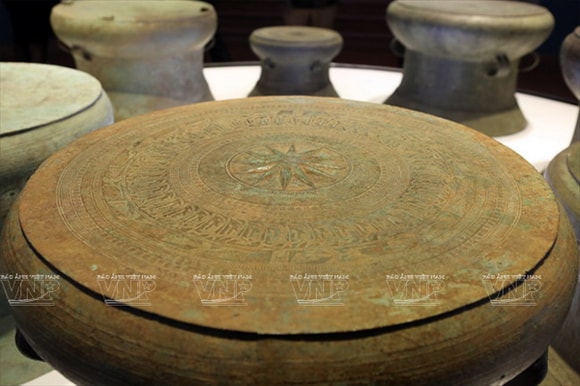 |
| The exquisite patterns on the surface of the Dak Lak bronze drums are on display at the exhibition. |
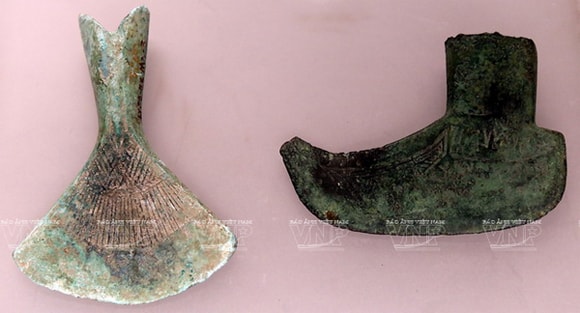 |
| A fish-tailed axe was discovered in Nghe An, and a bronze axe shaped like a foot was found in Hanoi. |
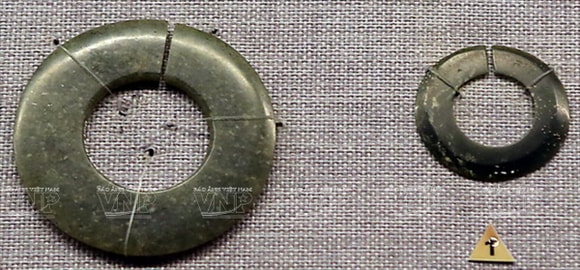 |
| Earrings made of jade and quartz were discovered in Thanh Hoa. |
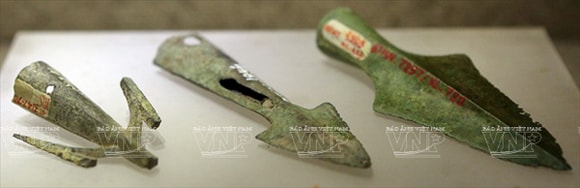 |
| The bronze spearhead is on display at the exhibition. |
In addition to the artifacts, the exhibition also presents supplementary scientific documents such as maps showing the distribution of Dong Son Culture sites, statistical tables, classifications of bronze and pottery artifacts, and technical drawings of stratigraphic cross-sections of some prominent sites…
The exhibition runs until the end of April 2015, allowing domestic and international visitors to fully appreciate the unique cultural features of Vietnam through this ancient culture.
According to Vietnam+