
General Secretary: Data and information must be kept secure and not allowed to be seized by others.
Speaking about security in digital transformation, the General Secretary emphasized the need for security and safety, stating, "Otherwise, if we work for free, others can take over immediately, and the leakage of secrets is even more dangerous..."
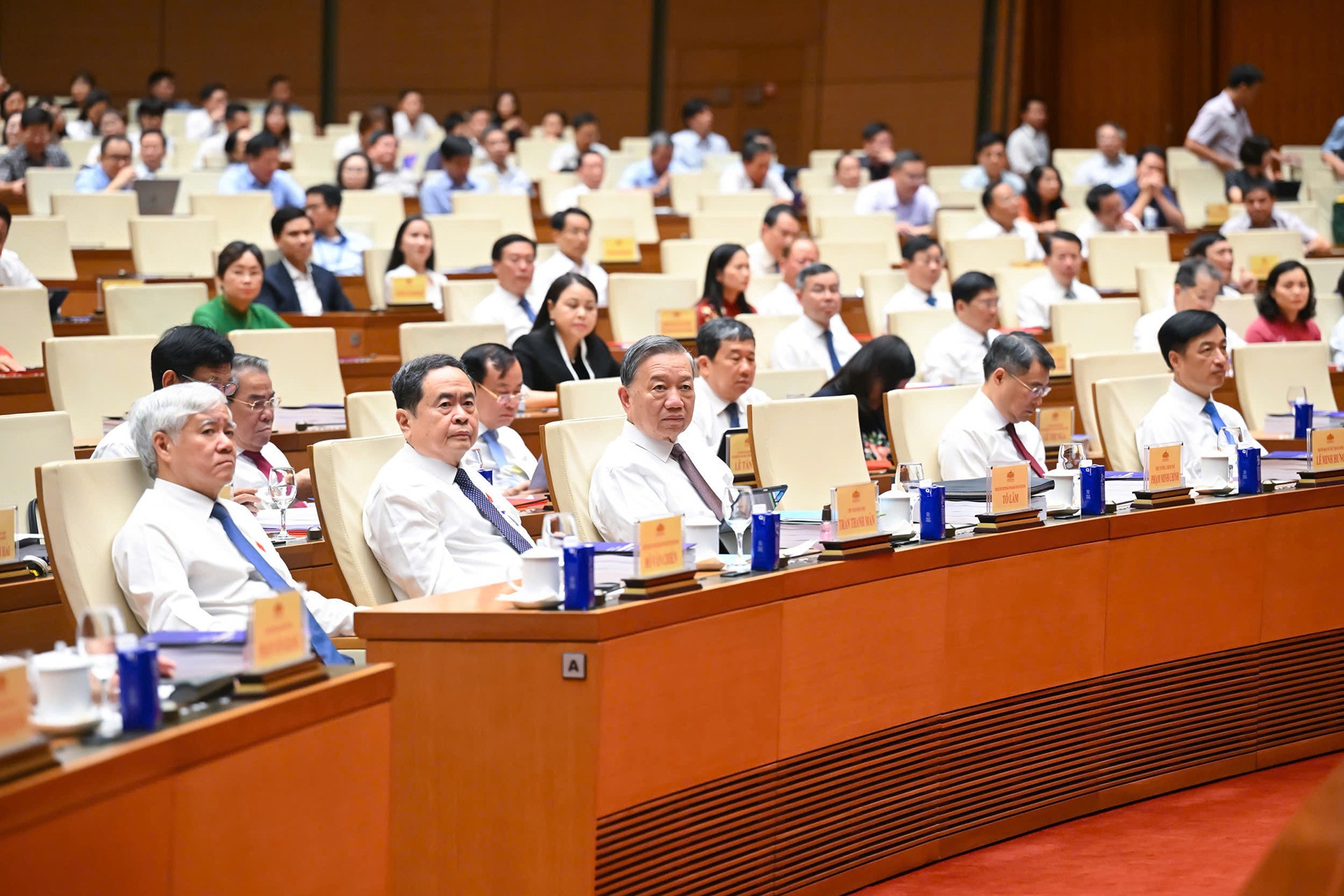
This afternoon, the Party Committee of the National Assembly and the Standing Committee of the National Assembly held a thematic conference titled "Digital Popular Education - Digital National Assembly: A Framework of Digital Knowledge and Skills for a Modern National Assembly".
Speaking at the conference, General Secretary To Lam stated that when the Politburo was preparing to issue Resolution 57, he pointed out the worrying reality that a large percentage of people and officials did not yet have a firm grasp of digital transformation knowledge, while Resolution 57 identified digital transformation as a key political task requiring the involvement of the entire political system and society.
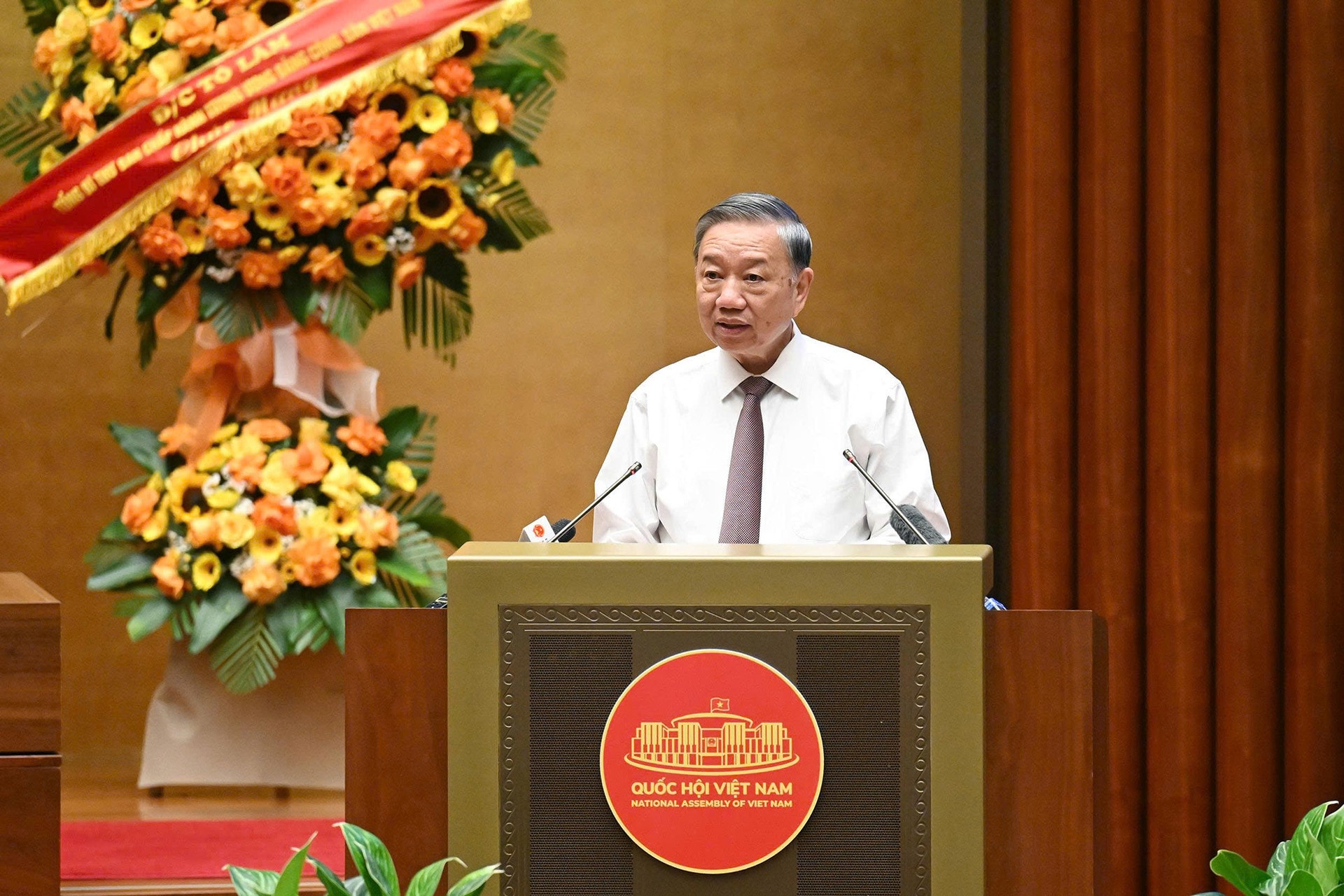
"The 'Digital Literacy Campaign – Digital Parliament' was launched with the aspiration to popularize digital knowledge to all delegates and officials in the National Assembly system, continuing the tradition of studiousness and open-mindedness of our nation in the new era," the General Secretary shared.
The General Secretary stated that the National Assembly Party Committee has issued a plan to implement Resolution 57, setting the goal of raising awareness of digital transformation among all National Assembly deputies, cadres, Party members, civil servants, and public employees; fostering a digital mindset and a culture of applying technology in work; and accompanying voters in accessing digital knowledge.
The National Assembly also focuses on popularizing essential digital skills, effectively utilizing digital platforms, digital technologies, and artificial intelligence, aiming to form a "Digital Parliament" in the future...
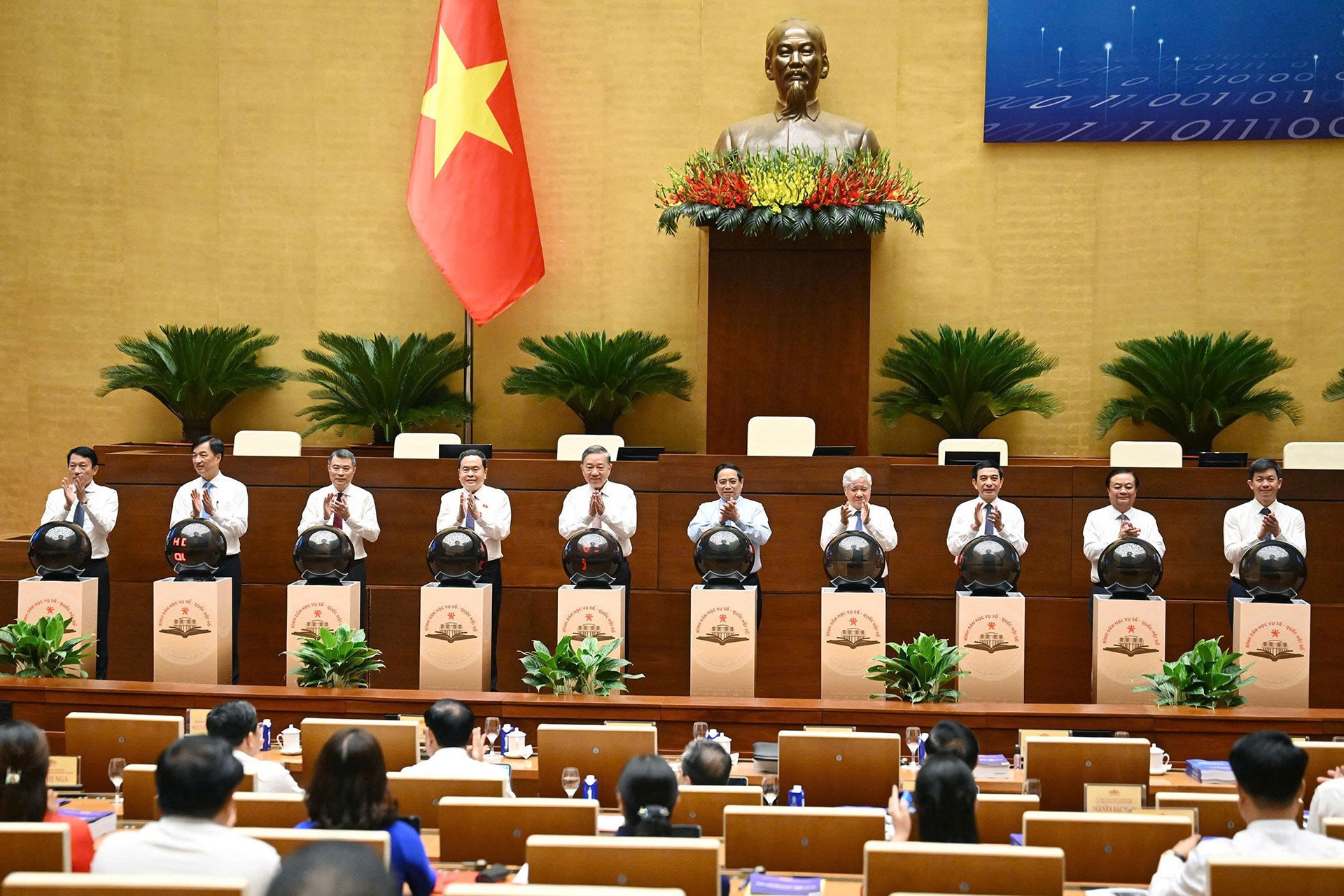
The General Secretary expressed confidence that the National Assembly can achieve and surpass the 2025 target of having at least 40% of its officials and delegates certified in "Digital Literacy for the People - Digital National Assembly," and that by 2026, 100% of its officials and delegates will have completed the program and met the digital skills standards on the VNeID platform.
The "Digital Popular Education - Digital National Assembly" program needs to be replicated throughout the entire political system. The General Secretary suggested that Party committees, government agencies, and mass organizations at all levels study and learn from this model.
According to the General Secretary, enhancing digital literacy among officials, civil servants, and citizens must be a crucial task, closely linked to administrative reform and socio-economic development.
"The Digital Literacy Movement must become a revolutionary movement, encompassing the entire population, comprehensive, and far-reaching. Every Party member, cadre, and civil servant must be a pioneer and role model in participating in learning digital skills and transforming their working methods to suit the digital age," the General Secretary stated.
Regarding the National Assembly, the General Secretary emphasized that they should not be complacent with the initial results, but should continue to develop the "Digital Popular Education - Digital National Assembly" movement in a comprehensive and substantive manner. This is not just a short-term movement, but also a foundation for lifelong learning for the National Assembly's staff.
"Digital transformation is a continuous process; technology is always evolving. We must also constantly learn, keep up, and excel in order to be innovative. Every delegate and official of the National Assembly needs to cultivate a spirit of self-learning, proactively update new knowledge, and consider honing digital skills as a daily, self-imposed requirement...", the General Secretary suggested.
The General Secretary suggested implementing training that is "right for the right people and right for the right needs," avoiding formalism and ineffective, widespread training.
It is necessary to promote the development and improvement of a comprehensive digital knowledge platform, develop electronic curricula, online lectures, and mobile learning applications... so that learners can conveniently study anytime, anywhere. The "Digital Popular Education - Digital National Assembly" movement should be popularized and implemented at the provincial and commune-level People's Councils.
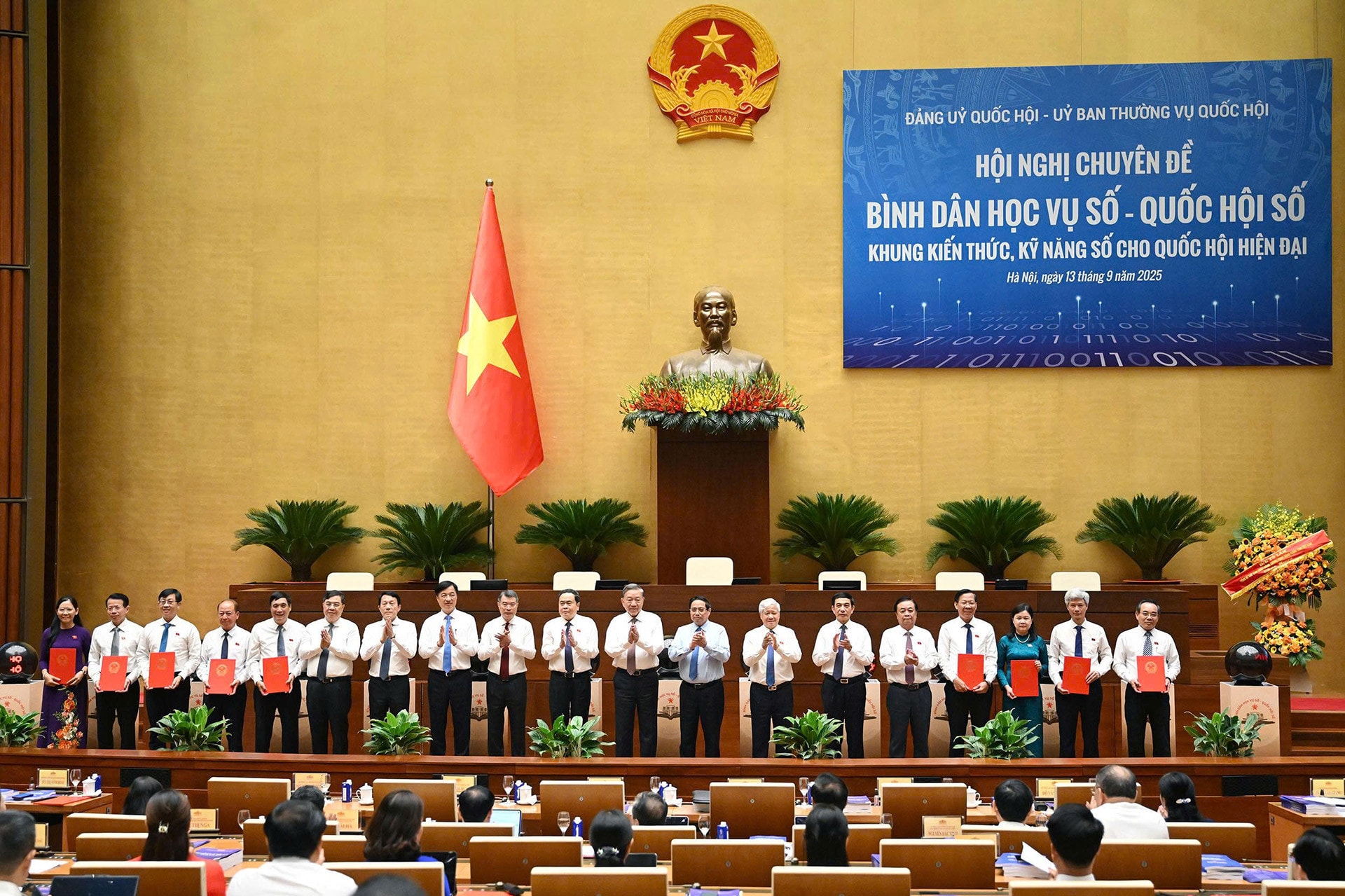
The General Secretary stated that the results of completing the "Popular Education Program" should be considered a criterion for evaluating the performance of cadres and Party members, linked to annual emulation and reward activities.
The goal is to achieve 100% basic digital knowledge and skills for all National Assembly delegates and officials by 2026. The General Secretary noted that this is a high goal, but entirely achievable.
"If 100% of National Assembly delegates and officials become exemplary digital citizens who are proficient in using technology, then the results of the National Assembly's activities will increase exponentially," the General Secretary hoped.
Dirty data will produce dirty results.
The General Secretary also reiterated the key areas for developing the digital literacy program for the general public, and the application of science and technology.
AboutlegalThe General Secretary stated that the shift from paper-based thinking to digital transformation is a new transformation, and therefore the legal system and laws must also transform accordingly. The legal system must create conditions for digital transformation to be effectively implemented in all areas, facilitating it for all citizens. This is a very new field. Not only the National Assembly but the entire system must build a legal framework.
Aboutdigital infrastructureRegarding information technology, the General Secretary noted that the infrastructure has been gradually improved with transmission systems, machinery, hardware, and software... "We must ensure these technical infrastructure requirements in order to develop digital transformation...", the General Secretary affirmed.
AboutdataThe General Secretary analyzed: "If we talk about digital transformation without data, then there is no digital transformation. Data must be accurate, complete, clean, and vibrant... Dirty data will produce dirty results. Accurate, complete, and clean data must be vibrant, nurtured, and supplemented daily... The reason we have artificial intelligence is because its vitality is based on data. Without data, artificial intelligence would fail. It would produce answers and results that are not as desired..."
Aboutsecurity requirementsThe General Secretary demanded security and safety, stating, "Otherwise, if we work for free, others will immediately take over, secrets will be leaked, which is even more dangerous, and the people will no longer trust such work because people who participate have their secrets exposed." The General Secretary emphasized that this must be absolutely secure and confidential.
Aboutpersonnel, peopleThe General Secretary noted that it is necessary to have understanding, knowledge, training, and expertise in digital transformation.
Finally, there must beinvestment budgetEnsuring the system functions properly is crucial, and it must also be upgraded because science and technology are constantly changing....


