
Total Control - The Silent Keepers of the Waves
Behind every radio and television program that airs on time are the silent shifts in the control room, where technical staff ensure the signal remains secure and continuous.
LIVENewspapers and radio and television in Nghe An.The central control center is where the agency receives, regulates, and broadcasts radio and television signals. Signals from completed programs, or live signals from the field, must be checked, processed, and broadcast to viewers and listeners on various platforms after being received.
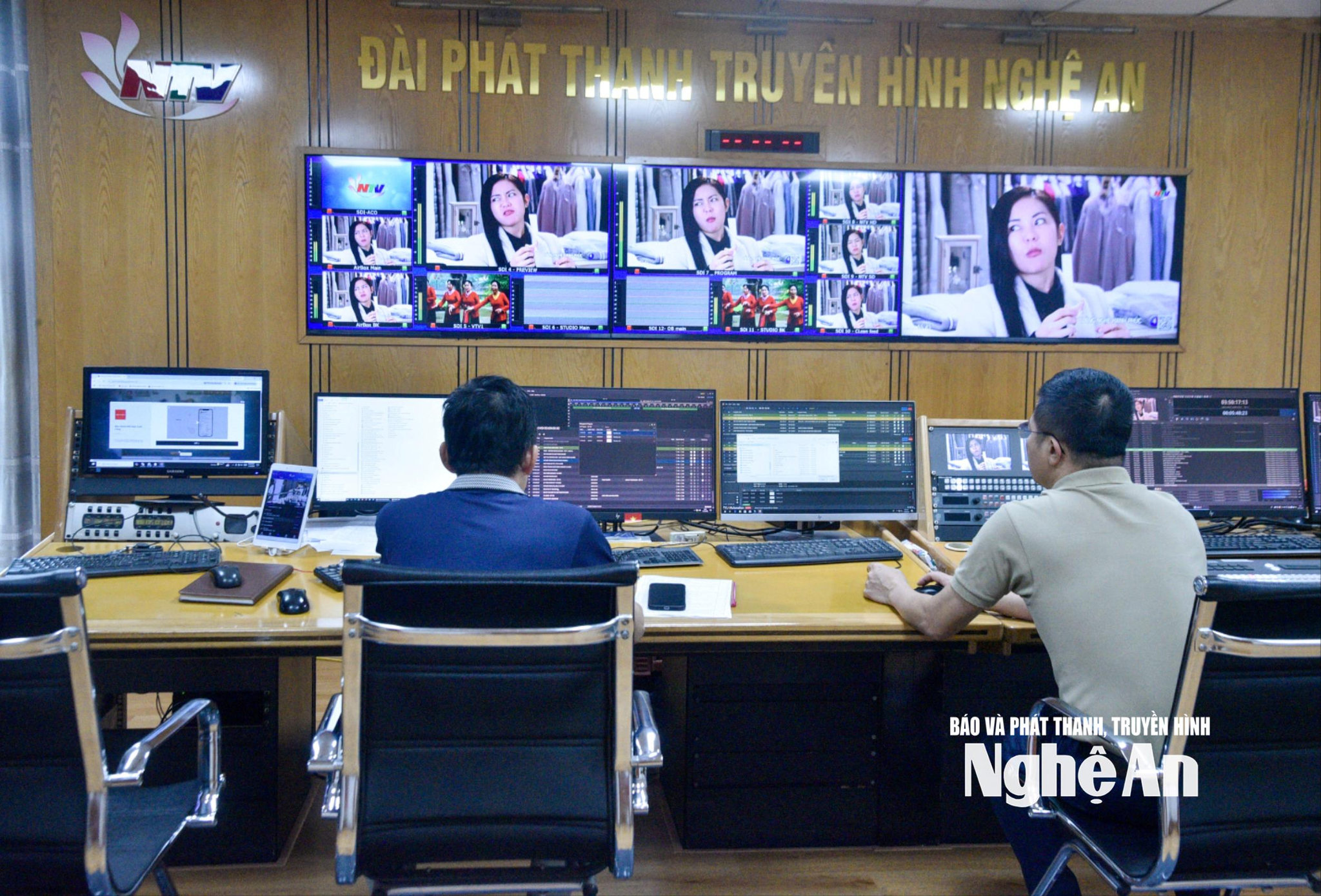
According to Mr. Nguyen Binh Tien, Deputy Head of the Technical and Technology Department, the work of the shift team is not simply about operating equipment according to a pre-scheduled plan. During a normal shift, the main control technician must monitor the equipment status, check signal quality, and ensure stable broadcasting. At the same time, this department must also monitor signals on transmission infrastructures such as satellite, cable television, and platforms from Viettel, FPT, MyTV, etc.
If reporters, editors, and cameramen are the creators of the content, then the overall control center is the department that ensures that content reaches the public safely, continuously, and according to technical standards.
The most important characteristic of the central control system is its continuity, seamlessness, and accuracy in accordance with regulations. For television, the system operates 24/7, requiring constant on-call personnel. Shifts are divided into morning shifts from 5 am to 12 pm, afternoon shifts from 12 pm to 7 pm, and evening shifts (also night shifts) from 7 pm to 5 am the following morning. For radio broadcasting, the continuous 19-hour broadcast time from 5 am to midnight requires ensuring full coverage, especially for news bulletins and live programs.
During shifts, the night shift is always considered the most stressful. Besides monitoring and supervising evening programs, technicians also have to relay central government programs and convert the signal to NTV's programs at the scheduled time.
The process of switching from VTV's programming to NTV's broadcast requires intense concentration and near-absolute precision, as even a small time error can affect the entire broadcast schedule. The pressure is even greater during the early morning hours, demanding alertness and no room for distraction to avoid delays or incorrect broadcasts.
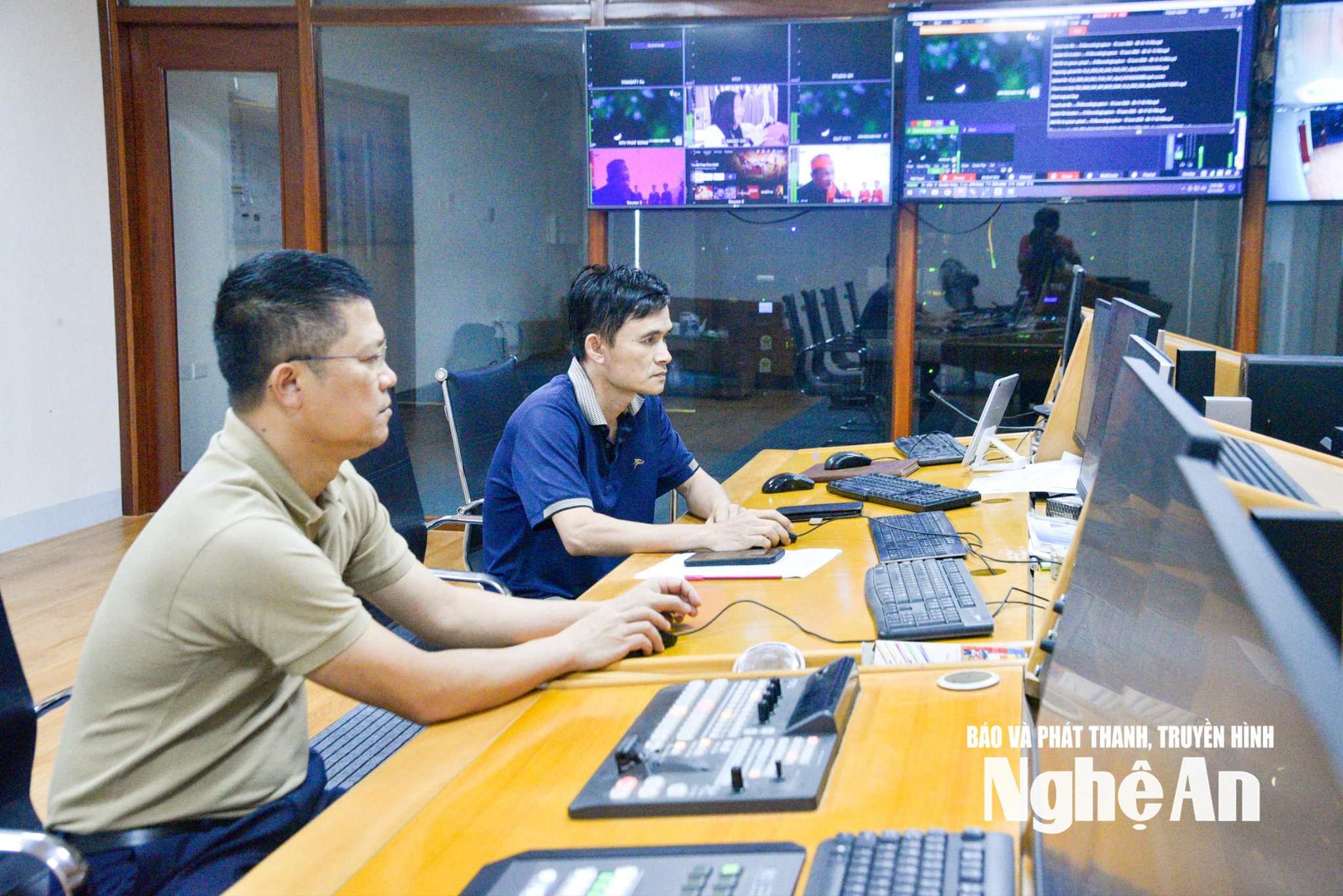
That pressure is even greater with live programs. According to Mr. Nguyen Binh Tien, live programs always have the potential for many unexpected situations. With pre-produced programs, errors can be checked and corrected before broadcast, but with live programs, issues with signal, sound, image, graphics, or duration must all be handled by the central control team in coordination while it is airing.
There are live television programs that are scheduled to last 90 minutes, but in reality end earlier, or conversely, last longer than planned. In such situations, the on-call team must closely monitor the actual situation and proactively prepare contingency plans to avoid "gaps" or "overlapping signals," resulting in incomplete transitions.
Furthermore, adjusting broadcast schedules at the last minute for unexpected events places a high demand on situational awareness. Every decision must be made quickly, flexibly, and accurately, and every operation requires utmost caution. Throughout their shift, technicians monitor the signal system, maintain communication with relevant departments, and perform technical operations in the shortest possible time to ensure the program is broadcast safely, smoothly, and as required.
Decisions about whether or not to relay a broadcast can be made in just a few seconds. Without focus, a firm grasp of the broadcast schedule, and close monitoring of the signal, errors can easily occur.
Mr. Nguyen Binh Tien - Deputy Head of the Technical and Technology Department (Nghe An Newspaper, Radio and Television)
To ensure that each program is broadcast on schedule and with technical safety, the General Control Department maintains close coordination with relevant departments. The Editorial Secretariat is responsible for developing the broadcast schedule, finalizing the content, and transferring the schedule and program files to the General Control Department.
Based on this, staff and technicians check the duration, signal quality, content, and technical parameters of the broadcast file before inputting it into the system. Any abnormalities or discrepancies will be promptly discussed and addressed in coordination with the production department or the Editorial Secretary to ensure the program is broadcast as required.
Their workspace consists of the control room, monitors, equipment, broadcast schedules, input and output signals, numbers, and machine commands. To ensure a successful broadcast, the technical staff always prioritizes focus. Even a small mistake can have consequences for the broadcast and the audience. Therefore, it's a job where errors are unacceptable; safety and accuracy are paramount.
Behind the seamless operation of each broadcast slot lies the meticulousness, experience, and professional competence accumulated through countless real-life situations. These rigorous requirements have created a crucial and indispensable component in the broadcasting industry.
Having dedicated 28 years to the field of broadcasting technology, Ms. Pham Thi Bich Thin, a female technician in the Technology Department, has witnessed many changes in technology and operational processes. Transmission infrastructure is becoming increasingly diverse, and broadcasting requirements are becoming more demanding, but the core requirement of the job remains unchanged: ensuring safe, accurate, and continuous radio and television broadcasting.
Currently, the control center has 12 people, including 8 in the television control center and 4 in the radio control center, working in shifts to ensure continuous operation. Among them are many long-serving officers and technicians who have diligently and silently dedicated themselves to the work behind the broadcasts, such as Ms. Pham Thi Bich Thin, who has performed her duties well for many years and has received a Certificate of Commendation from the Chairman of the Provincial People's Committee; or Mr. Ho Nam, an active officer in professional activities and the department's trade union.
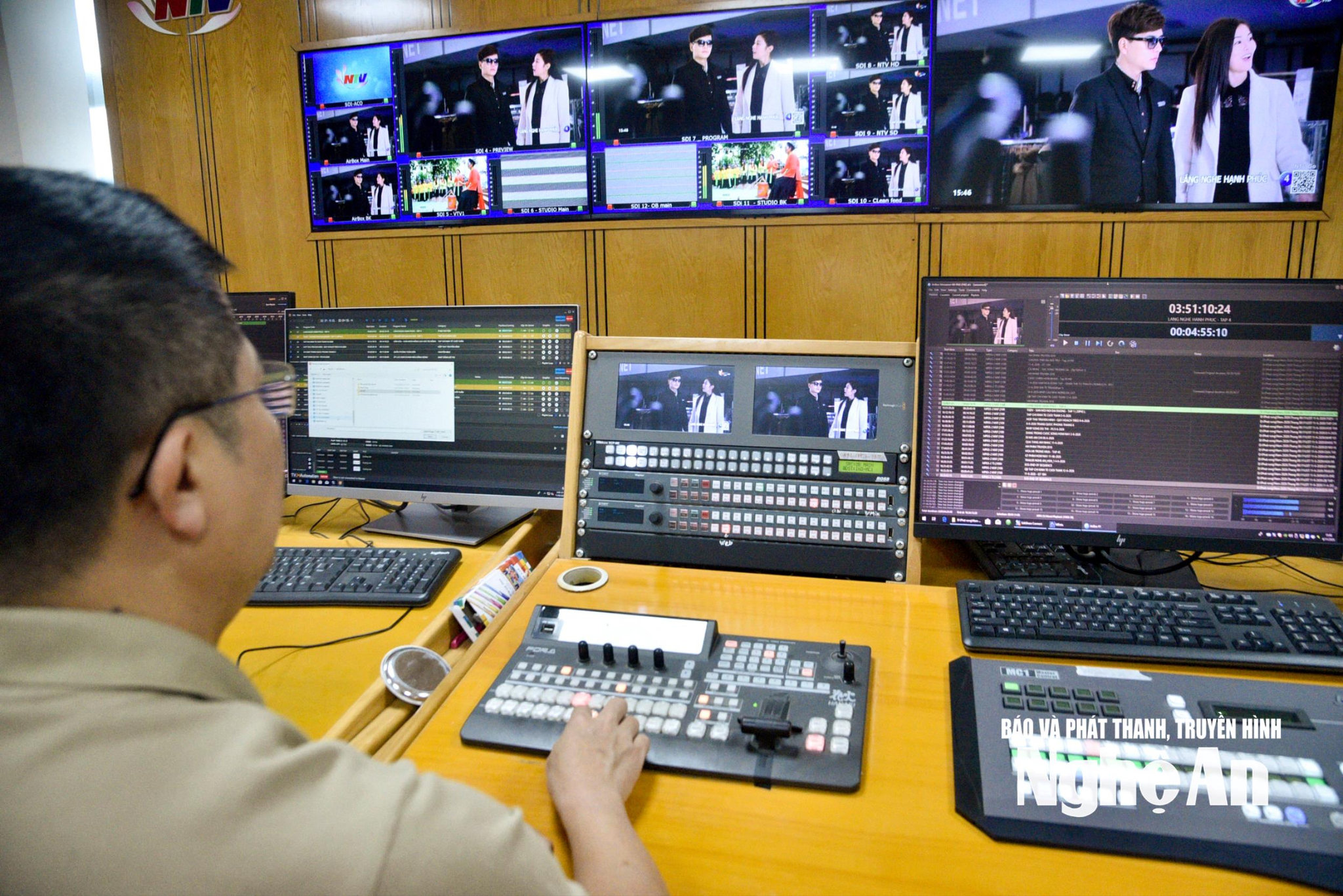
The work of the control room's officers and technicians doesn't involve many moments of being called upon; their joy lies in a timely news broadcast, a safe conclusion to a live program, or a smooth night shift. They don't appear in front of cameras or stand in the spotlight, but they are the ones who keep the flow of information uninterrupted. In the flickering lights of the control room, their dedication and responsibility quietly extend the signals, ensuring that the voice and image of Nghe An Newspaper and Radio and Television reach the public every day.


