
Concerns about agriculture
Hundreds of businesses have sent proposals and suggestions regarding difficulties and obstacles that need to be overcome, as well as concerns and ideas for the development and future of Vietnamese agriculture, to Minister Cao Duc Phat.
Besides the majority of agricultural businesses present at the 2014 Agricultural Business Forum, surprisingly, a number of "outsider" entrepreneurs from various fields such as architecture, information technology, etc., who have no connection to agriculture, were also present, sharing their concerns and aspirations for the development of Vietnamese agriculture with Minister Cao Duc Phat. NNVN (Vietnam Agriculture Newspaper) would like to excerpt some of these heartfelt opinions from the forum.
We don't yet know how to process it to increase its value.
 |
| (Architect Nguyen Nga, Vietnamese expatriate in France) |
For example, in France, I've seen them process rice into rice milk, which sells very well and is always "out of stock." I learned that the technology to produce this rice milk isn't difficult at all; we can easily access it. Each kilogram of rice can produce 2 liters of milk. The price of rice milk in France is up to 2 euros/liter, while soy milk and cow's milk only cost 1 to 1.5 euros, even lower than rice milk. Rice milk is now also imported into Vietnam, selling for 65-67 thousand dong/liter, while even the best quality rice exported from Vietnam only fetches 10 thousand dong/kg at most.
I've traveled to many coastal areas of Vietnam and seen that salt farmers produce salt quite similarly to many regions in France. With just a slight change in the process, they can produce salt like that in France. However, while our salt farmers sell their salt for only a little over 1,000 VND/kg, in France, they use salt in many processing, medical, and healthcare industries. They sell it for about 100,000 VND/kg, 100 times more expensive than in Vietnam, and they urgently need to import salt...
We are the world's second-largest rice exporter, and our rice is delicious, but farmers have very low incomes, and salt producers earn even less. Why not consider processing methods to increase the value of the product?
It is possible to become an agricultural powerhouse.
 |
| . |
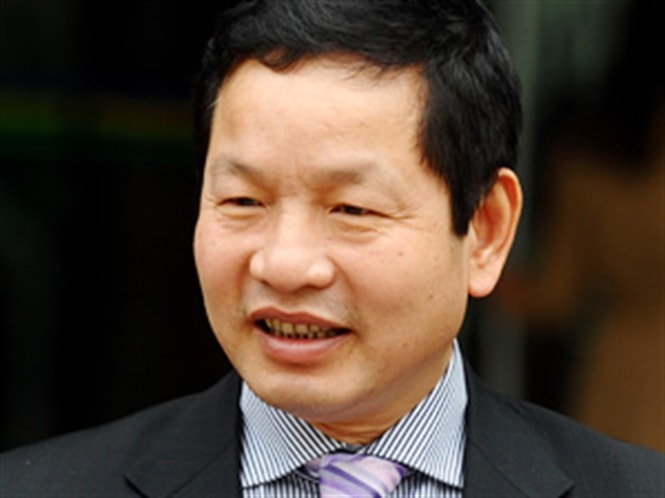
As a business in the information technology sector with no in-depth knowledge of agriculture, I've found agriculture to be truly captivating in recent years. I can confidently say that the most successful and reputable businesses in Vietnam today are all in the agricultural sector.
I believe that if Vietnam were to choose something to achieve great things in the future, that choice would be agriculture. Our information technology and software industries are trying to keep up with the times, but Vietnamese agriculture has the potential to be ahead of its time and become a powerhouse.
However, in addition to facing competition as we negotiate numerous free trade agreements, Vietnam's agricultural sector may also encounter other risks.
"The issue of shrimp broodstock is extremely serious. Every year we export shrimp worth 3.5 billion USD, but all of our broodstock is imported from our competitors such as China and Thailand..."
Every country that currently raises shrimp has received government investment in broodstock production programs, except for the Vietnamese government, which has yet to do so.
"We need a promise from the Ministry of Agriculture and Rural Development and the Government on whether there will be investment in broodstock shrimp production. If not, we need to let our businesses independently invest and develop it, because we can't continue like this forever." - Mr. Nguyen Van Nhiem, Chairman of My Thanh Shrimp Association, Soc Trang.
Quite by chance, I met a German businesswoman on a flight. To my surprise, she mentioned she was flying to Vietnam to meet with the Ministry of Agriculture to lease land for an agricultural project. They said they were managing a $4 billion agricultural production program funded by China, and that they couldn't produce in China because the environment there was too polluted to grow crops.
In Beijing now, it's always hazy and misty during the day, unlike the clean air in Hanoi. After years of rapid development at over 10% per year, China is now paying the price for environmental issues and is forced to slow down. I think their strategy might involve moving agriculture overseas, targeting Southeast Asian countries, starting with neighboring Vietnam.
From an opportunity perspective, China, along with India, sees its population rise above poverty and gain access to meat, dairy, sugar, etc., creating an enormous demand for food. It's difficult to imagine how many agricultural countries like Vietnam could possibly meet their needs.
Livestock farming faces "four hardships".
 |
| . |
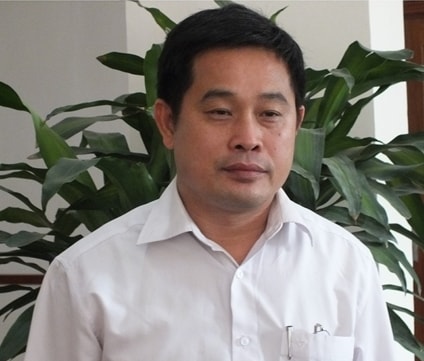
Our livestock cooperative, with nearly 500 farms, is in a precarious situation, unsure of how to cope. After two consecutive years of debt (2012-2013) due to losses, we still have outstanding bank loans with interest rates of 15-18%. Meanwhile, we cannot provide collateral to secure new loans for restocking.
Each farm requires an investment of tens of billions of dong, but the banks require land ownership certificates instead of collateral. Meanwhile, we rent the land for our farms, so how can we possibly have land ownership certificates?
Secondly, regarding land leasing, 95% of farm owners, equivalent to about 300 households, currently have to lease land themselves at exorbitant prices from defense units in the area.
However, last year, just as the farms had finished their infrastructure construction, costing hundreds of billions of dong, the Ministry of National Defense demanded their demolition, claiming that the land leasing agency lacked authority, leaving hundreds of our households in a desperate situation of bankruptcy. The land belongs to the state, to society as a whole; whatever is done should serve the people and society as a whole, so why make things so difficult?
Thirdly, regarding the environment, I assert that livestock farmers themselves cannot possibly invest in meeting the wastewater treatment standards of type A or type B as currently required by the Ministry of Natural Resources and Environment. However, whenever the environmental police come to inspect and find that the wastewater does not meet the standards, they impose harsh penalties. The absurdity is that they don't even explain how we can treat our wastewater to meet their requirements.
Recently, we had a project where a unit of the Ministry of Natural Resources and Environment helped us build a wastewater treatment plant. The plant had just been completed and put into operation when, as expected, the Environmental Protection Agency came to inspect it, and the results showed it didn't meet wastewater standards, so the plant is currently out of commissioning. It's utterly illogical!
Ultimately, we small-scale farmers are burdened with a 5% VAT on animal feed, while foreign corporations are comfortably exempt from this tax. We've calculated that, for the same pig and the same market, small-scale farmers are losing approximately 150,000 to 200,000 VND compared to foreign companies when the pigs are ready for slaughter.
Minister Cao Duc Phat:In implementing the restructuring of the agricultural sector, the Ministry of Agriculture and Rural Development has deployed many solutions to innovate the operations of enterprises, strengthen private investment cooperation and public-private partnerships. However, investment by private enterprises in the agricultural sector remains low, and investment by FDI enterprises only accounts for about 3.4% of total foreign investment.
In 2013, only about 1,000 new businesses were established in the agricultural sector, a 14% decrease compared to the previous year, while 1,300 businesses in the agricultural sector ceased operations. Despite this, thanks to the efforts of businesses, in the first nine months of 2014, Vietnam's exports of agricultural, forestry, and aquatic products still reached US$22.7 billion, a 14% increase compared to the same period last year, and could potentially reach US$3 billion for the whole year.
This effort has helped boost overall agricultural growth by 3% in the first nine months of 2014 (compared to 2.4% in the same period of 2013). This is a positive sign.
Through this Forum, the Ministry of Agriculture and Rural Development has listened to the many difficulties and obstacles faced by businesses and will seriously and promptly address these difficulties and obstacles, especially those related to policies and administrative procedures. It will also promptly rectify the working methods of agencies under the Ministry of Agriculture and Rural Development as well as business management agencies to create the most favorable conditions for the operation of businesses in the agricultural sector and attract more businesses from various sectors to invest in agriculture.
According to NNVN


