
Controversy over "golden rice"
Controversy surrounding the development of a new genetically modified rice variety is raging in the Philippines. Farmers fear the new variety will harm their crops, while Filipino scientists argue that the high-vitamin A rice will be a solution to childhood malnutrition. Environmental organizations, however, claim that only agricultural corporations will benefit from it.
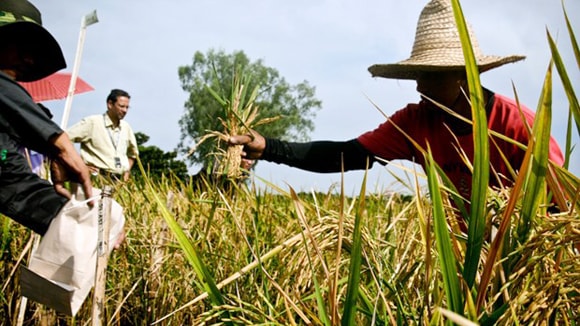
"Golden rice" from a controversial genetically modified rice variety
Farmers protest
Tensions escalated earlier this August when around 400 farmers destroyed a test rice field in Camarines Norte, Laguna province, because they believed the genetically modified rice would cause hybridization in the region's rice crops. They said the new variety would lead to crop failures and significantly impact their livelihoods.
Filipino farmers are concerned that this rice variety, as well as other foods genetically modified, could pose unforeseen risks to human health and the environment because the long-term effects of genetically modified foods have not been thoroughly studied. "We don't want people, especially children, to become guinea pigs," said one farmer.
The genetically modified rice variety, the focus of the debate, is called "golden rice" because it produces yellow rice, and was developed by a team at the International Rice Research Institute (IRRI). To create a rice variety with a high vitamin A content, they took three genes from corn and transferred them to the rice plant. This is not achievable through conventional breeding methods and requires advanced biotechnology.
Solutions to malnutrition?
In a statement posted on its website, IRRI said the trial rice planting had been authorized by the Department of Crop Production of the Ministry of Agriculture.
Dr. Bruce Tolentine, Deputy Director-General for Information and External Affairs at IRRI, stated that IRRI will continue to conduct trials of golden rice to ensure sufficient data and analysis before making a decision on this type of rice. However, Mr. Quijano exposed this, saying that there have been no safety trials. “The issue remains unresolved, such as chronic health effects or causing allergies and poisoning. Meanwhile, the project proposal is from the Rice Research Institute.”
Like many other Asian countries, rice is the primary source of energy for most people.
"Chemical companies benefit."
Currently, the "golden rice" variety is still under research. Local authorities are gathering information to submit to the government.
Many scientists are also concerned that many rice varieties in the Philippines, especially those grown by indigenous people, may be affected by genetically modified rice, or that they may be crossbred. Research and promotion of genetically modified rice varieties only benefit a few agricultural corporations when "golden rice" is bred to withstand herbicides from Monsanto or other chemical companies.
“We believe that the use of genetically modified technology in rice is unnecessary. And we believe that farmers and the community as a whole will not benefit. This research only profits the corporations that are trying to introduce genetically modified rice into cultivation. That is why they are pushing this product in developing countries,” said Trixie Concepcion of the Organization.
According to anninhthudo.PH


