
How are Japanese children taught to swim?
(Baonghean.vn) - Summer is the most anticipated season for children in Japan, not only because they get a summer break to go on trips with their parents, but also because they are very excited to experience many interesting things at kindergarten. One of the most exciting experiences is learning about water and swimming.
In Japan, swimming pool activities typically begin in early July and end in early September.
Parents will need to prepare swimwear and towels for their children according to the school's instructions.
When dropping off the children in the morning, the teacher will ask the parents if the child is eligible to swim in the pool that day, if the child has had a full breakfast, and if the child has had enough sleep the night before.
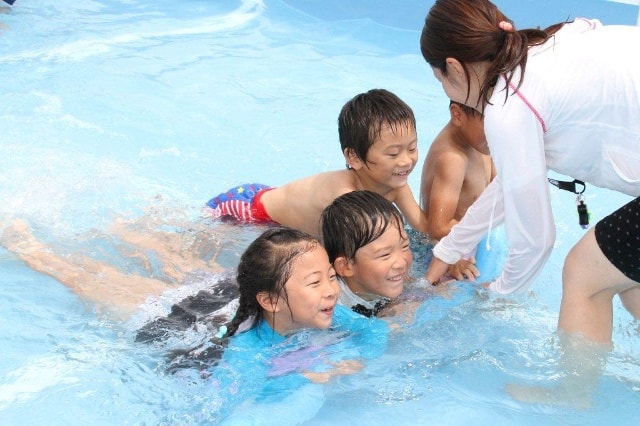 |
| The child is learning to swim under the guidance of a teacher. |
Children from 0 to 5 years old all get to experience the swimming pool. The pools will be filled with water according to the age group.
The 0-year-olds enter the pool with the aim of getting acquainted with water, simply to experience the joy of splashing their hands in the water.
Children will be allowed to bring their favorite toys to the pool and play freely under the close supervision of their teacher.
Before entering the swimming pool, older children aged 2 to 5 must clearly and loudly recite five promises: to eat a hearty breakfast; to get plenty of sleep; to do some warm-up exercises before entering the pool; not to splash water on children who are not used to the water or who are crying; and not to push, run, or jump in the pool.
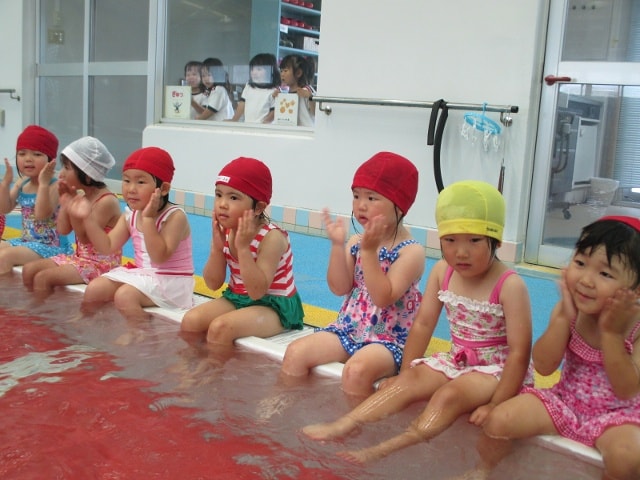 |
| The children warm up before getting into the pool. |
In older classes, children will set their own goals, such as "to hold their breath underwater for 10 seconds," "to relax and float on the surface of the water," etc. The teacher will listen to each child's ideas and goals, consider whether they are appropriate for the child, and then give the most suitable advice and encourage them to achieve them.
Five-year-old children will learn another swimming skill: swimming while wearing regular clothes. This skill will help them swim well even without a swimsuit, in case they encounter water hazards in their daily lives.
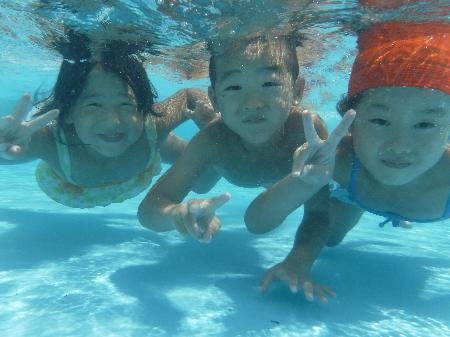 |
| The children practice holding their breath underwater. |
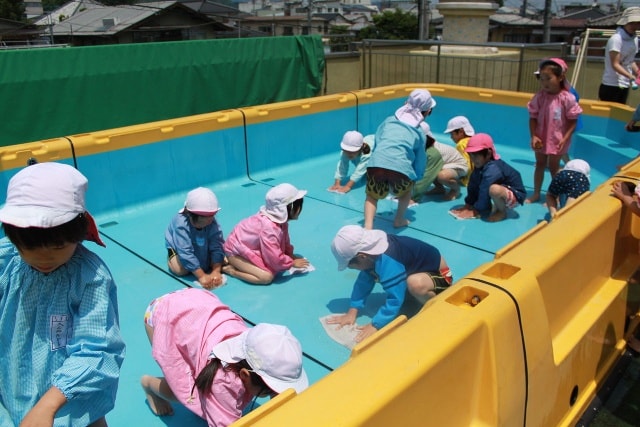 |
| After swimming, the children cleaned up the pool themselves and thanked it. |
At the end of the summer break, the teacher will compile the children's feedback about the swimming pool, how fun the games were, and how much the class has achieved its goals, encouraging them to try harder next summer.
After the swimming lesson, the children will clean the pool and their swimming toys under the guidance of their homeroom teacher. While cleaning, they will thank the pool and their toys. They must say thank you loudly and carefully, promising to see their friends again next year.
Le Quyen
| RELATED NEWS |
|---|


