
The Middle East - suspended between two US presidential terms.
(Baonghean.vn) - The term of US President Donald Trump is entering its final days. This week, Trump sent his son-in-law, Jared Kushner – a senior advisor and the "architect" of US policies on Israel and Palestine – on what is likely his final official trip to the Middle East. While aiming to mend the loose ends in the region, Kushner's trip has raised serious questions that are difficult to answer in public opinion both in the region and in the US.
Sit down with Qatar
Earlier this week, Qatar's state news agency reported that Kushner and his host, Emir Sheikh Tamim bin Hamad al-Thani, discussed "regional developments." These topics, according to DW, may have included the relationship between Qatar and Saudi Arabia and the United Arab Emirates – Saudi Arabia's allies – as well as Bahrain and Egypt, countries that boycotted Qatar since June 2017, closing sea routes, land borders, and airspace to Qatari vessels due to its close partnership with Iran.
Governments have also accused Qatar of funding terrorism and the transnational political organization Muslim Brotherhood, which is banned in Egypt and its Gulf allies. Qatari officials have denied these allegations.
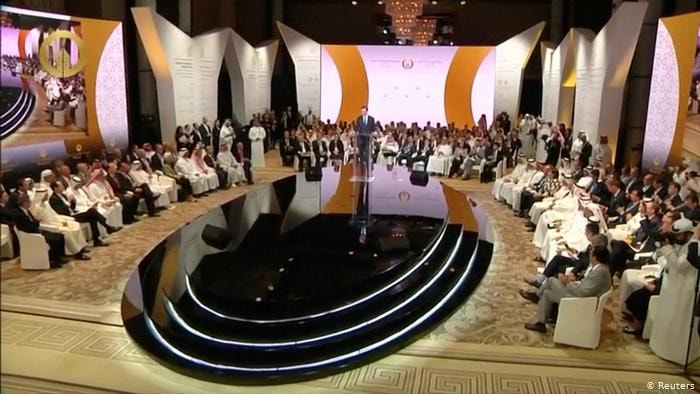 |
| Kushner speaks at the Peace to Prosperity conference in Bahrain in 2019. Photo: Reuters |
Qatar has offset the financial losses caused by the boycott, which led to cuts in imported food products, with help from Iran and Türkiye. However, in November, the government indirectly signaled that officials might consider reconciliation. Foreign Minister Sheikh Mohammed bin Abdulrahman bin Jassim Al Thani affirmed this.Qatari governmentHe said there was no official opinion on Middle Eastern countries normalizing relations with Israel while continuing to occupy Palestinian territories. He said that the UAE and Bahraini governments “will ultimately need to decide what is best for their countries.” However, the diplomat added that he “thinks it is better to have a united front” and prioritize “the interests of the Palestinians.”
"Conflict with Iran"
Currently, the Middle East appears to be sometimes divided in two: one side being Iran and its allies, and the other being Saudi Arabia, Israel, the US, and the countries they support. And Kushner is expected to address the topic of Iran during his stay in Saudi Arabia.
In retrospect, diplomatic activity during the Trump administration was erratic, but the US leader made it clear that Iran was one of his main issues. Iran also sits prominently on the agenda of Trump's successor, former US Vice President Joe Biden.
 |
| Working in an Iranian nuclear power plant. |
In a recent analysis published by the Israeli Telegraph Agency (JTA), expert Ron Kampeas commented,both Biden and Trump“They are all concerned about Iran’s accumulation of nuclear materials.” Biden may attempt to return to the agreement that the Obama administration and other countries signed with Iran in 2015 to limit its nuclear buildup. That agreement, considered “historic,” was ultimately destroyed by Trump, and he himself would benefit from preventing its restoration. On this issue, Kampeas writes: “The outgoing president is taking steps to hinder his successor, most notably a mechanism of increased sanctions. The most effective way to block the possibility of returning to the Iran agreement is to initiate a conflict with Iran.”
Of course, such a conflict, if it were to occur, would entail many complications. An attack on Iran would be a major obstacle to any hope of repairing the Middle East's financial system, according to expert Karen Young in an article published in November on the regional news website Al-Monitor. The author wrote: “In reality, it would usher in a lost generation, squandering the opportunity for demographic income, trapping a young, relatively healthy, and highly educated population in poverty, immobility, and silence – perhaps the greatest missed opportunity since the discovery of oil.”
Confrontation with the Saudi Arabian royal family.
Crown Prince Mohammed bin Salman undoubtedly has many reasons to worry about Saudi Arabia's relationship with the United States under Joe Biden's administration. Some members of Congress have claimed that Mohammed bin Salman was involved in the assassination of Washington Post journalist Jamal Khashoggi by government officials working at the Saudi consulate in Istanbul and have called for him to be held accountable. The Trump administration blocked all such efforts, and Washington Post journalist Bob Woodward even reported that Trump boasted about "saving" Mohammed bin Salman's life.
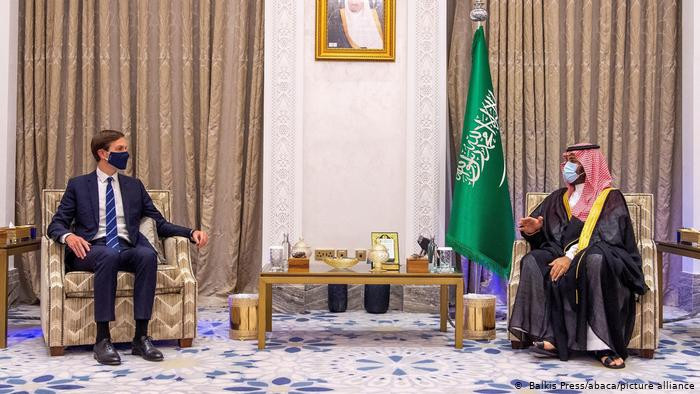 |
| Kushner during his visit to Saudi Arabia in September. Photo: PA |
In an interview with DW in November, Günter Meyer, director of the Center for Arab World Studies at the University of Mainz, stated that Biden would have to clarify his position. “On the eve of elections, Biden says he will ‘rethink’ the relationship with Saudi Arabia. An announcement like that usually triggers far-reaching changes,” Meyer said.
The UAE authorities may have less to worry about regarding their personal fate. However, the country's geographical location makes it particularly vulnerable in the event of military conflict. The ongoing war in Yemen, from which the UAE has largely withdrawn troops, now demonstrates the UAE authorities' limited ability to counter unconventional adversaries such as the Iranian-backed Houthi forces. Therefore, the UAE will undoubtedly hope to maintain good relations with the United States, which has so far provided them with protection.
What about Israel?
The Israeli government also faces the question of how to respond to Iran. Officials in the US and Iran assert that there is evidence suggesting Israeli involvement.assassination of a famous nuclear scientistThe assassination of Iranian Mohsen Fakhrizadeh on November 27th has not yet received any official comment from the Israeli government. However, if Israel's involvement in the assassination is confirmed, it could challenge the government's recently normalized relations with the UAE, Bahrain, and Sudan – a project encouraged by the US. Many in the region might be unwilling to support a war against Iran, and it certainly wouldn't guarantee Israel's security. The political consequences of such a scenario are difficult to calculate!
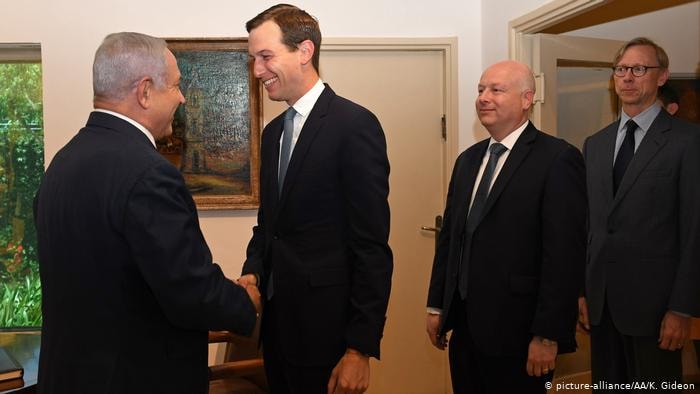 |
| Netanyahu had an effective relationship with the United States under Trump. Photo: AA |
Furthermore, Israeli Prime Minister Benjamin Netanyahu would seek U.S. support if he had to choose a full-scale military move against Iran. Commenting on this, expert Kampeas wrote for JTA: “Biden might be less willing to fully support Israel if Netanyahu initiates a war.”
These questions may remain open until after the inauguration on January 20, 2021, when President-elect Biden clarifies his plans for the region.


