
In the face of an environmental crisis, don't be slow to react!
To determine the cause of environmental incidents like the discoloration of the Nam Huong stream (Quy Hop district) and the resulting fish kill, local authorities and relevant agencies need to react quickly and promptly, while ensuring honesty and objectivity.
Concerned that the Nam Huong stream, specifically the section passing through Cai village, Chau Thanh commune (Quy Hop district), suddenly turned dark yellow with dead fish washing ashore, some social media users in Quy Hop district posted related information and images on their personal Facebook pages.

My colleague in this mining area was no exception; he also quickly posted information about the incident and the involvement of relevant authorities on his personal Facebook account.
Because this was an unusual incident, the information and images of the Nam Huong stream that they posted on their personal Facebook accounts quickly attracted the attention of social media users. Similarly, their colleagues' personal Facebook accounts also received many comments, including some very noteworthy exchanges.

As user Nguyen Giang wrote: “Let's look back at the history of Quy Hop 20 years ago. The water in the Dinh River, streams, and springs was crystal clear. It's so simple, yet we keep looking for the cause…”; or user Sam Van Thanh speculated: “It's probably because the water contains chemicals that so many fish are dying.”
Even Facebook user Khoi Nguyen wrote: “From 2016-2017, when the tailings dam of the Bac stream belonging to Nghe Tinh Non-Ferrous Metals Company broke, we analyzed and dissected the situation to decide on the optimal solution: replacing the water source supplying Quy Hop town. However, it is unclear who is responsible for the costs. The water plant is not responsible for whether the input source is adequate or not. Therefore, nothing has happened until now.”
In my opinion, if no one takes responsibility for replacing the water source for the water treatment plant, the only solution is to permanently suspend the tin ore mining operation at Suoi Bac stream. We cannot sacrifice the environment and people's health for economic reasons."

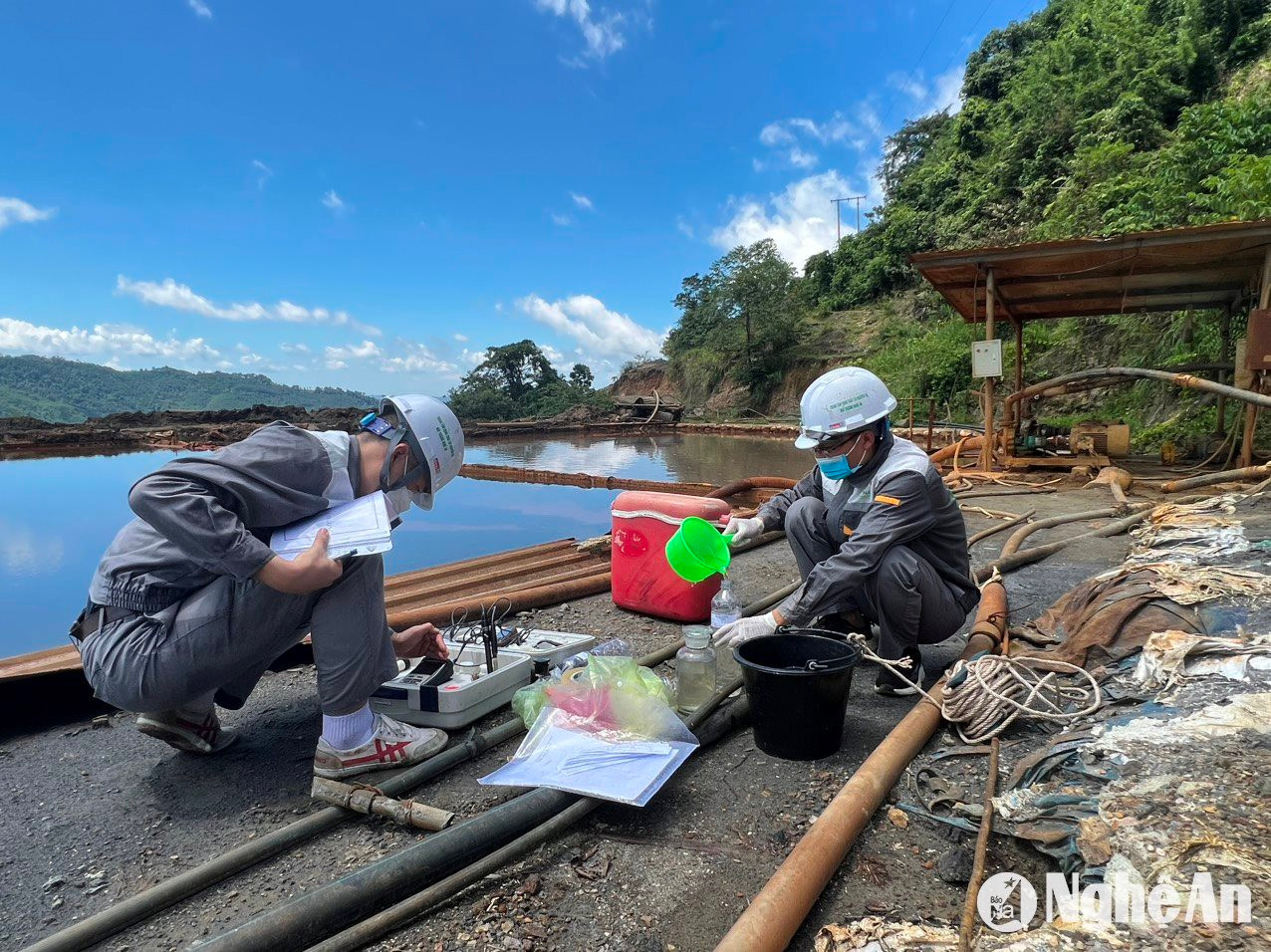
But most noteworthy is the comment from Tran Duc's account: "In my personal opinion, the government took samples a little too late. Perhaps it would have been more appropriate to take samples earlier. Too much of the toxic substances have been washed away by the stream water..."

As a journalist, I've worked in Quy Hop district many times to report on similar incidents, so when I read these comments, I understand their thoughts and feelings. Although Quy Hop district is rich in mineral resources, it has suffered negative impacts from mineral exploitation for many years. Some consequences are visible, but others are silently unfolding and not everyone is aware of them.
The water from the Nam Huong stream is closely linked to the daily lives of households in the communes of Chau Thanh, Chau Cuong, and Chau Quang, from agricultural production and livestock farming to daily drinking water. In fact, the water from the Nam Huong stream is even the raw water source for the Quy Hop Water Treatment Plant, which produces drinking water for tens of thousands of people in the town.
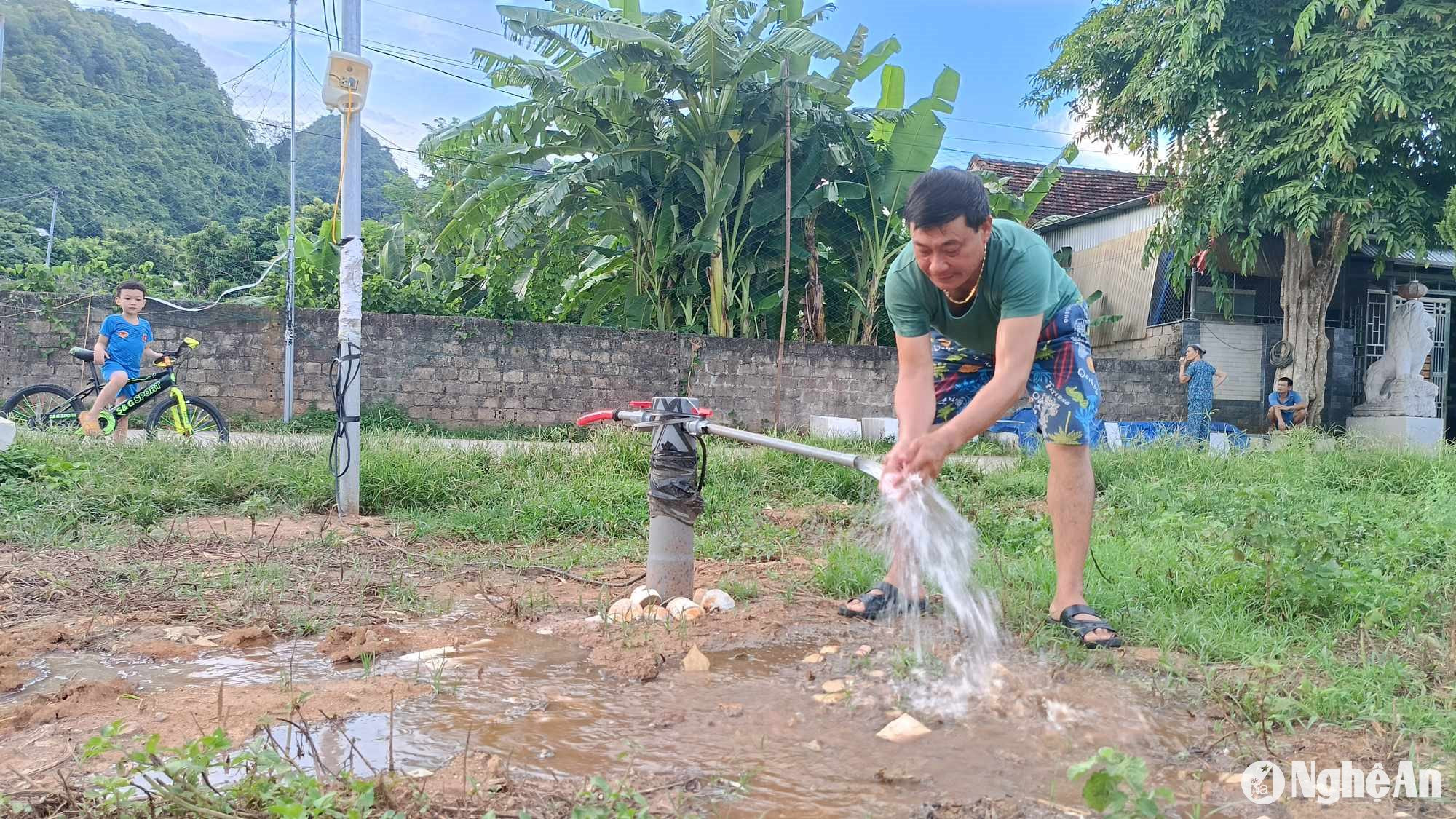
Therefore, when the Nam Huong stream experiences unusual problems, how can the people of Chau Thanh, Chau Cuong, Chau Quang communes and Quy Hop town not be worried and uneasy? They must express their desire for all levels of government, relevant agencies, and functional units to investigate the cause of the incident and severely punish the perpetrators.
However, to find the cause of the incident, a quick, timely response is needed, along with ensuring honesty and objectivity. In the case of the discoloration of the Nam Huong stream, in addition to identifying the source of the pollution, timely environmental sampling for analysis is extremely important. Everyone understands that the streams on Lan Toong mountain and the Nam Huong stream are both flowing water sources.
The discharge of wastewater by Ha An Tin Company Limited occurred over a specific period, and only a swift response and timely sampling for analysis could ensure accuracy. Conversely, if samples were taken after some time had passed since the incident, the water in streams and creeks would wash away the toxic waste, resulting in inaccurate analysis results.

As reported by Chau Thanh commune, the Nam Huong stream's discoloration to a dark yellow occurred between June 30th and July 1st; while the two water samples taken for testing were on July 3rd and July 8th. Therefore, Facebook user Tran Duc's concern and comment, "In my personal opinion, the government took the samples a bit late. Perhaps it would have been more appropriate to take them earlier. Too much of the toxic substance has already been washed away by the flowing stream..." is entirely justified!
Therefore, this comment should be considered valuable feedback; so that we don't hesitate in the face of any environmental incident!


