
Vocational schools in Nghe An province are striving to provide training based on specific orders.
(Baonghean.vn) - Choosing vocational training programs that align with job market demands is a major concern for vocational training institutions in the province.
In reality, many once-popular professions are now experiencing a slowdown, while conversely, there are professions that society urgently needs but vocational training institutions lack the resources to open new ones. However, training institutions are striving to find ways to meet market demands.
Customized training
In 2022, Hong Lam College of Economics and Technology received an order from Honda for over 200 positions in applied informatics. The company committed to hiring graduates from Hong Lam College with salaries ranging from 10 to 12 million VND, requiring only the skills to design small software programs or create a few modules as requested.

According to Phan Xuan Dung, Principal of Hong Lam Economic and Technical College: "Most students trained in Applied Informatics at our school are able to perform the jobs required by the clients. They receive stable salaries and are guaranteed long-term employment. In the coming years, the school will continue to offer this program, as in addition to orders from the previous company, we continue to receive orders from other companies with similar requirements."
The principal of Hong Lam Economic and Technical College added that the school will soon open more in-demand vocational programs such as beauty care to ensure the training program is closely aligned with market needs. "This is a profession that many domestic and international markets are in need of, and we have already enrolled a large number of students," Mr. Dung said.
Not only is Hong Lam receiving job orders in a new profession and then implementing training, but many schools are now upgrading their programs in popular fields after receiving numerous orders from businesses. Mr. Luong Anh Tuan, Principal of Nghi Loc Economic and Technical Vocational College, said: “Specifically for the Culinary Arts profession, we always have a large number of orders from hotels and restaurants. Even during internships, students are paid 5-7 million VND per month. By the time of graduation, many companies are willing to hire the entire class.”
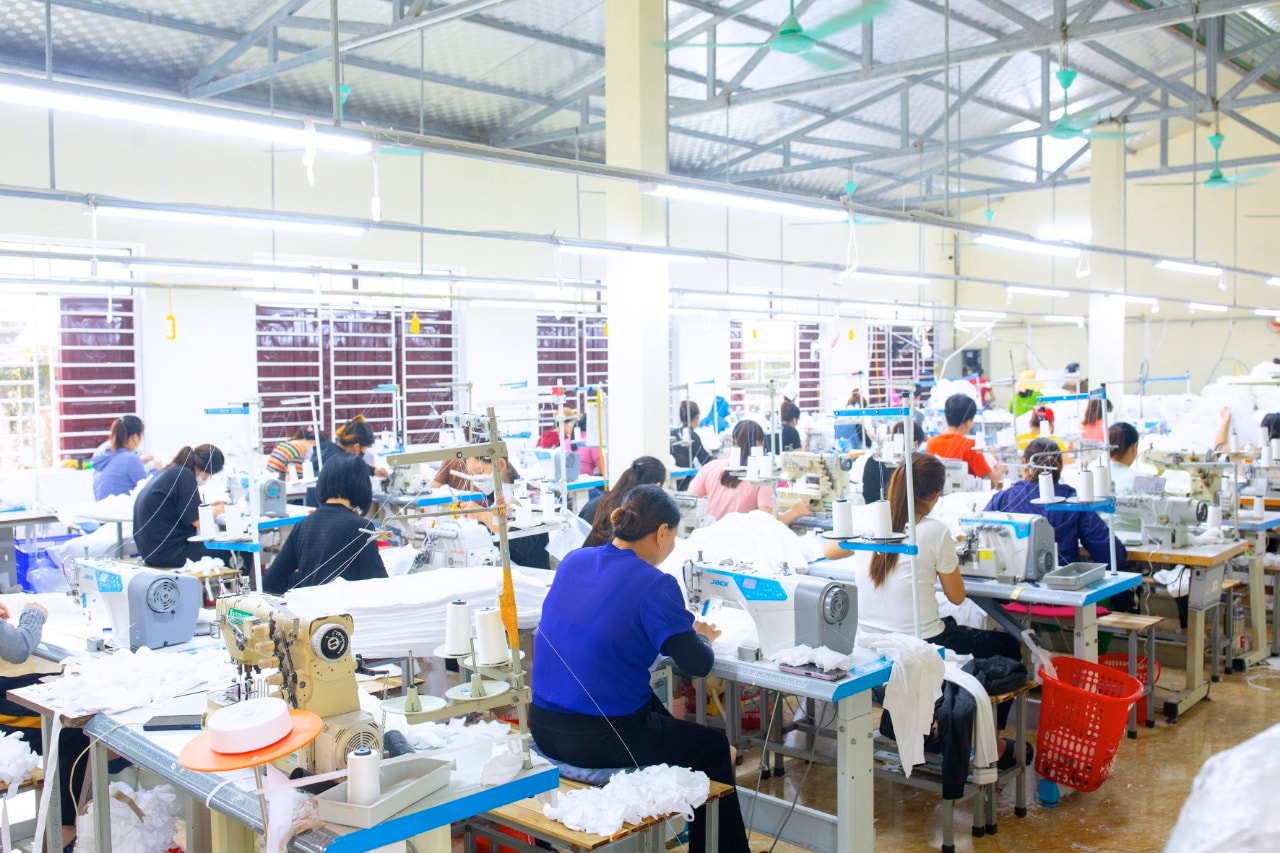
According to Mr. Tuan, Nghi Loc Economic and Technical College is planning to open new vocational programs such as fashion design and Korean language, but is facing many obstacles due to a shortage of full-time teachers and inadequate facilities. Mr. Tuan added: “The garment industry, which has been a hot sector in recent years, is now showing signs of stagnation, and in the coming years, the number of students pursuing this field will decrease. The school will make adjustments to enrollment numbers and focus on other vocational programs.”
Currently, many vocational training institutions in the province are reviewing low-enrollment programs to adjust training scale; at the same time, they will plan to open new programs that are in line with employment trends. Mr. Chu Minh Loi, Principal of Bac Nghe An Economic and Technical College, said: "We are currently training in seven traditional trades: Electricity, Refrigeration, Household Electricity, Welding, Mechanics, Sewing, Culinary Arts, and Automotive Technology. Besides the programs with relatively good enrollment numbers, there are also programs with significantly lower enrollment. To meet the trend, we will re-evaluate programs with few students and open new programs to meet market demand."
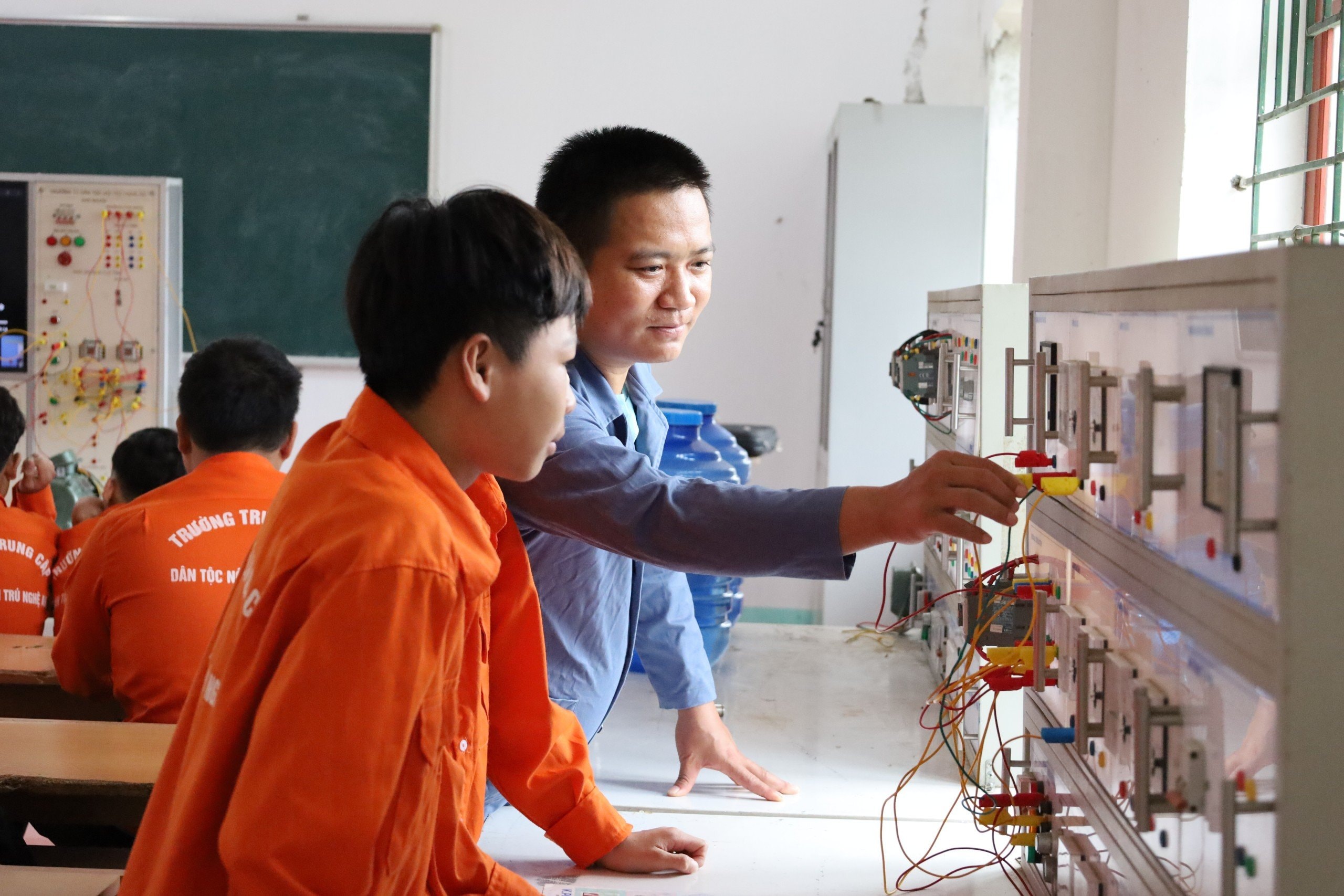
Similarly, the Nghe An Ethnic Boarding Vocational School also faces many challenges in improving the vocational skills of its students in in-demand fields. The principal of the Nghe An Ethnic Boarding Vocational School, Le Anh Tuan, stated: “We are investing in facilities for the Welding and Automotive Technology programs so that students have the best conditions to practice in a modern working environment, meeting the requirements of these professions.”
At the meeting summarizing the work on job creation and labor export, Mr. Bui Dinh Long – Vice Chairman of the Provincial People's Committee – observed: “To ensure that workers have good jobs and are ready to join businesses in the province and nationwide, schools and vocational training institutions must have close links, and vocational training needs to be linked to the needs of the labor market. The most effective approach is still training based on orders from businesses to ensure that students will have jobs upon graduation.” Therefore, according to the Vice Chairman of the Provincial People's Committee, schools that know how to choose the right professions that society needs will affirm their position. Instead of training what the school has to offer, schools should keep up with training in the professions that society needs.
Improving the skills of workers to meet market demands.
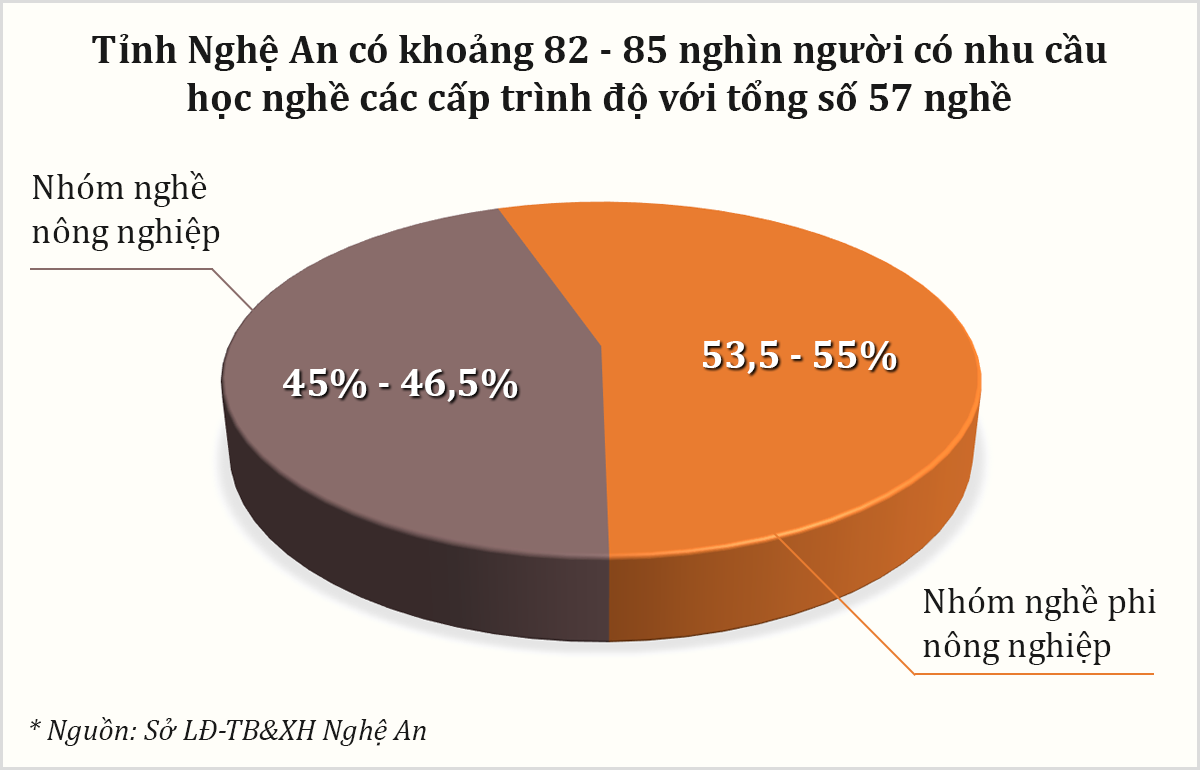
According to a report by the Department of Labor, War Invalids and Social Affairs, approximately 82,000-85,000 people in the province have a need for vocational training at various levels across 57 different occupations. Specifically, agricultural occupations account for 45-46.5% of the province's total demand, while non-agricultural occupations account for 53.5-55%.
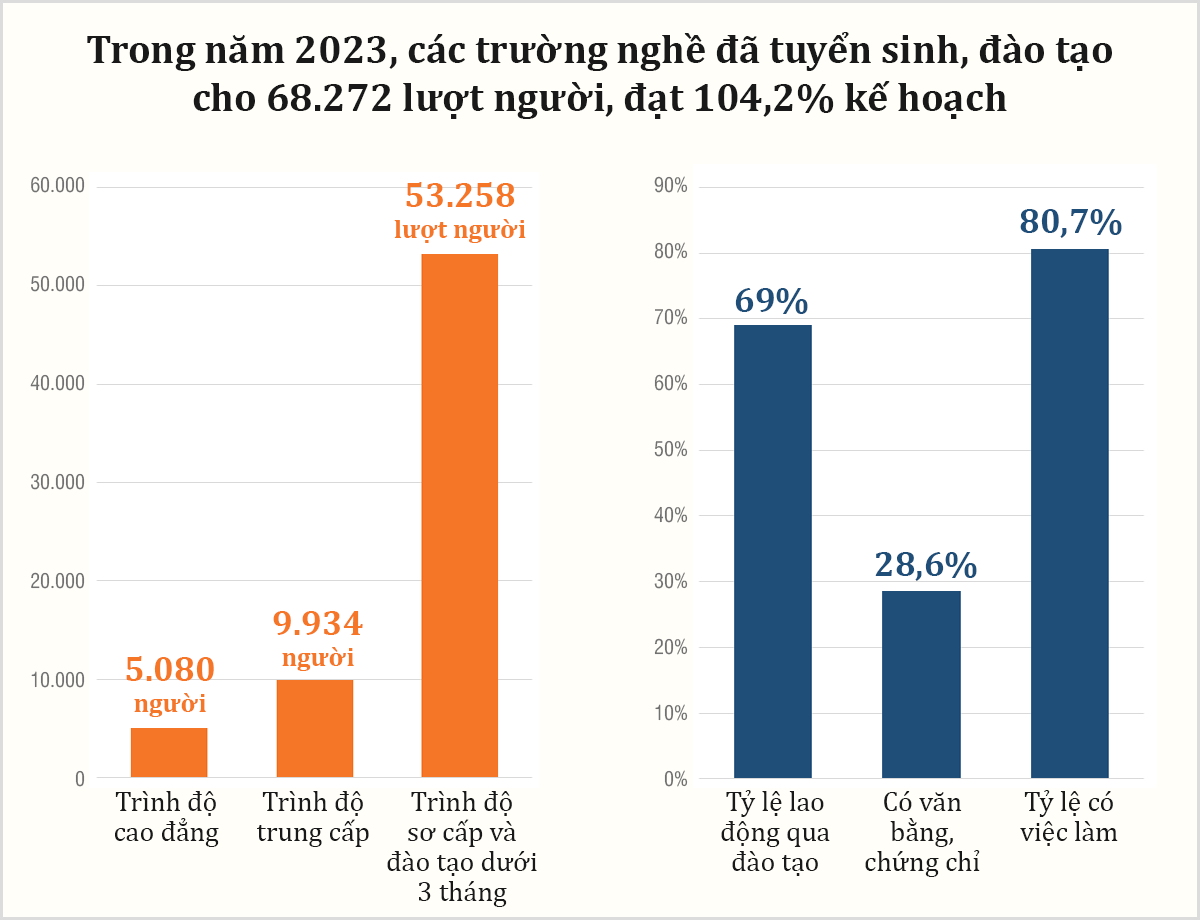
In 2023, vocational schools enrolled and trained 68,272 people, achieving 104.2% of the plan; including 5,080 people at the college level, 9,934 people at the intermediate level, and 53,258 people at the basic level and training courses under 3 months, contributing to raising the rate of trained labor to 69%, of which 28.6% have diplomas or certificates; the employment rate reached 80.7%.
Training institutions have focused on and promoted partnerships with businesses to create opportunities for students to intern and find employment. The employment rate for college and vocational school graduates reaches 95%, with some professions achieving 100% employment and stable income after graduation, averaging 7-8 million VND per month, such as welding, mechanics, electrical engineering, electronics, hotel management, automotive technology, culinary arts, construction, and restaurant management.
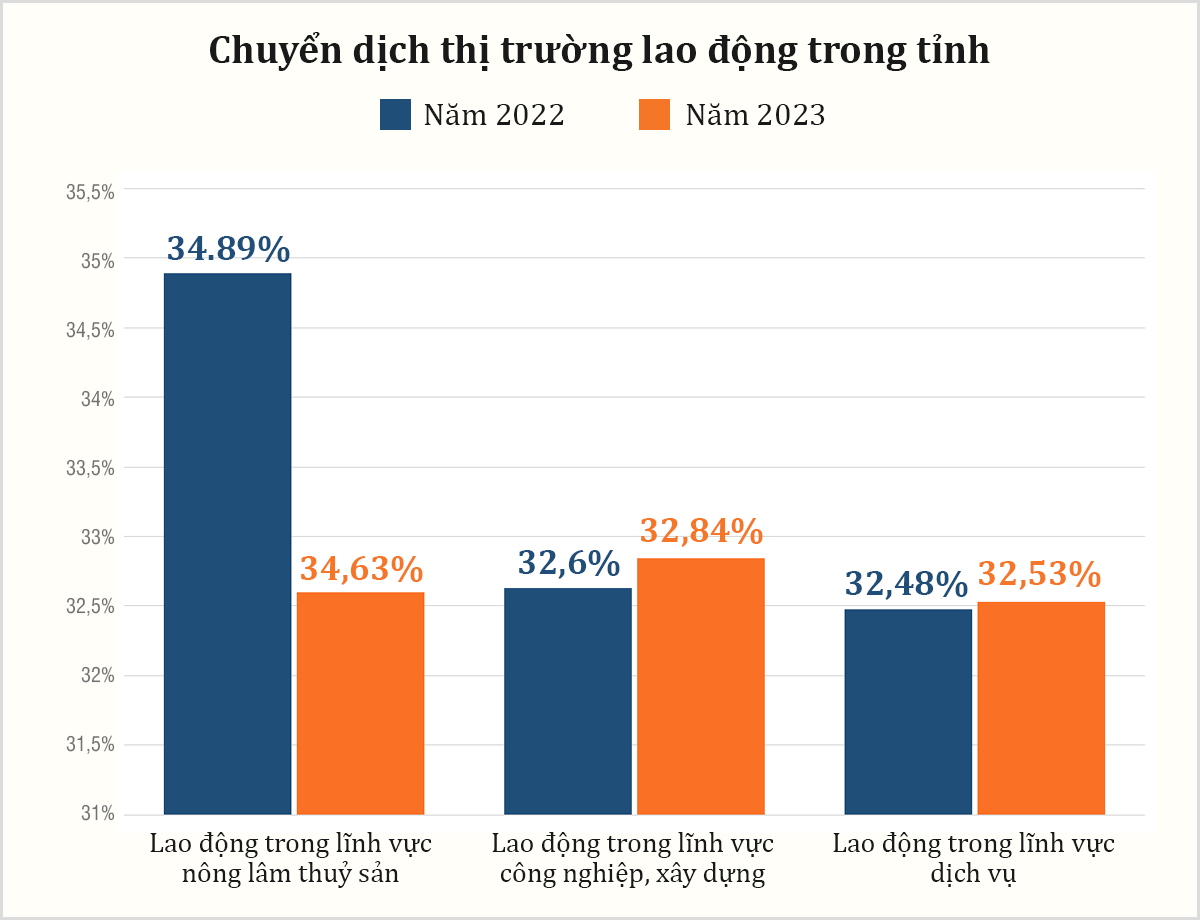
The labor market is shifting in a positive direction, with the proportion of workers in agriculture, forestry, and fisheries decreasing from 34.89% in 2022 to 34.63% in 2023, while the proportion of workers in industry and construction increased from 32.60% in 2022 to 32.84% in 2023, and the proportion of workers in the service sector increased from 32.48% in 2022 to 32.53% in 2023. The quantity and quality of human resources are continuously improving, ensuring they gradually meet the needs of the domestic labor market and international integration.
Vice Chairman of the Provincial People's Committee Bui Dinh Long affirmed: To create more high-paying job opportunities for workers in the province, it is necessary to strengthen cooperation between local labor management agencies and businesses; between vocational education institutions and businesses, especially corporations and conglomerates, to sign agreements on training based on orders, targeted training, linking enrollment with recruitment and employment. Develop diverse training methods, such as: on-the-job training at businesses, production and service establishments; farms, and apprenticeship programs.
In addition, it is necessary to conduct thorough surveys and forecasts of labor market demand, aligning them with the socio-economic development strategies, plans, and programs of the province, each sector, and each locality, as well as with the North Central economic region and the domestic and international labor markets.


