
General Cuong: Visiting Cuong Temple and not forgetting the pain of losing the country.
(Baonghean.vn) - Based on historical evidence, this article expresses the views and concerns of Major General, Associate Professor - Doctor Le Van Cuong, former Director of the Institute of Strategy & Science, Ministry of Public Security.
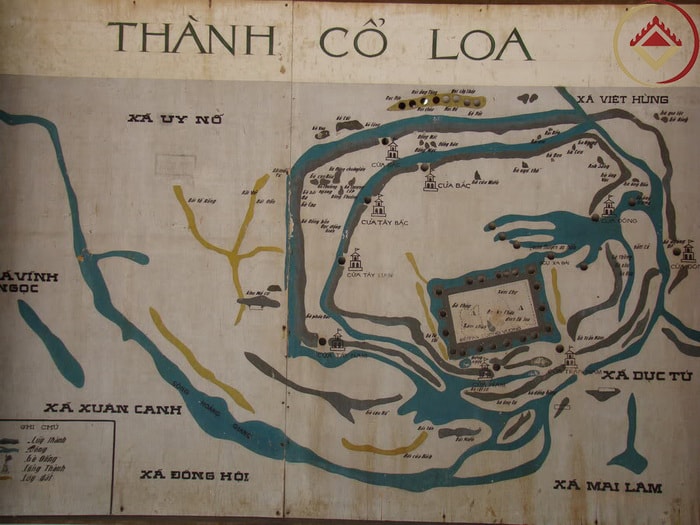 |
| Diagram of Co Loa Citadel. Image source: Internet |
Sima Qian's Records of the Grand Historian confirms: "In 218 BC, the King of Qin (i.e., Qin Shi Huang) sent Du Shu to lead 500,000 troops, divided into five divisions, to conquer the Baiyue people in the South. But upon reaching the land of Van Lang, they were met with fierce resistance from the Van Lang and Au Viet tribes... The war lasted more than 10 years. The Qin army advanced for a long time, running out of food. They were stationed in useless territory, unable to advance or retreat. The Qin soldiers always wore armor to defend against attacks. Hunger, disease, and countless deaths and injuries followed. The number of laborers who served them who hanged themselves on trees along the roads was too many to count. General Du Shu was killed in battle. The Qin army had to retreat... Since the Qin dynasty declared itself emperor and conquered the world, this was the first time the Qin dynasty had been defeated in the land of Au Lac."
At the end of the 3rd century BC, the Qin dynasty declined; various feudal lords rose up and claimed power. In the northern region of Vietnam (present-day Guangdong), Zhao Tuo became king of Nanyue. In the Records of the Grand Historian, Sima Qian clearly stated: "The king of Nanyue was surnamed Zhao, given name Tuo, from Zhouding County (now in Hebei Province, China), formerly a military officer... During the Qin dynasty, Tuo was appointed as the magistrate of Longxian County in Nanhai Prefecture (now in Guangdong, China)."
Having suffered a crushing defeat in his invasion of Âu Lạc, in 210 BC, Triệu Đà devised a plan to feign peace, sending his son Trọng Thủy to marry An Dương Vương in order to study the structure of Cổ Loa citadel, An Dương Vương's defenses, and steal the secret of the Liên Châu magic crossbow.
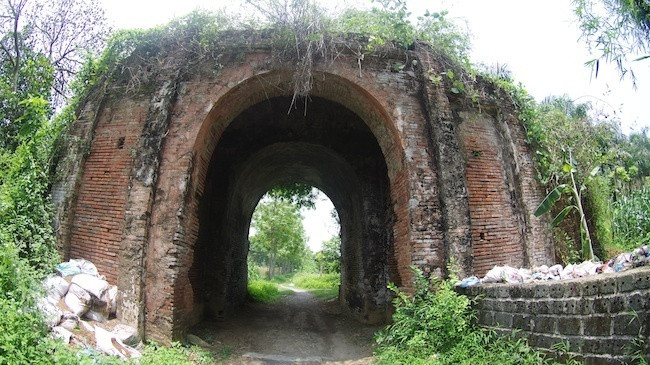 |
| Remnants of Co Loa Citadel (Hanoi). Image source: Internet |
"Trong Thuy was a dangerous spy planted in the Thuc dynasty court. He also used bribes to sow discord within the Au Lac court. An Duong Vuong himself harbored a viper in his bosom, and the tragedy of losing the country should not be entirely blamed on My Chau."
Trieu Da and his son Trong Thuy used wealth to bribe and corrupt officials at the court of King An Duong Vuong in order to win over and divide the court, making An Duong Vuong blind and deaf, unable to distinguish friend from foe. Sima Qian also mentioned this issue in the Records of the Grand Historian: "That man used force to threaten the border regions, bribing the Min Yue and Western Au Lac with wealth to make them subservient to him."
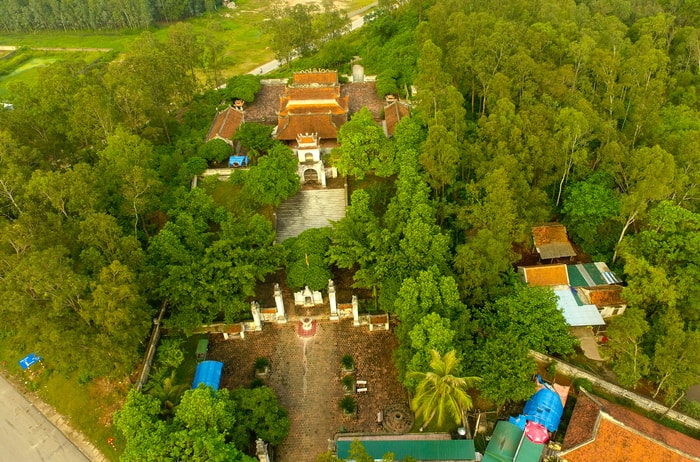 |
| Cuong Temple was built by the people to worship An Duong Vuong. This is believed to be the place where King An Duong Vuong committed suicide after killing his daughter My Chau. Photo: Nguyen's book |
When Trieu Da proposed that Trong Thuy marry into the Thuc dynasty (210 BC), An Duong Vuong asked General Cao Lu (the designer and commander of the Co Loa citadel): "For several years, the Trieu dynasty and Au Lac have maintained friendly relations. Now their son, Trong Thuy, wants to propose marriage to My Chau. What do you think? Personally, I want to accept the marriage proposal to maintain peace and avoid war."
Three days later, General Cao Lu reported:
- Never before have we seen a defeated army ask for their son to be allowed to live with them as a son-in-law. They simply want to learn about the defenses of Loa Thanh. This is absolutely unacceptable.
King An Duong was furious:
- The Trieu dynasty has been fighting Au Lac for a long time without success, and they want to use the marriage proposal to resolve the animosity. How could I not agree? You are old now, I will let you go home to rest. (5)
During the two years (210 - 208 BC) that An Duong Vuong allowed him free movement within the Thuc dynasty's court, Trong Thuy learned about the structure of Loa Thanh citadel, the Thuc dynasty's defenses, and stole the secret of the Lien Chau magic crossbow.
In 208 BC, having secured all the secrets of Loa Thanh and the Lien Chau magic crossbow, Trieu Da launched a war to conquer Au Lac.
Because he ignored the advice of General Cao Lỗ, King An Dương Vương lost his country and plunged the ancient Vietnamese nation of Âu Lạc into nearly a thousand years of bloodshed and tears under Northern rule.
Due to his ignorance and disregard for the advice of loyal ministers, King An Dương Vương lost his kingdom. King An Dương Vương committed a grave crime against the nation, the people, and the country, leaving a dark stain on Vietnamese history.
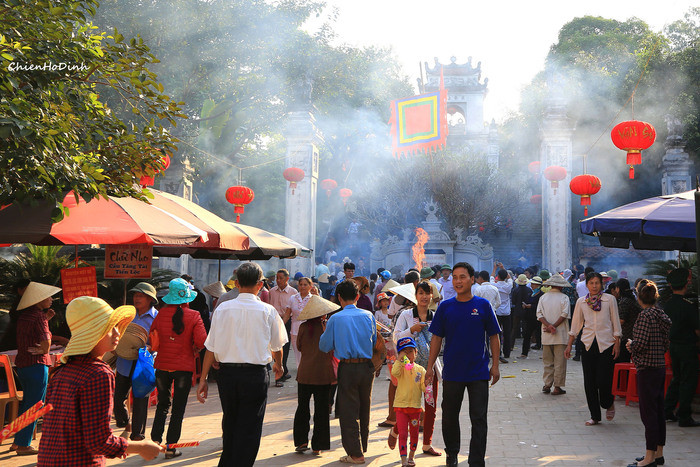 |
| Tourists participating in the Cuong Temple Festival. Photo: Ho Dinh Chien |
Visiting Cuong Temple (Dien Chau - Nghe An) reveals two key principles of governance:
Firstly, an ignorant and disobedient district magistrate will only cause harm on a small scale. An ignorant king who ignores the advice of loyal ministers will certainly lead to the decline and even loss of the country.
Secondly, the lesson learned from over 2,000 years of Vietnamese feudalism is that every king who ignored the advice of loyal ministers shared the same fate: the country declined, and even the king's own life was not spared.
In 208 BC, ignoring the advice of General Cao Lỗ, An Dương Vương lost his kingdom and took his own life, ending the dynasty he himself had founded.
1,585 years after King An Duong Vuong lost his country, in 1377, Vietnamese history had a second dark stain. Ignoring the advice of loyal officials such as the Imperial Censor Le Tich, the Grand Censor Truong Do, and General Do Le, and instead heeding the flattery and slander of the Grand Chancellor Do Tu Binh, King Tran Due Tong died in battle on January 24th, 1377 (the year of Dinh Ti) during the campaign against the Champa army at the capital of Cha Ban (present-day Binh Dinh province).
Regarding this event, the Complete Annals of Dai Viet record:
"The king was stubborn, acting according to his own will, ignoring advice, and despising the enemy, which is why disaster befell him, not because of misfortune."
Separated by 1,585 years, the two Vietnamese kings shared three similarities: ignorance; disregard for the advice of loyal ministers; and tragic deaths: An Dương Vương committed suicide, while Trần Duệ Tông was killed in battle.
When visiting Cuong Temple, do not forget the pain of losing your country, and reflect on the past, knowing what you must do to protect the beautiful land and heritage left by your ancestors.
| The Cuong Temple was built by the people to worship Thuc Phan An Duong Vuong. Located on Mo Da Mountain in Dien An commune, Dien Chau district (Nghe An province), it sits close to National Highway 1A. Legend says this is where King An Duong Vuong killed his daughter My Chau and committed suicide after Co Loa Citadel fell to Trieu Da. Today, the Cuong Temple is both a scenic spot and one of the most sacred places of worship in Nghe An province. Every year, in the second lunar month, the local people organize the Cuong Temple Festival with many cultural, religious, and spiritual activities. |
Associate Professor - Doctor Le Van Cuong


