
USD exchange rate on December 21st: Black market drops sharply, global rate rises slightly.
On the morning of December 21st, the USD exchange rate on the free market fell by 148 dong, in contrast to the stability at banks. Globally, the DXY index rose slightly to 98.60 points.
Domestic exchange rate movements
According to the State Bank of Vietnam, the central exchange rate between the Vietnamese Dong (VND) and the US Dollar (USD) remained unchanged at 25,148 VND/USD on the morning of December 21st. The buying and selling rates at the State Bank of Vietnam's exchange floor also remained unchanged, maintaining at 23,941 – 26,355 VND/USD.
At commercial banks, the USD exchange rate continued to remain stable. Vietcombank listed the buying price at 26,095 VND/USD and the selling price at 26,405 VND/USD, unchanged from the previous session. VietinBank and BIDV also maintained a common selling price around 26,405 VND/USD.
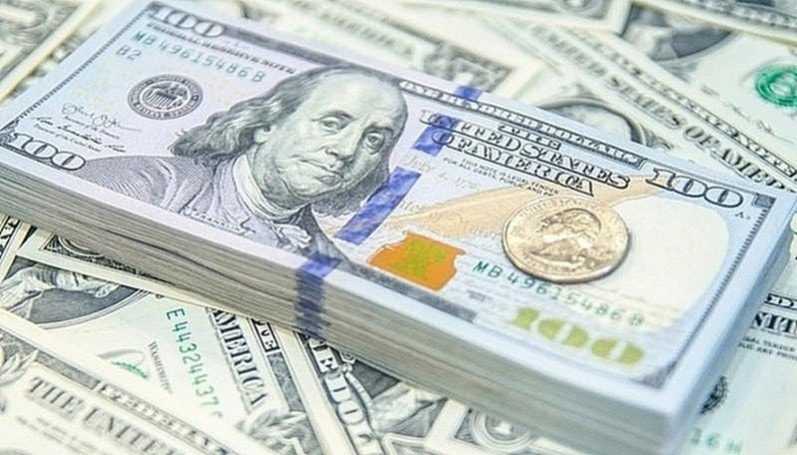
In contrast to the official market, the USD exchange rate in the free market has fallen sharply. As of 4:30 AM on December 21st, the "black market" USD was trading around 27,760 – 27,900 VND/USD, a decrease of 148 VND in the buying rate and 108 VND in the selling rate compared to the previous session.
Compare exchange rates at several banks.
| Bank | Buy cash (VND/USD) | Selling price (VND/USD) |
|---|---|---|
| NCB | 25,890 | 26,408 |
| HSBC | 26,209 | But |
| Sacombank | But | 26,370 |
| VietinBank | But | 26,408 |
| MB | But | 26,408 |
USD edged higher in international markets.
On the international market, the Dollar Index (DXY), which measures the strength of the USD against a basket of six major currencies, closed at 98.60 points, up 0.17%. Overall for the week, the DXY rose by approximately 0.32%, indicating a return to stability for the US dollar.
According to Reuters, the US dollar strengthened against most major currencies after the Bank of Japan (BoJ) raised interest rates. This decision caused the USD/JPY exchange rate to surge by 1.38%, to 157.69 yen/USD.
US government bond yields also rose in line with the general trend. The 10-year yield increased by 3.3 basis points to 4.149%, while the 2-year yield, which reflects the Federal Reserve's policy expectations, rose to 3.486%.
Macroeconomic factors at play
Economic data released this week in the US, particularly the consumer price index (CPI), showed that inflation is cooling, raising expectations that the Fed may soon ease monetary policy. In addition, the number of initial jobless claims rose to 236,000, reflecting signs of a slowdown in the labor market.
Recent statements by US President Donald Trump have also impacted market sentiment. He said the next Fed chairman would be a "strong supporter of interest rate cuts," further reinforcing expectations of an easing cycle in the first half of next year.


