
The problem arises from the risk of the village and hamlet Party branches disappearing again in special areas.
(Baonghean) - Although strengthened, improved, and increasingly meeting task requirements, the grassroots political system in special areas, especially at the village and hamlet level, still has many shortcomings. Notably, in addition to some villages and hamlets lacking Party branches, some mountainous areas are at risk of having no Party branches again...
Many villages and hamlets do not yet have independent Party branches.
In terms of organizational structure, in areas with a large number of religious followers, many hamlets still lack independent Party branches. According to the Provincial Party Committee's Organization Department, as of June 15, 2016, the entire province had 168 hamlets (belonging to 65 communes in 10 districts, cities, and towns) that did not have enough local Party members to establish independent Party branches. Of these, 76/168 hamlets (45.2%) had only 1-2 local Party members; 92/168 hamlets (54.8%) had no local Party members at all, an increase of 16 hamlets compared to the beginning of the 2010-2015 term.
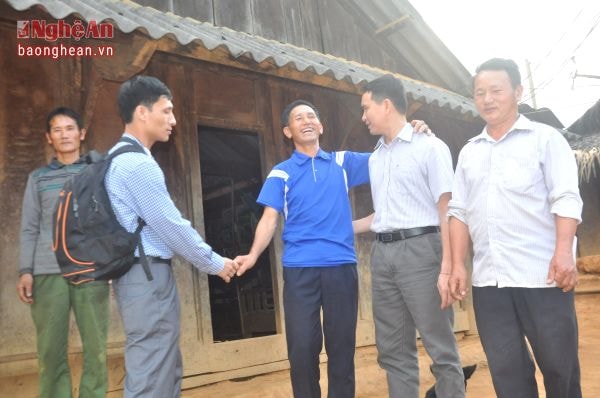 |
| Officials from the Ky Son District Party Committee held a discussion with the head of Huoi Nhao village in Nam Can commune. |
To eliminate the lack of Party branches, some districts are deploying Party members who are commune-level officials and civil servants to hamlets to establish Party branches. Specifically, they are deploying 498 Party members to 125 out of 168 hamlets (62 hamlets need 100% Party membership); 13 hamlets have combined Party activities, and there are still 30 hamlets without Party branches.
Through practical investigation, it was found that, for various reasons, developing Party members in areas with large religious populations still faces many difficulties. Meanwhile, the stability of newly established and merged Party branches is low, and the risk of branches becoming "blank" again may occur when newly appointed officials retire or transfer to other positions, or when elderly Party members request exemption from activities due to illness. On the other hand, the situation of "old trees but no new shoots" occurs in many places, making it even more difficult for Party branches in villages and hamlets with large religious populations.
Comrade Tran Van Duong - Secretary of the Party Committee of Quynh Thanh commune (a predominantly Catholic commune in Quynh Luu district) said: Before 2015, the commune had no Party branches in all 14/14 hamlets. From October 2015, the Party Committee strengthened the hamlets by assigning Party members who are commune-level officials and civil servants to establish 5 Party branches; as of now, there are still 9 hamlets without Party branches.
Regarding mass organizations, only 3 out of 14 hamlets have a branch or liên chi hội (joint branch) of the Veterans Association. Furthermore, many key positions at the commune level are not held by Party members; including: Vice Chairman of the Commune People's Committee, Vice Chairman of the Commune People's Council, Chairman of the Fatherland Front Committee, Chairman of the Farmers' Association, Head of the Police, Head of the Military... The Commune Party Committee also currently has two vacant positions.
In Quynh Yen commune, Quynh Luu district (a locality where over 50% of the population is Catholic, with 5 predominantly Catholic hamlets), the entire Party Committee has 204 members, but only 1 is Catholic. According to the commune's leaders, in the past 20 years, the Party Committee has only admitted one Catholic member. Currently, all 5 Catholic hamlets have to recruit Party members from the commune to establish Party branches.
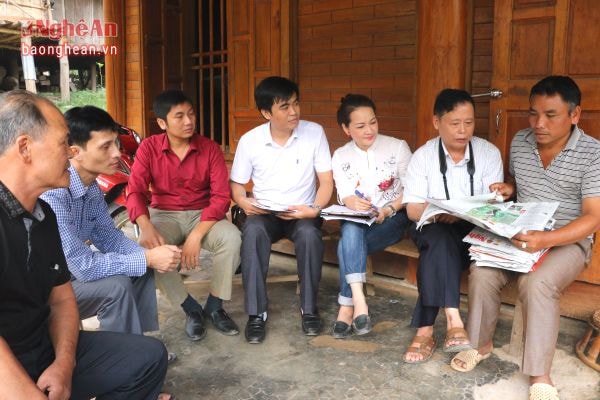 |
Mr. Luong Xuan Lieu - Secretary of the Party Branch of Ta Do village, Muong Tip commune (Ky Son district) shared his thoughts. |
In reality, in areas where Party branches have not been established, the lack of leadership cores and weak political systems are understandable; in some strengthened and merged Party branches, the quality of activities is also not high, failing to create significant changes. Some Party branches, established 5-10 years ago, have not yet developed local Party members to form independent branches; in some places, one strengthened Party branch has to lead 2-3 hamlets, or merge many hamlets together. Also, due to strengthening, some Party members have not been closely involved with the local area, thus failing to fully utilize their capacity in mobilizing the masses and understanding the situation at the grassroots level. As for local Party members, some are assigned to key positions and actively participate, while others are only sporadically active, failing to demonstrate the pioneering and exemplary role of a Party member. The activities of the Party committees and people's mass organizations in some localities are still limited.
According to Comrade Bui Thi Thanh, Secretary of the Party Committee of Quynh Yen commune: When problems arise at the grassroots level, the administrative apparatus in villages and hamlets in Catholic areas is almost unable to fulfill its role and responsibilities, leading to many officials of mass organizations requesting to leave their positions. Each time this happens, the Party committee has to find replacements, which is very difficult. And when the village committees and the heads and deputy heads of mass organizations in the grassroots political system have low stability and are constantly changing, their activities become even more difficult...
This is also a common reality in some Catholic areas today. Leaders in some localities say that training and recruiting Catholic party members is already difficult; some admitted party members later cease their activities for various reasons, and some violate laws on population policy and have to be removed from the party roster… These are difficult issues that put Party branches in Catholic areas at high risk of becoming "blank" again if comprehensive measures and solutions are not implemented.
The risk of Party branches being completely closed again in mountainous areas.
For the mountainous ethnic minority areas of the province, although the situation of having no Party branches in villages and hamlets has been basically eliminated, the risk of it recurring remains. According to Comrade Vi Hoè - Secretary of the Ky Son District Party Committee: The main reasons why the work of creating and developing Party branches still faces difficulties in Ky Son are the large geographical area, the limited awareness of the people, and the ongoing migration, young people going away to work, and illegal labor. In addition, some local Party committees and authorities have not truly paid attention to the work of creating Party branches, and have not built and promoted the role of influential people in the community.
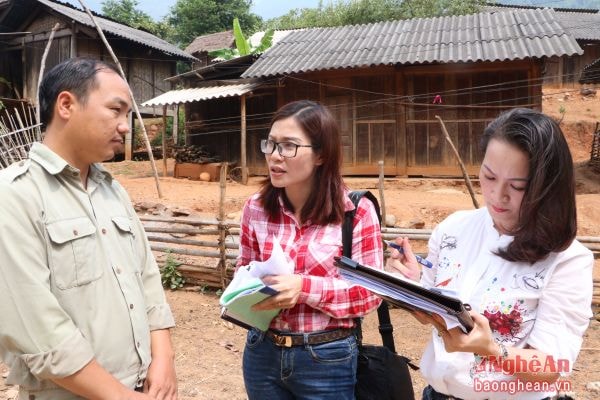 |
| Mr. Mu Ba Zo - Deputy Secretary of the Party Committee of Ta Ca commune (Ky Son district) speaks with reporters. |
Therefore, although Ky Son district is considered to have implemented Conclusion No. 10/KL-TU on building the grassroots political system in ethnic minority areas quite well, including the work of developing Party members and enhancing the fighting capacity of village Party branches, at this time, Ky Son has 23 village Party branches (14 branches with 3 or fewer Party members) in 12 communes at risk of having no Party branches at all, with the highest number being in Na Ngoi commune with 6 branches (Ka Duoi, Xieng Xi, Buoc Mu 2, Huoi Xai, Ka Noi, Tham Hon), and Bac Ly commune with 4 branches (Keo Pha Tu, Huoi Bac, Keo Nam, Cha Nga)...
There are Party branches that haven't admitted any new members for 3-5 consecutive years; some branches have a small number of local members, mainly consisting of seconded members, such as the Huồi Khói branch (Mường Típ commune) with only 5 members, 4 of whom are commune officials, and the branch secretary, Mr. Xồng Xìa Mà, is nearly 80 years old. The Nhãn Lỳ branch (Tà Cạ commune) is also facing the risk of having no members at all, with only 3 local members.
It was found that, due to the unique nature of the area, in addition to difficulties in recruiting new party members, the border communes of Ky Son district also face the problem of party members being removed from the membership list due to failure to pay party fees, migration to Laos, and prolonged absences from party activities.
In the Nậm Khiên 1 Party cell, Nậm Càn commune, three Party members were removed from the Party roster in 2015 due to migration to Laos. According to local leaders, despite regular propaganda and mobilization efforts, migration to Laos, including cadres and Party members, continues due to local customs and the lack of awareness among the people. From 2014 to 2015, 102 Party members in Kỳ Sơn district were removed from the roster, primarily due to voluntarily abandoning Party activities.
Besides Ky Son, other districts at high risk of having no Party branches again include Anh Son (20 branches), Nghia Dan (9 branches)... In some other mountainous districts, although the number of Party branches at risk of having no branches again is not large, the quality of activities, capacity, and fighting strength of the village and hamlet Party branches are not high.
| As of June 25, 2006, the total number of Party branches at risk of becoming "empty" again in the 21 districts and towns of the province was 108; of which, 14 (13%) were branches with fewer than 3 local Party members; 38 (35.1%) were branches with 3 Party members; and 56 (51.9%) were branches with 4 Party members. |
According to the Provincial Party Committee's assessment in Project No. 01-DA/TU dated August 10, 2016, compared to the requirements of the tasks in the new period, the activities of Party branches, especially those in residential areas, still face many difficulties. The consolidation and strengthening of Party branches in some areas have not received timely attention and guidance from grassroots Party committees.
Many villages and hamlets in religious areas still lack Party branches and Party members. The number of Party members who are religious believers admitted annually is decreasing. The number of Party branches with elderly and infirm members exempted from activities is increasing, while the source of new Party members is limited, leading to the risk of many blocks, hamlets, and villages no longer having Party branches. In particular, due to the lack of Party leadership, the tasks of socio-economic development, national defense and security, and the activities of mass organizations in blocks and hamlets without Party branches face many limitations compared to areas with similar conditions. Some places even harbor many complex factors...
| Signs of identifying blocks and hamlets at risk of no longer having party branches: (1) hamlets with party branches of less than 5 local party members, (2) having many party members over 60 years old, (3) not having recruited party members in the last 5 years and the expected source of party member development in the future will face many difficulties. |
(To be continued)
Reporters' Team


