
Vấn đề sống còn của địa phương có trưng cầu ý dân cả nước?
Members of Parliament argue that some issues require a referendum at the local or regional level, rather than necessarily seeking the opinion of the entire nation.
The scope of referendums as stipulated in the draft law on referendums is one of the issues that has sparked much debate among National Assembly deputies during discussions in the plenary session.
The drafting body argued that issues of national significance should be decided by the entire population when put to a referendum. However, issues of local or regional importance should be decided through public consultation. The National Assembly's Law Committee, the body responsible for reviewing the draft law, also agreed with this viewpoint.
Citing the example of whether a referendum should be held in the local area or region affected by the construction of a nuclear power plant or any other project, Representative Tran Ngoc Vinh (Hai Phong) suggested that this issue should be addressed at two levels.
Accordingly, the decision on whether or not to develop nuclear power must be made through a national referendum. Furthermore, the location of a nuclear power plant and whether it is permissible will be subject to public consultation before the competent authority makes a decision.
From that perspective, Representative Vinh supports the provision as drafted, which stipulates that a referendum should be conducted nationwide.
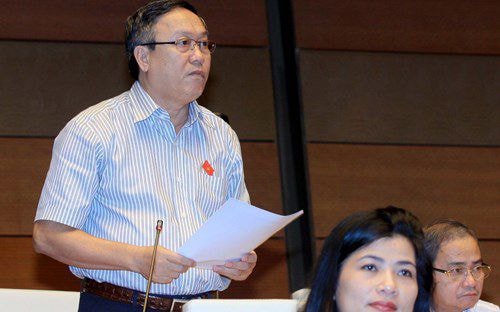 |
| National Assembly representative Do Ngoc Nien (Binh Thuan) |
Disagreeing with the above argument, delegate Do Ngoc Nien (Binh Thuan) emphasized that the legal nature and consequences of soliciting public opinion are completely different from a referendum.
Trưng cầu ý dân được tổ chức theo quy trình, thủ tục chặt chẽ, kết quả có giá trị quyết định.
Lấy ý kiến nhân dân lại thực hiện một cách đơn giản, có khi chỉ bằng một cuộc họp mà số lượng người dự không được quy định đảm bảo số đông hay tỷ lệ phần trăm lựa chọn phương án là bao nhiêu.
Kết quả lấy ý kiến nhân dân không có giá trị quyết định, chỉ là thông tin tham khảo và quyền quyết định thuộc về các cơ quan có thẩm quyền.
Theo đại biểu, điều đó là không công bằng, việc thực thi quyền trực tiếp của người dân địa phương không được coi trọng. Những vấn đề đặt ra có lẽ mang tính sống còn, bức xúc ở địa phương, khu vực như sự an toàn hồ đập thủy điện, thủy lợi; an toàn hạt nhân, ô nhiễm môi trường nghiêm trọng; nhập chia các đơn vị hành chính…
Do vậy, ông Niễn đề nghị phạm vi trưng cầu ý dân được thực hiện cả tầm quốc gia và ở cả địa phương.
Đại biểu Nguyễn Thanh Thủy cũng cho rằng, với đặc thù địa lý, chính trị, kinh tế - xã hội của Việt Nam và nhận thức của người dân thì ngoài quy định trưng cầu ý dân được thực hiện trên phạm vi toàn quốc cần quy định mở theo hướng trong trường hợp cần thiết Quốc hội quyết định trưng cầu ý dân ở một hoặc một số tỉnh, thành trực thuộc Trung ương về vấn đề có tác động trực tiếp đến địa phương.
Theo đại biểu, quy định như vậy là cần thiết, tạo thuận lợi cho nhân dân địa phương, tránh lãng phí, đảm bảo tính hiệu quả khi vấn đề chỉ liên quan, tác động trực tiếp đến quyền và lợi ích hợp pháp của nhân dân một địa bàn.
Kết quả trưng cầu ý dân trong trường hợp này phản ánh đúng nguyện vọng, mong muốn của người dân địa phương đối với chính sách của Nhà nước; đồng thời phản ánh đúng bản chất của trưng cầu ý dân, đảm bảo chủ trương, chính sách của nhà nước xuất phát từ người dân, phù hợp với người dân./.
Theo VOV


