
It remains difficult to obtain loans for agriculture.
There's a real-life situation where banks are reluctant to lend to rural households because the disbursed capital is small while the monitoring costs are high. Meanwhile, farmers find the lending mechanisms and procedures complicated, so instead of going to the bank, they will borrow from their neighbors.
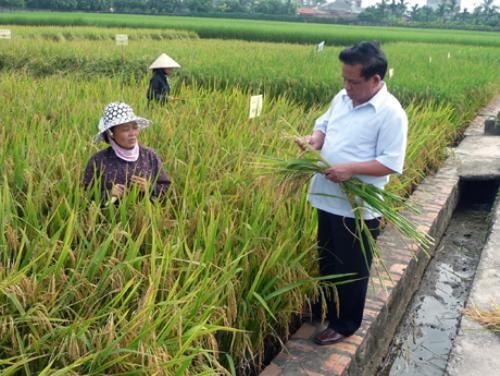
Prefer lending to businesses rather than individual farmers!
In recent years, in accordance with the Party and Government's policies, the banking system has implemented many policies prioritizing capital for agricultural and rural development. Starting with Decree 41 on credit policies for agricultural and rural development, credit for agriculture was 292,000 billion VND. To date, after three years, this has reached 622,000 billion VND, a 2.1-fold increase. This credit accounts for approximately 18-19% of the total credit of the entire sector; if the outstanding loans of the Policy Bank are included, it accounts for about 20-22%, corresponding to the agricultural sector's contribution to the national GDP. Thus, the amount of credit injected into agriculture is not insignificant.
However, due to the enormous production capacity of the rural agricultural sector, credit policies for this sector have not yet met the needs and have not been as effective as expected.
Vietnamese farming households
At the online seminar "Meeting Credit Needs for Agriculture and Rural Areas" organized by the Government's electronic information portal this morning (August 15), Mr. Nguyen Tien Dong - Deputy General Director of the Agricultural and Rural Development Bank (Agribank) - stated: Small loans, high costs, and high risks mean that if there aren't enough branches close to the people and sufficient staff, lending to households is impossible. Credit is primarily based on trust; understanding and trust are essential before lending can be granted. It's not solely about collateral; collateral is only a necessary condition, not a sufficient one.
Farmers are reluctant to borrow capital.
The difficulty in accessing credit has made farmers hesitant to borrow. According to the Vietnam Rural Household Resource Access Survey (VARHS) 2006-2012, 50% of surveyed farmer households had outstanding debts, and 60% of them reported borrowing from banks. However, the scale of borrowing was very low, accounting for only 13.6% of the total amount borrowed.
Explaining this issue, Mr. Nguyen Viet Manh, Director of the Credit Department of the State Bank of Vietnam, said that:For bank credit, it's crucial to have a specific address and objective, and to take into account the habits of the people. Just like a housewife whose husband seems to have nothing to do but is actually doing countless chores, the spending needs of a farming household are similar. Some expenses don't qualify for bank loans; income is seasonal, but daily expenses and miscellaneous costs are inaccessible to bank loans. Therefore, the habit of borrowing from informal lenders has emerged, offering convenience and ease of access. From the lender's perspective, if the borrower's profile isn't clearly defined, capital is difficult to access.
Banks are reluctant to lend to rural households, while farmers are hesitant to borrow due to complicated lending mechanisms and procedures, leading them to turn to "black market credit," said Mr. Nguyen Tien Dong.Currently, we have sent seven teams of officials to conduct research on farmers to determine how to provide loans based on integrated spending credit limits that are affordable for them.”.
Increase funding for agriculture.
The demand for credit in agriculture and rural areas is enormous, and the obstacles to accessing credit in this sector are being addressed by the Government and relevant agencies. However, to meet the development needs of the agricultural sector, especially the capital needs for production and business of farming households, there is still a significant gap between policy and practical implementation.
To help farmers access loans more effectively, Mr. Nguyen Viet Manh stated: From now until the end of the year, the banking system will continue to implement credit policies in the agricultural sector and for farmers as stipulated. At the same time, they will continue to extend and postpone debt repayments; and reduce interest rates on some bad debts…
In addition, the State Bank of Vietnam is also researching and coordinating with relevant agencies to propose lending programs that are suitable for the production processes of farmers.
Mr. Nguyen Tien Dong - Deputy General Director of the Agricultural and Rural Development Bank (Agribank):
|
Theobaocongthuong.PH


