
Is it "dặm" wallet or "giặm" wallet?
(Baonghean.vn) - To this day, many people are still wondering how to spell it correctly.
In a press release dated November 28th sent to media outlets, the Ministry of Foreign Affairs stated that the Ví and Dặm folk songs of Nghe Tinh, Vietnam, have been recognized as a "Representative Intangible Cultural Heritage of Humanity." However, on the website www.dsvh.gov.vn of the Department of Cultural Heritage, Ministry of Culture, Sports and Tourism, in the list of national cultural heritage, the agency refers to them as "Ví and Dặm folk songs of Nghe An."
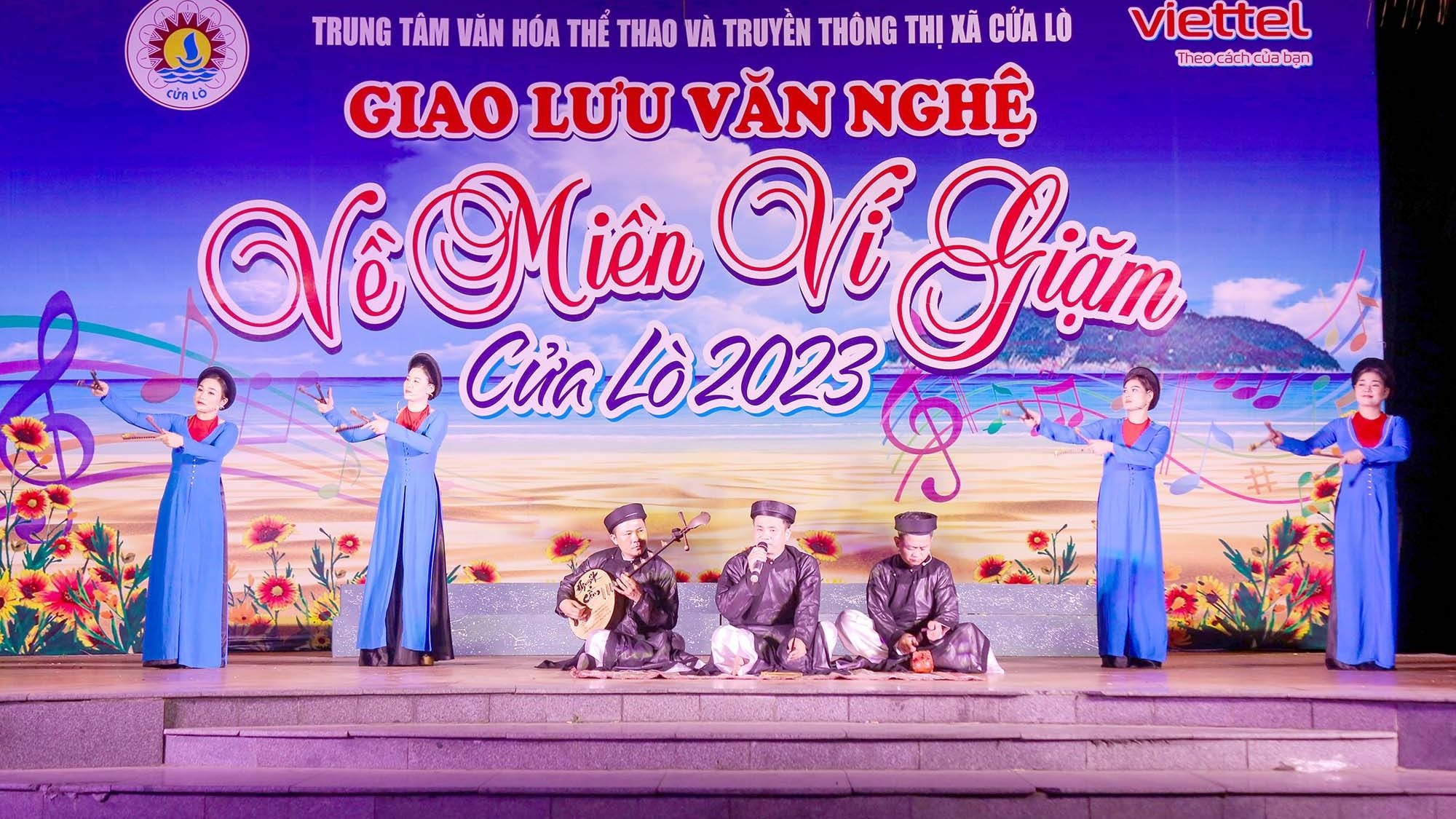
At the international scientific conference "Preserving and Promoting the Value of Folk Songs in Contemporary Society" (the case of the Ví, Giặm folk songs of Nghe Tinh) jointly organized by the Ministry of Culture, Sports and Tourism in collaboration with the People's Committee of Nghe An and Ha Tinh provinces in May, the organizing committee also used the term "ví, giặm" in scientific documents. This shows that not only many people but also government agencies lack consensus on how to refer to "ví, dặm" or "ví, giặm".
Linguistics experts also have differing views on "ví, dặm/giặm". According to the Vietnamese Dictionary (edited by Hoàng Phê, Da Nang Publishing House - Center for Lexicography, 2011), "hát dặm" is "a folk singing style in Nghe Tinh, with a rapid rhythm, lyrics based on five-word poems, and the last two lines always repeat in rhyme and wording," while "hát ví" is "a lyrical call-and-response singing style between men and women during labor" (such as ví đò đưa, ví phường nón, ví phường vải, ví leo non). "Giặm" is understood as a verb meaning: 1. To weave or mend a damaged section of a basket; 2. To add to a missing or incomplete section to make it complete. According to author Do Thi Kim Lien (Journal of Lexicography and Encyclopedia, No. 2-2012): "They are called 'ví' or 'giặm' because each poem contains at least one line that repeats the previous line between two stanzas, like adding rice seedlings to the empty space. Some poems have only one pair of repetitions, while others have up to 12 pairs."
Dr. To Ngoc Thanh, President of the Vietnam Folk Arts Association, believes that how something is called must follow local customs. “I have spent many years doing fieldwork in the Nghe Tinh region, so I understand the people there. Their way of using it is ‘giam,’ meaning to add to what is missing or in a place, but using ‘dam’ would become a unit of length measurement,” Dr. Thanh said. He further explained that the poetic form of ‘giam’ is where the last line repeats the penultimate line in a similar way, for example: “She gave me some money / She ordered me to buy all sorts of things / She ordered me to buy all sorts of things again...”
It is known that at the scientific conference "Preserving and promoting the values of folk songs, chants, and chants of Nghe An province" held in Vinh City, Nghe An province in March 2011, based on many convincing pieces of data and arguments, scientists discussed and agreed that from after the conference onwards, the spelling "giặm" would be used in all official documents.
However, perhaps because the usage of "ví, dặm" is familiar to many people, and this standardization has not been widely publicized, "ví, dặm" is still commonly used.


