
Why shouldn't you overinflate your tires?
Tires affect the safety and performance of a vehicle, so over-inflating them poses many risks on the road.
Many drivers often overinflate their tires in the hope of improving fuel efficiency and tire lifespan. However, this is a mistake because it not only damages the tires but also poses many dangers when driving on the road.
Here are some potential risks of over-inflating your tires:
Risk of tire blowout
When tires are inflated beyond the standard pressure, the pressure inside the tire increases, creating compression. This can lead to tire deformation or bulging, especially on long journeys or at high speeds.
In addition, overinflated tires can also lead to the risk of tire blowouts, posing a danger to both the driver and other road users.
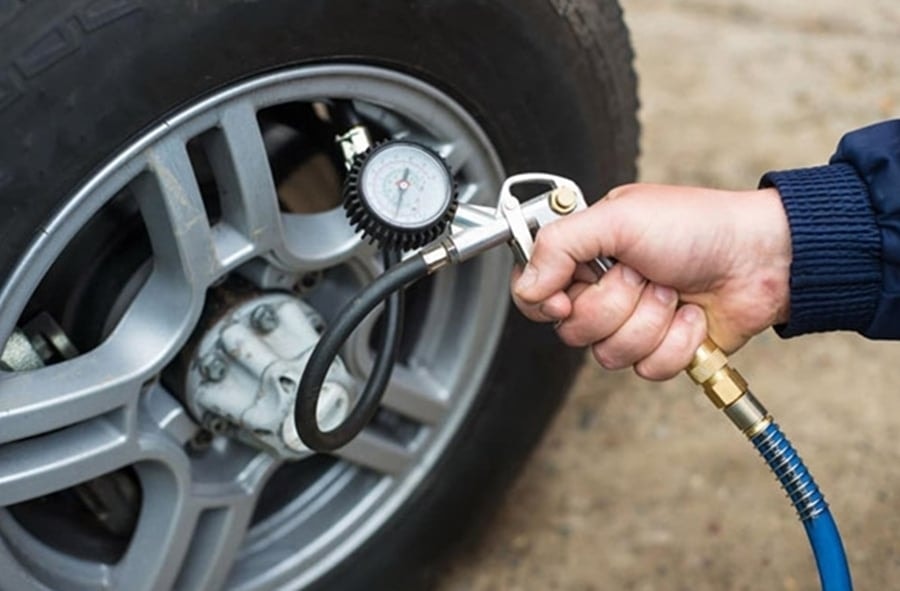
Reduced friction between the tires and the road surface makes it easier to lose control.
When tires are overinflated, the friction between the tire and the road surface decreases, making it difficult to control the vehicle, especially when cornering or on slippery roads.
Overinflated tires also cause the tire grooves to become ineffective at draining water, leading to hydroplaning. This results in reduced traction, making the tires more prone to skidding and increasing the risk of losing control.
Reduced driving feel
Overinflated tires significantly reduce the ability to absorb vibrations from the road surface, making the ride stiff and uncomfortable. This not only causes discomfort for the driver but also negatively affects the suspension system and other parts of the vehicle. Over time, this reduces the lifespan of the tires and many other car components.
Things to keep in mind when inflating car tires.
To ensure safety while driving, manufacturers recommend that users have their tire pressure checked regularly, including the spare tire. It's best to check when the tires are cold to get the most accurate reading.
Additionally, it's advisable to use a pressure gauge instead of relying solely on feel to determine if a tire is properly inflated or underinflated. Using your hand to feel the pressure can result in tires that are either too hard or too soft, easily leading to unsafe situations for the driver.
Be careful not to over-inflate or under-inflate your tires, as this will affect the friction between the wheel and the road surface, potentially causing accidents. Ideally, you should inflate your tires to the manufacturer's recommended pressure.


