
Why is the teacher training sector in Nghe An province struggling to attract students?
(Baonghean) - In recent years, teacher training has become less attractive, despite the State's preferential policies on tuition fee support. This is also the reason why teacher training colleges in the province are still recruiting cautiously this year, even though the total enrollment quota set by the Ministry of Education and Training for teacher training has increased by more than 30%.
Struggling to make a living from this profession.
Having graduated from a College of Early Childhood Education and previously taught at a private preschool in Vinh City, Nguyen Thuy Anh settled for a management position at a coffee shop three years after graduation. Thuy Anh also mentioned that after graduation, only slightly more than half of her classmates stayed in the profession, while the rest pursued side jobs, and few considered returning to their old profession.
I used to love teaching and was determined to pursue it long-term. But after graduating and starting to teach, I realized it's a very demanding and stressful job, especially working at a private school.
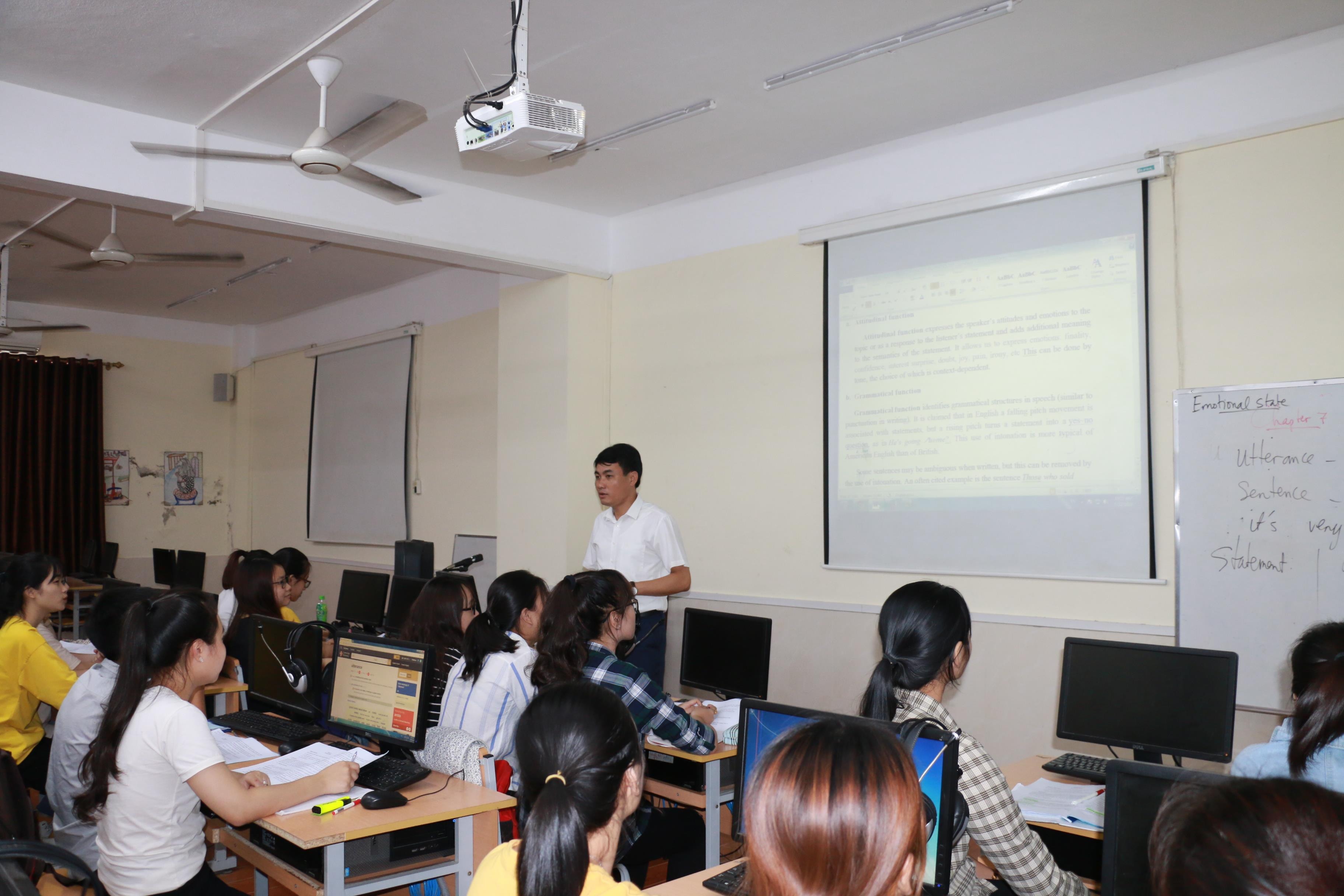 |
| Foreign language class for teacher training students. Photo: My Ha |
Not only preschool teachers, but also some teachers in vocational schools are struggling to make ends meet.
I've been with the Welding Technology Department for 15 years, with a salary scale of level 4, but my current salary is only 5 million VND. In reality, the current salary is very low, even lower than that of recent graduates, whose income can range from 8 to 10 million VND per month.
Due to low salaries, recruiting teachers for Yen Thanh Technical College has been very difficult in recent years, even though the school has implemented preferential policies such as direct recruitment of excellent graduates and allocating additional teaching hours to help teachers increase their income. Currently, the school is short 15 teachers, and this shortage is likely to continue as many teachers who applied for the job have not returned.
The school's policy has been in place for four years, but only 2 out of 8 applicants have been hired. This could be due to low salaries, or because Yen Thanh district is not as developed as the city center, so teachers want to find other environments with more opportunities for development.”
A paradox in vocational schools today is that graduates can earn two or three times more than their teachers. Because of this, many teachers are leaving the profession to work for businesses or pursue high-skilled labor programs abroad.
At the Vietnam-Germany College, the number of teachers has decreased by more than 20 in the last three years, from 130; some teachers who were already on the payroll and recognized as excellent teachers have even resigned.
During the training process, the school always focuses on nurturing dedicated and skilled students to create a talent pool for the school. However, many students remain uninterested. Perhaps there should be preferential policies for this group so that vocational school teachers can work with peace of mind and ensure a minimum standard of living.”
No mass enrollment.
In 2019, the Ministry of Education and Training allocated over 46,000 places for teacher training programs, an increase of more than 30% compared to the previous year. At the Ministry of Education and Training's online conference on the 2019 National High School Graduation Examination and university and college admissions, a representative from the Department of Higher Education also stated that there were several reasons for the increase in teacher training quotas.
 |
| English class for students at the Teacher Training Practice School. Photo courtesy of My Ha. |
One of the key reasons is that the country is currently short of approximately 75,000 teachers, mainly at the preschool and primary school levels. Therefore, increasing the quota will be proactive in the coming years, as the demand for teachers in localities is steadily increasing.
Compared to the rest of the country, Nghe An is also a "cradle" for teacher training with 2 universities and 1 college. However, while the demand for teacher training graduates is increasing nationwide, Nghe An has faced many difficulties in recruiting students for teacher training programs in recent years, even at traditional universities like Vinh University.
In reality, although the enrollment quotas for teacher training majors are not high each year, many majors fail to meet their enrollment targets. Specifically at Nghe An Teacher Training College, majors such as Geography Education, History Education, Literature Education, and Mathematics Education have almost completely disappeared from the market.
Faced with this challenge, even though the national enrollment target has increased this year, schools in Nghe An are being very cautious in recruiting students for teacher training programs.
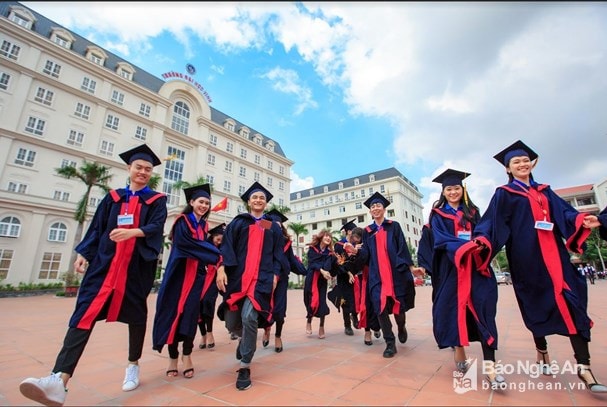 |
| Teacher training colleges are being cautious in their admissions process. (Photo: Archival image) |
This year, our school has been allowed by the Ministry to increase its enrollment quota by 30%. However, we only recruit based on actual needs and mainly focus on students for the preschool and primary education majors, which have high job demand. There are virtually no quotas for secondary school students.”
At Vinh University, this year the university is opening a new teacher training program: Natural Sciences Education. However, the university is not increasing the total enrollment quota for this program.
We conducted surveys in the North Central provinces, especially in Nghe An, Ha Tinh, and Thanh Hoa, and accordingly, we will maintain the same quota this year to avoid a surplus of teachers in the coming years."
The fact that universities are not massively recruiting students for teacher training programs also shows that the job market for teachers in the coming years will still face many difficulties. To solve this problem, the smart solution is for universities to focus on investing in quality rather than quantity. At the same time, they should gradually improve the effectiveness of training, link training with recruitment needs, and closely follow the development plans of each locality.


