
Why do cars easily lose their brakes at the end of steep mountain passes?
Brake failure is an extremely dangerous technical problem, easily encountered when vehicles repeatedly descend steep mountain passes for tens of kilometers with heavy loads.
Brake failure is most common in vehicles traveling long distances, on hilly or mountainous roads, and in challenging terrain. This is because drivers on these types of roads tend to use the brakes excessively, and since most vehicles' braking systems transmit braking force via hydraulic fluid, continuous braking easily generates heat.
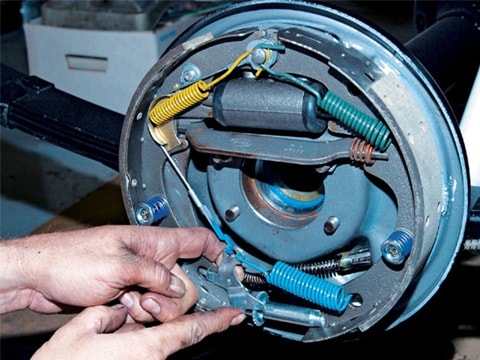 |
| Automotive brake pads typically use hydraulic fluid to transmit braking force to the wheels. |
The heat generated can cause the brake pads to become inert, potentially boiling the brake fluid in the cylinder, disrupting the seals in the brake cylinder, and causing brake fluid to leak out each time the brake pedal is pressed, leading to brake failure.
Another reason is that descending a mountain pass in third gear or higher is also dangerous because the engine speed combined with inertia will increase the vehicle's speed by at least 40% compared to normal.
If the brakes fail, calmly pull the parking brake, then try shifting the gear lever back to first gear to slow the vehicle down to the slowest possible speed. Note that you shouldn't keep it in neutral (N) for too long, because when going downhill, pressing the clutch to shift to neutral will cause the car to accelerate faster and it will be very difficult to shift back into gear because the engine speed and the wheel rotation speed are no longer synchronized.
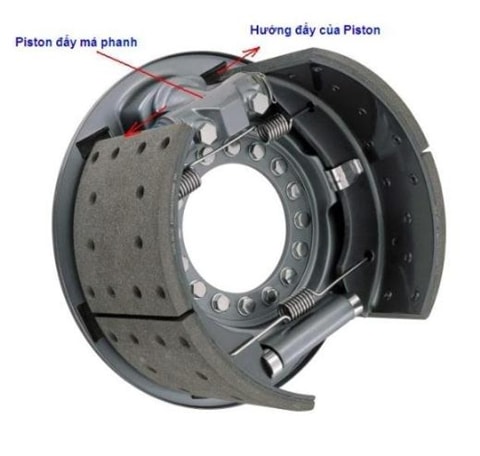 |
| When overheated, the brake fluid boils, causing the pistons that push the brake pads to lose their effectiveness. |
For example, if the car is descending a hill in 3rd or 4th gear and suddenly loses its brakes, to downshift to 1st gear you have to depress the clutch, shift to neutral; release the clutch and rev the engine so that the engine speed matches the wheel rotation speed; then depress the clutch again, downshift to 2nd gear.
At this point, the car will lurch and jerk suddenly. Shift the gear lever to first gear. The car's speed will be very slow, and you can stop the car completely by releasing the handbrake lever and then quickly pulling it again to bring the car to a complete stop.
When your brakes fail, you should repeatedly pump the brake pedal to temporarily restore hydraulic pressure in the leaking lines. Then, bring the vehicle to a complete stop by leaning it against guardrails, steel railings, walls, curbs, cliffs, etc.
To minimize the effects of brake failure, drivers should get into the habit of using low gears (gears 1 and 2) when descending steep hills, slopes, or rough terrain. The low engine RPM will slow the vehicle's roll, reducing the burden on the brakes. Remember, vehicles that are regularly maintained and serviced have a brake failure rate of only 1%.
According to VTC.news


