
Why is the U.S. State of the Union address so special?
(Baonghean.vn) - Today (January 30th), US President Donald Trump will deliver the State of the Union address. This is both an interesting event and a traditional legal responsibility from the founding of the United States to the present day. So, what is special about the US State of the Union address?
1. Why is a State of the Union address necessary?
The President is the most powerful political institution in America, and in a broader sense – the most powerful in the world, so it's safe to say that any of their speeches deserve attention. So what makes the State of the Union address so special and noteworthy?
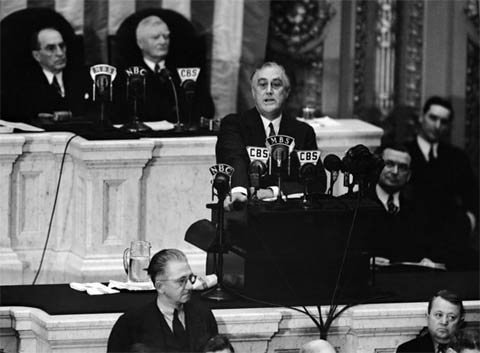 |
| President Franklin D. Roosevelt addressed Congress in Washington on January 4, 1939. He spoke of the "Four Freedoms": freedom of speech, freedom of religion, freedom from poverty, and freedom from fear. |
Because the State of the Union address is a legal obligation of the U.S. President as stipulated in Article II, Section 3 of the Constitution, which explicitly requires the President to “from time to time inform Congress of the state of the union and to propose that Congress consider the directions and solutions that the President deems necessary and appropriate.”
This is a "report" acknowledging the achievements and challenges the nation is facing, along with the issues that need to be addressed and resolved. The State of the Union address can be seen as a way for the U.S. Constitution to create interaction between the two most dynamic branches of power in the system, serving both as an obligation for the head of the executive branch to report to the legislative branch, and as a reflection of the executive branch's influence on the legislative decisions of Congress.
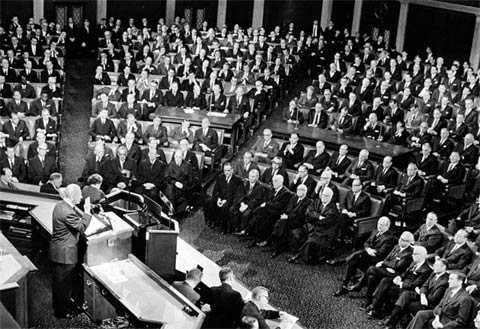 |
| President Lyndon B. Johnson announced his Big Society programs in 1968. He also called for a Voting Rights Act as well as clean water and air. The audience applauded 80 times during his speech. |
2. Why does the State of the Union address take place at the end of January and the beginning of February each year?
The U.S. Constitution does not specify a particular time for the State of the Union address. However, since the 20th Amendment stipulates that the official start date for both a congressional term and a presidential term is at the end of January, this timing has become a common practice.
3. What is the State of the Union address about?
These messages can often last for over an hour, which is unusual for Western culture. However, this is because the messages contain a great deal of content, including:
The state of the US economy, the number of jobs created and lost, inflation levels, national debt, and any budget deficits;
- Social programs supporting American citizens, as well as citizens of other nations around the world, and global issues; education and healthcare systems; the progress, failures, and successes of the U.S. military operations worldwide.
The message will almost certainly be embedded in new legislative ideas aimed at addressing outstanding issues and the President's request to Congress to consider these bills.
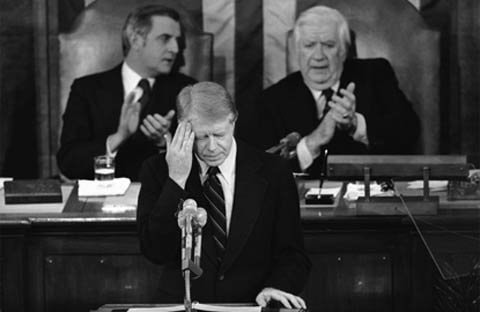 |
| President Jimmy Carter delivering the State of the Union address to Congress in Washington on January 23, 1979. |
4. Is the State of the Union address required to be a public speech?
This is not specifically enshrined in the U.S. Constitution. Traditionally, presidents have always chosen to address Congress publicly. However, in 1801, after taking office, President Thomas Jefferson felt that Congress gathering to welcome a head of state and listen to a legislative address seemed formal and hollow, as was often the practice favored by autocratic monarchies. Therefore, he simply wrote a letter to Congress each year.
5. Who was present at the State of the Union address and who were the “designated survivors”?
Among the crowd attending the State of the Union address were virtually all of the most powerful positions in the U.S. government, members of the House of Representatives, members of the Senate, and nine justices from the Supreme Court. However, this also increased the risk of a "headless snake" if an attack of any kind were successful at the address or if a natural disaster occurred at the venue.
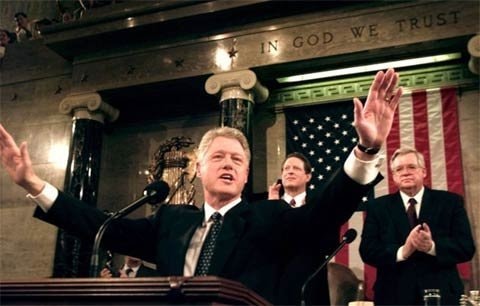 |
| On January 19, 1999, President Bill Clinton delivered the State of the Union address shortly after being impeached by the House of Representatives over his affair with Monica Lewinsky. |
Therefore, officially becoming a practice since the Cold War, a cabinet member of the current government would be protected at an undisclosed location – also known as the “Designated Survivor”Designated Survivor). If an unfortunate event occurs resulting in the death of all senior leaders, the "designated survivor" will succeed to the presidency and maintain the functioning of the state apparatus.
6. Were there any political protests that occurred immediately after the State of the Union address?
The answer is: Yes. However, not directly at the ceremony. In 1966, the media offered the Republican Party half an hour to refute and protest President Lyndon B. Johnson's address. Senator Everett Dirksen and Representative Gerald Ford delivered this counter-argument. Since 1976, the opposition party's response has been drafted during the address and released immediately afterward.
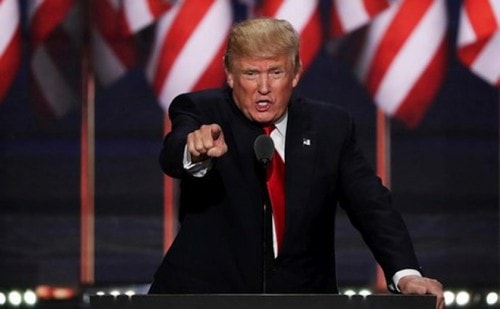 |
| What will President Trump say in his first State of the Union address? |
7. Who delivered the longest and shortest State of the Union address in history?
According to statistics from the House Clerk's Office, President Harry Truman delivered the longest State of the Union address, with over 25,000 words (compared to an average of 5,000 words). The first President of the United States, George Washington, had the shortest State of the Union address, at just 833 words.


