
Summer sore throat in young children
In hot weather, many children are at risk of developing sore throats due to excessive sweating and weakened immune systems. If children are not treated and cared for properly, it can lead to many dangerous complications.
During the hot summer months, young children are very susceptible to sore throats due to excessive sweating and weakened immunity. Many children also get sick from improper use of fans or air conditioners. If left untreated or without proper care, it can easily lead to complications such as tonsillitis, otitis, sinusitis, laryngitis, bronchitis, and lymphadenitis. Therefore, prevention is extremely important.
Increase in the number of children with the disease.
In recent days, the continuous heatwave has caused a surge in illnesses, especially among young children, leading to a dramatic increase in hospitalizations and treatment. At the National Children's Hospital, doctors reported that, on average, over 2,000 sick children have been brought to the hospital by their families each day, an increase of about 20% compared to normal times.
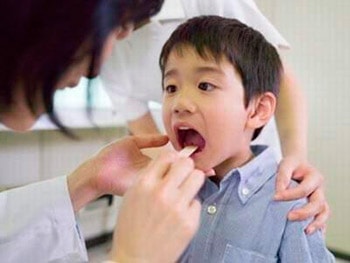
At the Pediatrics Department of Bach Mai Hospital (Hanoi), the number of children seeking treatment has increased during the recent hot weather, and the number of severe cases requiring hospitalization has risen significantly. According to Associate Professor Dr. Nguyen Tien Dung, Head of the Pediatrics Department at Bach Mai Hospital, the department examines and receives more than 200-300 pediatric patients daily. Children often present with symptoms such as diarrhea, fever, and respiratory infections, but the majority have fever, cough, and sore throat. Many children are admitted with complications such as severe bronchitis and pneumonia due to negligence and improper treatment at home.
Associate Professor Dr. Nguyen Tien Dung stated: When children suffer from acute pharyngitis, the mucous membrane of the throat swells rapidly, which can be caused by bacteria, viruses, fungi, or environmental factors. In the summer, the hot weather makes young children very susceptible to acute pharyngitis due to drinking more cold water and sometimes having strong fans blowing directly on their faces. Children's respiratory systems become weakened due to dehydration of the mucous membranes, and their throats and noses dry out from sitting for long periods under air conditioning. Additionally, older children who run and play outdoors in the sun and sweat a lot can catch a cold. Approximately 80% of children with rhinitis and pharyngitis are infected by viruses. After a few days, due to the weakening of the child's immune system, especially in children with rickets, malnutrition, or chronic respiratory diseases (adenoids, bronchial asthma), the infection is very likely to recur.
Manifestations
When infected, children suddenly develop a high fever of 39-40°C, accompanied by coughing, nasal congestion (on one or both sides of the nose), and a sore throat, causing them to cry excessively. Young children may lose their appetite and breastfeed less. Older children may experience headaches, sore throats (painful swallowing), nasal congestion, tinnitus, and a burning sensation in the throat. Some children complain of ear pain, accompanied by a runny nose with mucus, a slightly hoarse voice, and a dry cough. They may also feel tired, have dry lips, and a coated tongue. If left untreated, acute pharyngitis can easily lead to complications such as tonsillitis, otitis, sinusitis, laryngitis, bronchitis, lymphadenitis, adenoid hypertrophy (in young children), and most dangerously, sepsis.
Take the child to see the doctor.
For young children, a sore throat often causes fussiness, poor feeding, and loss of appetite, leading to the misconception that these are signs of teething discomfort. For infants under 3-6 months old, if a fever appears, parents should take the child to the doctor immediately. For older children, if these symptoms persist, the sore throat worsens, and the fever is high, a visit to an ENT specialist is necessary for appropriate treatment to avoid complications.
Ways to prevent the disease
During the hot summer months, prevent your child from sweating by limiting their running and jumping, avoiding direct sunlight, and not dressing them in too many layers of clothing. Excessive sweating can lead to chills and sore throats. Ideally, children should wear clothes made of cotton to absorb sweat.
After running, playing, or being in the sun and sweating, do not let children bathe immediately. For older children, proper supervision is needed to avoid bathing in strong sunlight or for too long, as this can easily lead to sore throats or colds due to sudden changes in body temperature.
Do not direct the fan directly at the child's face. Instead, direct the fan towards the wall, towards the child's feet while they sleep. In this position, the cool air from the fan can spread throughout the room and help the child sleep soundly. You can also turn on the fan and let it rotate gently outside the mosquito net. Avoid direct exposure to the airflow.
If possible, have your child sleep in an air-conditioned room, limit their movement in and out of the room because the significant temperature difference can easily make them sick. Do not let your child sleep in a place with a direct draft. For your child's safety, when using air conditioning, parents should only set the temperature to 25-27 degrees Celsius.0C is reasonable.
In addition, parents should also pay attention to limiting children's consumption of cold drinks such as ice cream and iced water, and cold foods. Ensure a reasonable, balanced diet with all four nutrient groups: protein, carbohydrates, fruits, and vegetables. Increase the intake of foods rich in vitamin C, such as oranges and lemons, to boost the body's immunity. Regularly brushing teeth and rinsing the mouth daily will help prevent illness effectively.
Every day, you should rinse your mouth regularly with diluted salt water to prevent infections. When rinsing your throat, remember to first rinse your mouth thoroughly with the prepared salt water solution and spit it out before rinsing your throat. To rinse your throat, tilt your head back as far as possible. When the salt water touches the back of your throat, use your breath to push the salt water out. After expelling the air, return your head to a normal position, spit out the old water, and repeat the above action 3-4 more times with fresh salt water.
According to Health & Life - nt


