
What goods does Vietnam open its market to the US?
With successful negotiations on reciprocal tariffs, Vietnamese goods are now presented with a golden opportunity to penetrate deeper into the world's largest market.
Breakthrough in tax policy: Major obstacles removed.
For many years, Vietnamese businesses have faced significant challenges from US trade protection measures. Anti-dumping and countervailing duties applied to Vietnamese goods are often 10-20% higher than those applied to countries recognized as market economies. This has created a substantial barrier to increasing market share in the US market.
However, President Donald Trump's commitment to significantly reduce reciprocal tariffs has opened a new chapter. According to published information, the United States will apply a 20% tariff on goods from Vietnam, significantly lower than the current tariff in the trade defense cases. This is a positive sign for Vietnam's export turnover in the coming period.
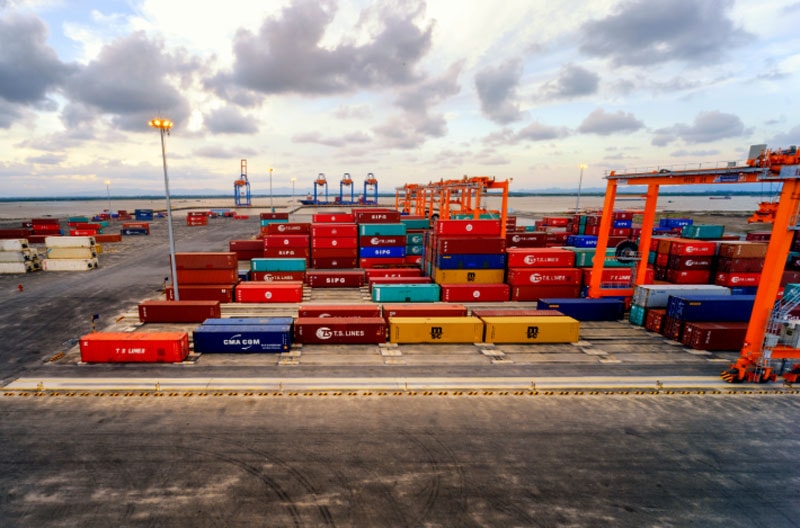
Vietnam opens its market to the US: Which goods are prioritized?
According to published information, the American goods that Vietnam has opened its market to include motorcycles, a product that previously faced many technical and tariff barriers. The removal of these barriers is seen as a concession in exchange for preferential treatment from the United States.
In return, Vietnamese goods will have easier access to the US market, especially high value-added product groups such as agricultural products, consumer electronics, and precision mechanical products.
These are sectors with strong growth potential and are also consistent with Vietnam's orientation towards building a sustainable and in-depth economy.
Previously, many of Vietnam's key export items such as textiles, machinery and equipment, telephones and components, wood products, and seafood... were mainly processed goods, dependent on imported raw materials, and easily affected by US trade protection measures.
With the commitment to opening up bilateral markets, these goods have the opportunity to increase localization, improve standards, and penetrate deeper into global supply chains.
High-tech collaboration: An opportunity to participate in the global supply chain.
Promoting cooperation in high-tech fields, digital transformation, and clean energy will help Vietnam participate more deeply in the global technology supply chain. These high-level commitments are expected to attract US capital into high-tech industries, digital infrastructure, AI, and green manufacturing.
This is an opportunity for Vietnam to not only be a processing hub but also a high-value-added manufacturing center in the region. Being recognized as a market economy will generate a new wave of investment in environmentally friendly manufacturing sectors, aligning with sustainable development goals.
New challenges and requirements for Vietnamese businesses.
Despite the immense opportunities, Vietnamese businesses need thorough preparation to fully capitalize on the new incentives. US trade policy remains based on the principle of reciprocity, requiring Vietnam to improve its legal environment, ensure transparency, and protect intellectual property rights.
Businesses need to restructure their supply chains, upgrade product standards, and increase compliance with rules of origin. The new playing field demands modern management capabilities and export policies that are value-driven rather than focusing solely on quantity.
In the post-globalization context, Vietnam is proactively building peace, cooperation, and development based on dialogue and trust. This not only benefits both countries but also contributes to the overall stability and prosperity of the region.


