
The formidable weapons of the terracotta army in Qin Shi Huang's tomb.
The terracotta army in the tomb of Chinese Emperor Qin Shi Huang is not only famous for its life-sized replicas, but also for its weapons that could take the lives of any enemy.
According to Ancient Origins, in 1974, Chinese archaeologists announced a sensational discovery: 8,000 terracotta warrior statues buried with Emperor Qin Shi Huang in Xi'an.
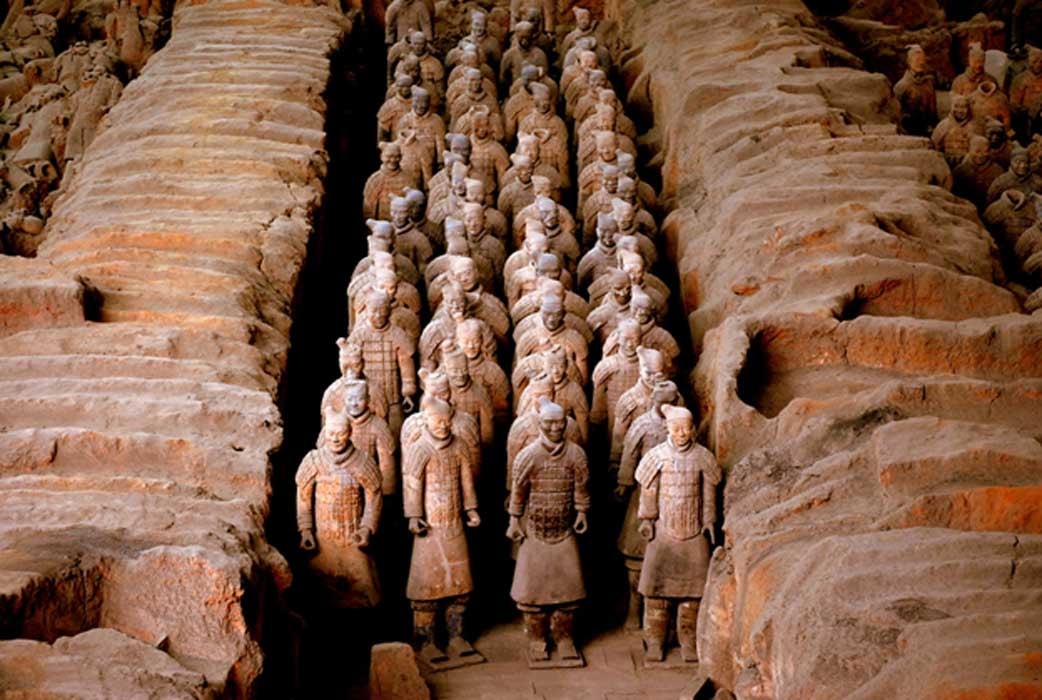 |
| The Terracotta Army in the Mausoleum of Qin Shi Huang. |
Nearly three decades after their initial discovery, researchers learned that the weapons of this terracotta army were all real, not replicas. The weapons were exceptionally sophisticated for their time, notably the bows and arrows powerful enough to pierce enemy armor.
The Terracotta Army, dating back approximately 2,200 years, was discovered along with a 50-square-kilometer tomb complex. This is one of the largest tomb complexes in the world, built to prepare for the afterlife of Qin Shi Huang, the first emperor to unify China.
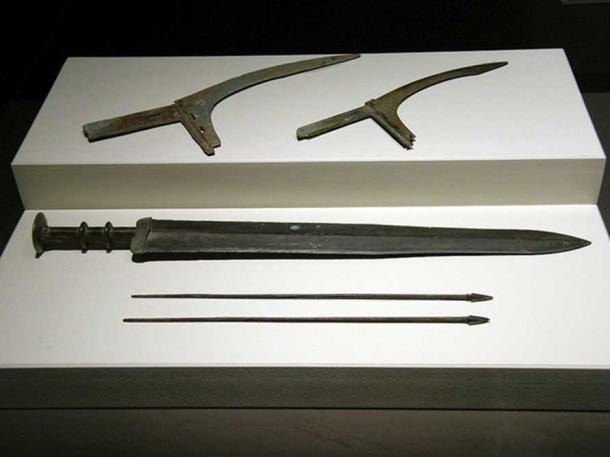 |
| The weapons were found intact along with the terracotta army. |
Researchers believe that the purpose of creating the terracotta army was to ensure the emperor's safety on his journey to the afterlife. According to the journal Archaeology International, more than 40,000 bronze weapons have been found alongside the warriors.
Arrowheads are the most common weapon that archaeologists have collected. They are bundled in groups of 100, representing the number of arrows in an archer's quiver.
Each bow and arrow consists of a triangular, pyramid-shaped arrowhead, a handle that holds the arrow in place on a bamboo or wooden frame, and a feather attached to the tail. The metal parts of the bow and arrow, such as the arrowhead and handle, are the only ones that have survived intact to this day.
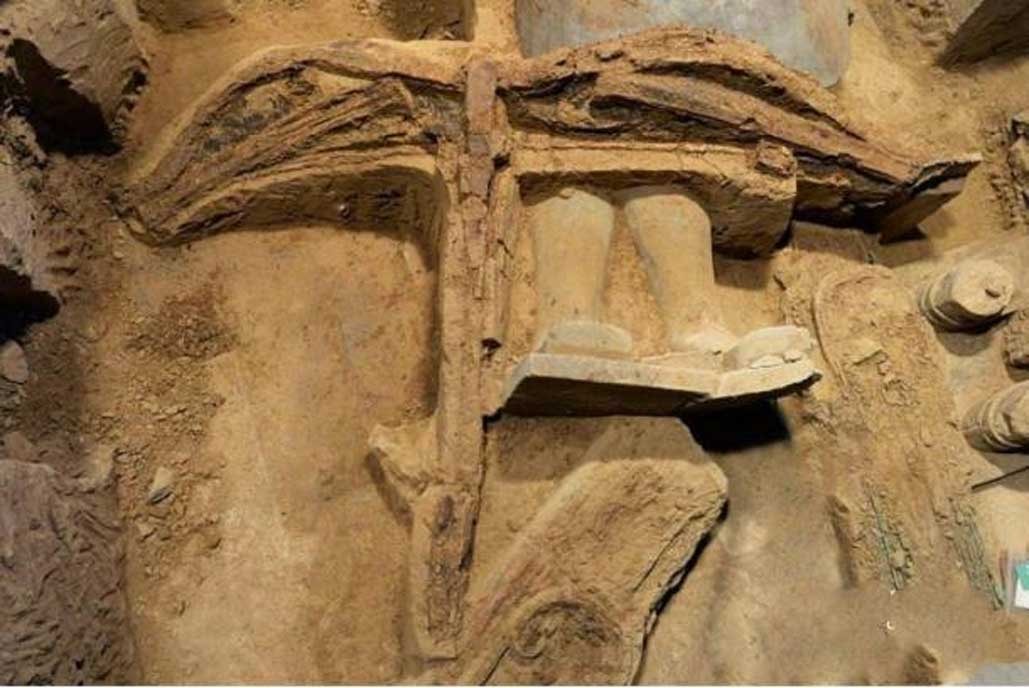 |
| The oldest known crossbow was discovered inside the tomb of Qin Shi Huang. |
Scientists at the University of London and the Terracotta Army Museum recreated the arrowheads and tested them with a crossbow from that era. The results showed that the arrows easily penetrated the armor used around 200 BC and could inflict fatal wounds.
"These bows and arrows were crafted to a level far beyond their time," says Mike Loades, a historian and expert on modern weaponry.
According to Vietnamnet
| RELATED NEWS |
|---|


