
Building a new way of life in Chau Quang
(Baonghean) - In the cultural life of ethnic minorities in mountainous areas, especially in matters of weddings, funerals, and rituals, there are many beautiful customs, but also some outdated practices that we need to encourage the people to eliminate in order to have a healthy cultural life. In Chau Quang commune (Quy Hop district), the commune has chosen to pilot two "outdated customs" to encourage people to eliminate, and it can now be believed that they have been permanently eradicated: not holding overnight wedding ceremonies and not bringing "ancient mouths" to funerals.
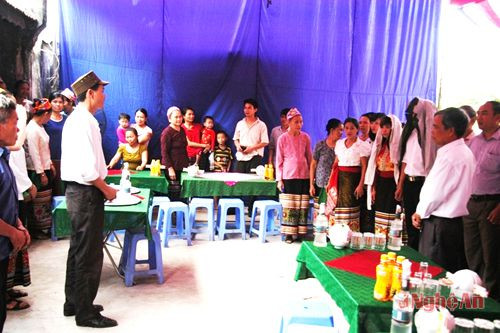 |
| A daytime wedding ceremony, part of the new lifestyle movement among the Thai people in Chau Quang commune. |
The elaborate and cumbersome custom of welcoming the bride overnight, which tires all families, is well known. The custom of bringing a "cổ khẩu" (a type of offering) to a funeral is also a seemingly small tradition, but its implementation is far from simple. "Cổ khẩu," in Thai, means "rice package" in general, containing a packet of rice, a bottle of wine, a boiled pig (usually a small pig weighing 4-5 kg), a pair of boiled chickens, or a pair of grilled fish (boiled briefly in boiling water or grilled over a fire). Depending on the relationship to the deceased, the "cổ khẩu" may contain a large or small pig, chicken, or fish, which are brought and placed on top of the coffin for the deceased to "eat" and for many people to see. In practical terms, "cổ khẩu" (offering food) means bringing food to the deceased, but in reality, it's just about helping each other provide some food for a meal during a funeral. Thai funerals often last up to three days before burial, with hundreds of guests attending... so the bereaved family has to work very hard to provide enough food for three meals a day for both guests and the bereaved. In the past, due to financial difficulties, people created "cổ khẩu" to help each other, with one family bringing food to another, and over time it became a kind of "debt" that everyone had to repay.
Nowadays, considering that the traditional "ancestral altar" is no longer necessary, visits to the village are primarily about incense and sincere devotion. Based on this specific analysis, the Commune Front Committee directed the village front groups to hold meetings to discuss and reach a high consensus throughout the villages to abolish the "ancestral altar," replacing it with incense and money equivalent to the "ancestral altar" to help each other (or "repay debts") in times of hardship. Commune officials, from the secretary to the chairman, whenever they visit the villages, propagate and analyze the merits and righteousness of the proposed change. At every village meeting, the village heads always mention this, and the Commune Party Committee directs the village Party branches to integrate this propaganda into their branch meetings so that each Party member understands, thereby persuading their family, relatives, and the entire village community. Following the principle of patience, perseverance, and using successful villages as examples... until the vast majority of villages agreed and responded, the Fatherland Front Committee of the commune issued a general decision for the entire commune to implement. What seemed like a small task required seven years of persistent effort to eliminate this custom throughout the commune.
Thai Tam


