
Soviet Nghe Tinh - The pinnacle of the revolutionary movement of 1930-31
(Baonghean.vn) - Eighty-six years ago, with a swift and powerful offensive, our people created an extremely strong revolutionary movement - the 1930-1931 revolutionary movement, culminating in the Nghe An - Thinh Hoa Soviet.
On February 3, 1930, the Communist Party of Vietnam was founded, promptly leading our people to rise up and fight against colonial invaders and feudal collaborators. The revolutionary movement swept across 25 provinces and cities nationwide, becoming particularly strong from International Labor Day on May 1, 1930.
In Nghe Tinh, the protest movement erupted on the morning of May 1, 1930, with the participation of workers in the Vinh-Ben Thuy industrial zone and farmers from neighboring districts demanding higher wages, shorter working hours, the abolition of corvée labor, reduced taxes, an end to terrorism, support for the struggle of the Nam Dinh textile factory workers, and support for the Soviet Union. From May to August 1930, there were 97 strikes and demonstrations by workers and farmers in the Nghe Tinh region.
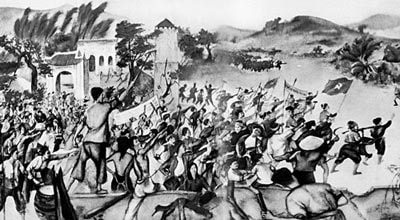 |
On August 1, 1930, workers in the Vinh-Ben Thuy industrial zone went on a general strike, marking the beginning of a new era of fierce struggle. In harmony with the workers' struggle, farmers in Nghe An and Ha Tinh provinces organized numerous armed self-defense demonstrations, marching to district headquarters in Can Loc (August 4), Nam Dan (August 6 and 30), Thanh Chuong (August 12), Nghi Loc (August 29), and spreading to almost all districts in the two provinces.
However, the protest movement only reached its peak in September. On September 1st, 20,000 farmers in Thanh Chuong district demonstrated, demanding the abolition of taxes and the release of political prisoners. French soldiers opened fire, but the protesters still advanced into the district headquarters, broke into the prison, released prisoners, burned files, records, and the district administrative office.
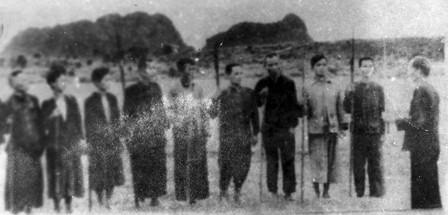 |
| The Red Self-Defense Team in Hoa Quan - Dong So - Nghe An during the Nghe An - Thinh Hoa Soviet Uprising of 1930-1931. |
Faced with the overwhelming onslaught of the people, the local gentry were forced to flee. Most villages in Thanh Chuong district were left without a governing authority. The people of Vo Liet commune spontaneously took it upon themselves to organize and manage the affairs of the commune.
On September 5th, farmers in Anh Son district protested in support of the people of Thanh Chuong district with slogans such as "abolish poll tax," "redistribute land," and "release political prisoners." Following this, over two days (September 5th and 7th), farmers in Dien Chau and Can Loc districts burned down prisons. From September 8th to 11th, the fighting spirit intensified as tens of thousands of farmers from Nam Dan, Thanh Chuong, Dien Chau, Can Loc districts, and others rose up in revolt.
The movement reached its peak with the struggle of 8,000 farmers in Hung Nguyen district on September 12th, chanting slogans such as "Down with imperialism! Down with feudalism!" The protesters marched in long lines towards Vinh city. The French colonialists used bombers and machine guns to attack the protesters, killing 217 people, injuring 125, and burning down 177 houses. The villages of Loc Chau and Loc Hai were completely destroyed. However, this did not stop the farmers' struggle; instead, it fueled the fighting spirit, causing great fear among the colonial authorities.
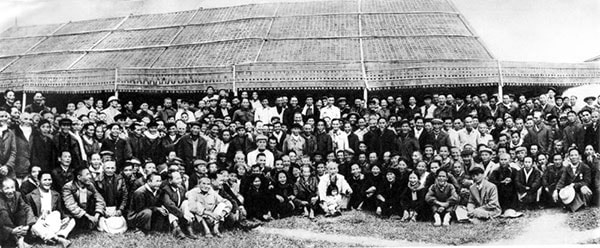 |
| On December 9, 1961, during his second visit to his hometown, President Ho Chi Minh took a photograph with soldiers of the 30-31 movement. |
Following the collapse of colonial and feudal rule in Nghe An and Ha Tinh provinces, Party branches and Red Peasant Associations managed and directed all activities in the villages. The revolutionaries established Soviet power – the first Soviet government in Vietnam (a rudimentary revolutionary government led by the working class).
The new government enacted many new policies on politics, economics, and culture. Politically, the people were granted the right to freedom of assembly, discussion, and participation in mass organizations such as the Farmers' Association, the Workers' Union, and the Communist Youth League. Economically, land was distributed, unreasonable and unjust taxes were abolished, and rent reductions and debt cancellations were implemented for the poor. Culturally, the revolutionary government organized a new way of life, opened classes to teach the national language, eradicated social ills and outdated customs, and fostered a spirit of solidarity and mutual assistance.
The Nghe An - Thinh Hoa Soviet Movement was a momentous historical event in the history of the Vietnamese revolution under the leadership of the Party. Although it lasted only 7 months and was still in its early stages, it left a positive mark as the first worker-peasant state, unprecedented in history, fulfilling the burning aspirations for independence and freedom of a people who had lost their country and were enslaved.
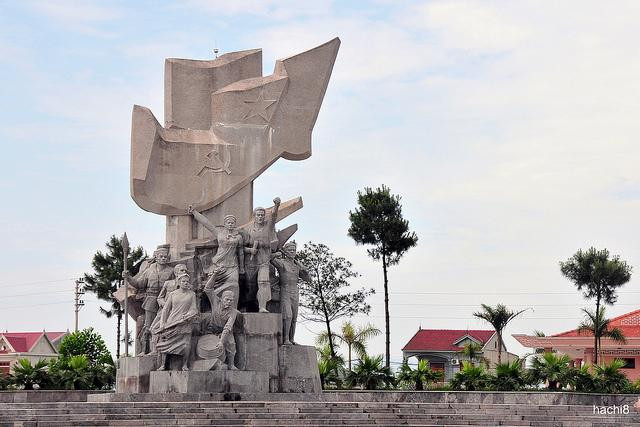 |
| Soviet-Nghe Tinh Monument (Nghen town - Can Loc district - Ha Tinh province). |
The greatest achievement of the 1930-1931 revolutionary movement and the Nghe-Tinh Soviet was the practical affirmation of the leadership and revolutionary leadership capacity of the working class through its vanguard political party, uniting with patriotic people who were capable of overthrowing the imperialist and feudalist regimes, liberating the nation, and bringing freedom and happiness to the people.
This was the first general rehearsal of the Vietnamese revolution under the leadership of the Communist Party of Vietnam, not only raising the issue of the worker-peasant alliance, the land issue and the peasantry, but also affirming the Party's leadership role, the issue of political struggle combined with armed struggle, gradually creating the conditions and strength for our nation to achieve the victory of the August Revolution in 1945.
From this movement, for the first time, workers and peasants allied themselves in the struggle under the leadership of the Communist Party; revolutionary governments were established in some rural areas. Assessing the immense historical significance of the revolutionary upsurge of 1930-1931, Ho Chi Minh wrote: “Although the French imperialists suppressed that movement in a sea of blood, the Nghe Tinh Soviet demonstrated the heroic spirit and revolutionary capacity of the Vietnamese working people. Although the movement failed, it forged the forces for the later victorious August Revolution.”
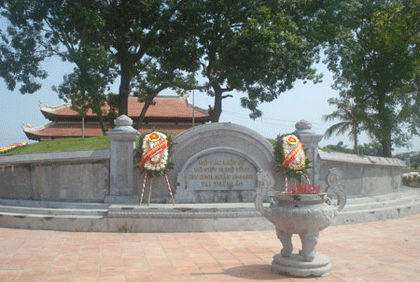 |
| Graves of Soviet martyrs of Nghe An - Ha Tinh (Hung Nguyen - Nghe An). |
The 1930-1931 uprising, culminating in the Nghe An - Thinh Hoa Soviet, left a great lesson about the Party's ability to attract and unite broad segments of the population through its correct policies, principles, and slogans that met the people's burning aspirations. From this, we can draw a valuable historical lesson: whenever the working people perceive their own interests in the policies, strategies, and concrete actions of the ruling class, they will actively and voluntarily participate and respond.
And from the very beginning, our Party helped the people understand their fundamental and urgent interests through correct policies and slogans such as achieving independence from slavery, reclaiming land and factories for workers and peasants, and implementing the first basic rights to life and democracy...; thereby arousing and promoting revolutionary momentum among the masses.
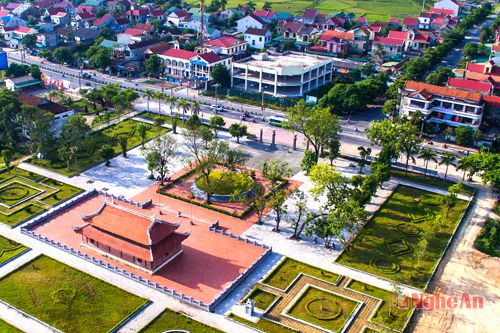 |
| View of the Soviet-Nghe Tinh Historical Site (Thai Lao, Hung Nguyen - Nghe An). Photo: Sy Minh. |
Today, in the context of the comprehensive national renewal process and the implementation of the strategy for building and defending the Socialist Republic of Vietnam, perfecting guidelines, policies, and mechanisms that align with the trends of the times and the legitimate aspirations and interests of the people, in order to create momentum and combined strength for the renewal process, is an urgent and immense task for our Party and State.
Eighty-six years have passed, but the soaring spirit of the Nghe An - Thinh Hoa Soviet of the 1930s still burns brightly in every patriotic Vietnamese citizen. The spirit of the Nghe An - Thinh Hoa Soviet not only accompanied our people in overcoming countless difficulties and challenges to achieve glorious victories in the struggle for national independence, but also continues to achieve victories in the current task of building and defending the country. Today, the spirit of the Nghe An - Thinh Hoa Soviet continues to accompany our people in overcoming difficulties and challenges to build a Vietnam that is "more decent and more beautiful," as President Ho Chi Minh instructed.
Peace
(Synthetic)


