
Removing Windows 11 passwords: More convenient, but is it safe?
Removing passwords allows for faster access to Windows 11 computers, but it comes with security risks. This article provides detailed instructions on the methods and analyzes when you should apply them.
Why should you consider removing your password on Windows 11?
On Windows 11, using a password is a basic layer of protection to prevent unauthorized access to your personal data. However, in some specific cases, eliminating the login requirement can offer convenience and speed up access to your computer. For example, if you are the only user of the device in a secure environment like your home, or when setting up a computer for entertainment purposes (a media center), automatic login will make the experience more seamless.
This article will provide detailed instructions on how to remove or bypass the password prompt on Windows 11, while also analyzing the associated security risks so you can make the most informed decision.
Convenient solution: Enable automatic login
This method doesn't delete the password from your Microsoft account; it only configures Windows 11 to automatically log in every time it starts up. This is a balance between convenience and security, as your account remains protected online.
- Open menuStarttypenetplwizand press Enter to open the User Accounts window.
- In the "Users" tab, select the account you want to log in automatically.
- Uncheck the box"User must enter a user name and password to use this computer".
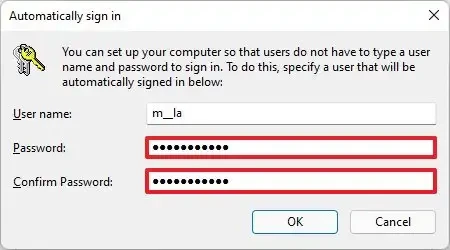
- PressApplyA dialog box will appear asking you to enter your current password to confirm.
- Enter your password twice and press Enter.OK.
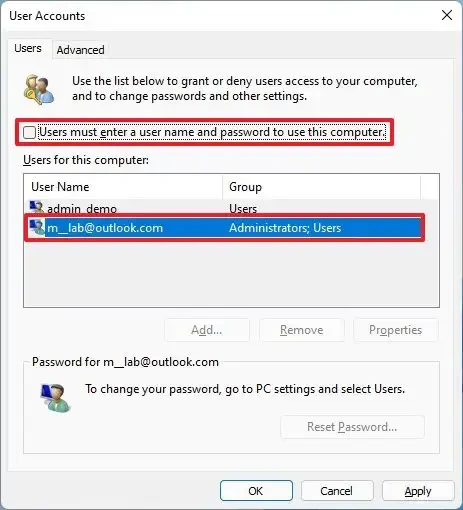
Note: If you don't see the option in step 3, you need to go toSettings > Accounts > Sign-in optionsand turn off the option"For improved security, only allow Windows Hello sign-in for Microsoft accounts on this device".
Completely remove passwords: Switch to a Local account
To completely remove the password, you need to switch from a Microsoft account to a local account. Consider this carefully, as it will reduce the device's security against unauthorized access.
Switching from a Microsoft account to a local account without a password.
- OpenSettings > Accounts > Your info.
- Select"Sign in with a local account instead".
- Confirm your current Microsoft account password.
- At the local account creation step, enter a new username. Most importantly,Leave the "New password" and "Confirm password" fields blank..
- PressNext, then select"Sign out and finish".
Once complete, the computer will restart and automatically log in to the new local account without requiring a password.
Remove the password for an existing Local account.
If you've been using a local account, deleting your password will be simpler:
- EnterSettings > Accounts > Sign-in options.
- Select itemPasswordand press the buttonEdit.
- Enter your current password and press Enter.Next.
- Leave all new password fields blank and press Enter.Next, then selectFinish.
Methods for advanced users
For experienced users, using system administration tools such as Command Prompt or Computer Management is also an effective option.
Use Command Prompt
The command-line tool allows you to change your password quickly.
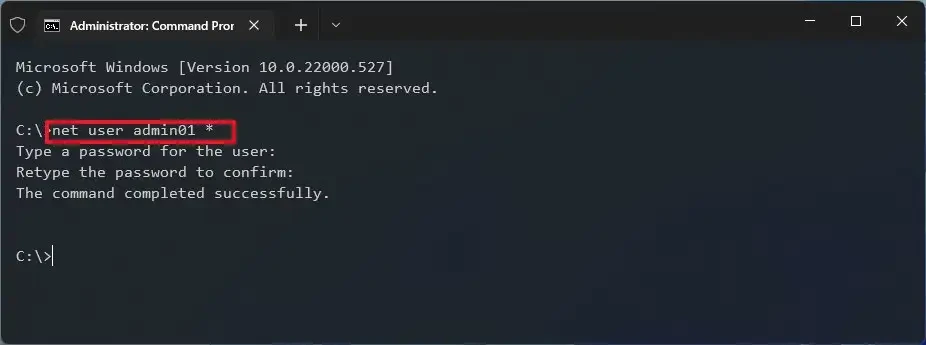
- OpenStart, search for "Command Prompt", right-click and select"Run as administrator".
- Type the command
net userTo view a list of all accounts on the computer. - Use the following command to delete the password, replaceUSERNAMEusing your account name:
net user USERNAME * - When prompted to enter a new password, simply pressEnterTry twice to set a blank password.
Perform the operation via Computer Management.
This is another graphical interface for managing local users and groups.
- OpenStart, search for "Computer Management" and open the application.
- Navigate toSystem Tools > Local Users and Groups > Users.
- Right-click on the account you want to change and select"Set Password...".
- A warning will appear, pressProceed.
- Leave both password fields blank and press Enter.OK.
Risk assessment: When should and shouldn't you delete your password?
Deleting your login password offers convenience but comes at the cost of significantly reduced security. Your computer will be more vulnerable to unauthorized access if it's stolen or used by someone else. Therefore, you should only consider this if your computer is located in a completely secure place, doesn't contain sensitive data, and is used only by you. For laptops that are frequently moved or shared computers, maintaining a strong password, combined with biometric login methods like Windows Hello (fingerprint, facial recognition), is always the recommended option.


