
Exports of agricultural and aquatic products decreased.
According to statistics from the Ministry of Industry and Trade, in April, the country's merchandise export turnover was estimated at 9.7 billion USD, a decrease of 12.1% compared to the previous month.
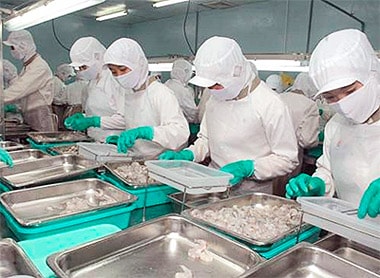
Illustrative image
Domestic businesses account for only 35%.
In the first four months of the year, the country's export turnover reached over 39.4 billion USD, an increase of 16.9% compared to the same period last year. However, this increase was mainly due to foreign direct investment (FDI) enterprises, which contributed about 65%, while domestic enterprises accounted for only 35%, reaching 13.9 billion USD, an increase of 7% compared to the same period last year.
Agricultural and aquatic products have traditionally been key export items for many domestic businesses. However, this group of key products is showing a downward trend in export value. In the past four months, export value for this group reached only about 6.2 billion USD, a decrease of 5.8% compared to the same period last year. Some products experienced significant declines, such as coffee (down 16.6%), cassava and cassava products (down 4.7%). In terms of price, compared to the same period last year, most export items decreased, such as rice (down 28 USD/ton), cashew nuts (down 10.3%), rubber (down 11%), pepper (down 2.8%), and rice (down 6.1%).
Ms. Phan Thi Dieu Ha, Deputy Director of the Import-Export Department of the Ministry of Industry and Trade, stated that the export growth rate of agricultural and aquatic products in April improved compared to the first months of the year, but remained low, causing the overall export value of this key product group to decrease. The downward trend in global commodity prices has also affected the export prices of domestic businesses. While some products saw increased export volumes, the drop in prices impacted the growth rate.
We have reached the extraction threshold.
Many of Vietnam's key agricultural products, such as rice, coffee, and pangasius fish, which are among the world's leading producers, are at risk of declining. Due to the difficult global economic situation, import demand from major markets like the US, EU, and Japan has decreased, significantly impacting the country's agricultural and aquatic product exports. Since the end of 2012, many economic experts have warned about the difficulties facing these product groups, as export volumes have reached their limits and further increases are unlikely, while demand from importing markets is declining.
Rice is one of the key commodities; besides falling prices, many contracts signed with foreign customers have also been canceled. In the first four months, 280,000 tons of export contracts were canceled. As for seafood, according to the Vietnam Association of Seafood Processing and Export (VASEP), in the first three months of the year, the country's seafood exports are estimated at $1.26 billion, a decrease of nearly 5% compared to the same period last year.
This is the first time since 2009 that seafood exports in the first quarter of 2013 have decreased compared to the previous year, with declines across most key products and markets. Technical barriers and tariffs in major importing markets are increasing, such as the issue of ethoxyquin in shrimp exported to Japan and South Korea. Pangasius is facing pressure from anti-dumping duties, and shrimp is at risk of countervailing duties. In addition, due to a lack of orders, insufficient capital, and rising production costs, many seafood businesses have ceased operations, leading to reduced production.
According to Kinhtenongthon-HV


