
25,000 soldiers participated in the RIMPAC 2012 exercise.
The large-scale naval exercise involving 22 countries is taking place against the backdrop of heightened tensions in the Asia-Pacific region due to the "return" of the United States.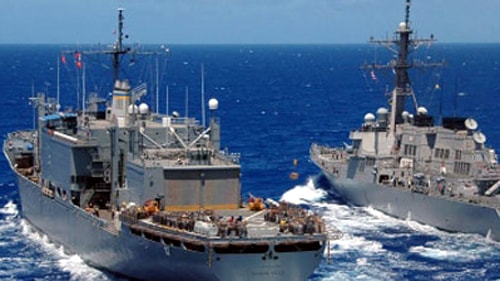
Warships from various countries are moving towards Hawaii to participate in RIMPAC 2012.
A fleet of warships, submarines, and fighter jets from 22 countries have just launched the Rim of the Pacific 2012 (RIMPAC 2012) exercise in Hawaii, USA. This is considered the world's largest regularly scheduled naval exercise, held every two years.
Taking place from June 29 to August 3, the RIMPAC 2012 exercise involved 42 warships, 6 submarines, more than 200 aircraft, and 25,000 troops from 22 countries around the world. These 22 countries included Russia, Australia, Canada, Chile, Colombia, France, India, Indonesia, Japan, Malaysia, Mexico, the Netherlands, New Zealand, Norway, Peru, South Korea, the Philippines, Singapore, Thailand, Tonga, the United Kingdom, and the United States.
Beginning in 1971, RIMPAC has increasingly attracted more countries and grown in scale. While only 8 countries participated in 2006, this number increased to 10 in 2008 and 14 in 2010. This year, the Russian Navy is participating in RIMPAC for the first time, deploying three ships: the destroyer Admiral Panteleyev, the tanker Boris Butoma, and the rescue ship Fotiy Krylov from the Pacific Fleet.
According to the US military, RIMPAC 2012 was "a rare opportunity for participating nations to develop and maintain crucial cooperative relationships, while ensuring the safety and security of maritime routes."
This year's largest naval exercise in the world is being led by the U.S. Pacific Fleet under the command of Vice Admiral Gerald Beaman. Admiral Beaman is the Commander of the U.S. Third Fleet.
RIMPAC 2012 marked the first time that senior officers from non-US countries commanded different units within the participating forces. Specifically, Rear Admiral Stuart Mayer of the Royal Australian Navy commanded the naval unit, while Rear Admiral Michael Hood of the Royal Canadian Air Force led the air force participating in the exercise.
The exercise included drills in amphibious landings, gunnery practice, missile launches, anti-submarine warfare, and air defense. In addition, the program included activities such as anti-piracy operations, mine sweeping, explosive ordnance disposal, diving, and rescue.
The large-scale naval exercise involving 22 countries is taking place against the backdrop of heightened tensions in the Asia-Pacific region due to the "return" of the United States. Washington recently announced that it will shift its security focus to the Asia-Pacific region. To achieve this, the US aims to deploy a large portion of its warships to Asia while strengthening partnerships and cooperation with countries in the region. This US strategy is causing considerable unease in China.
According to VOV.vn - DT


